Visual Naturebook

Lessons from the Edge of the Woodlands
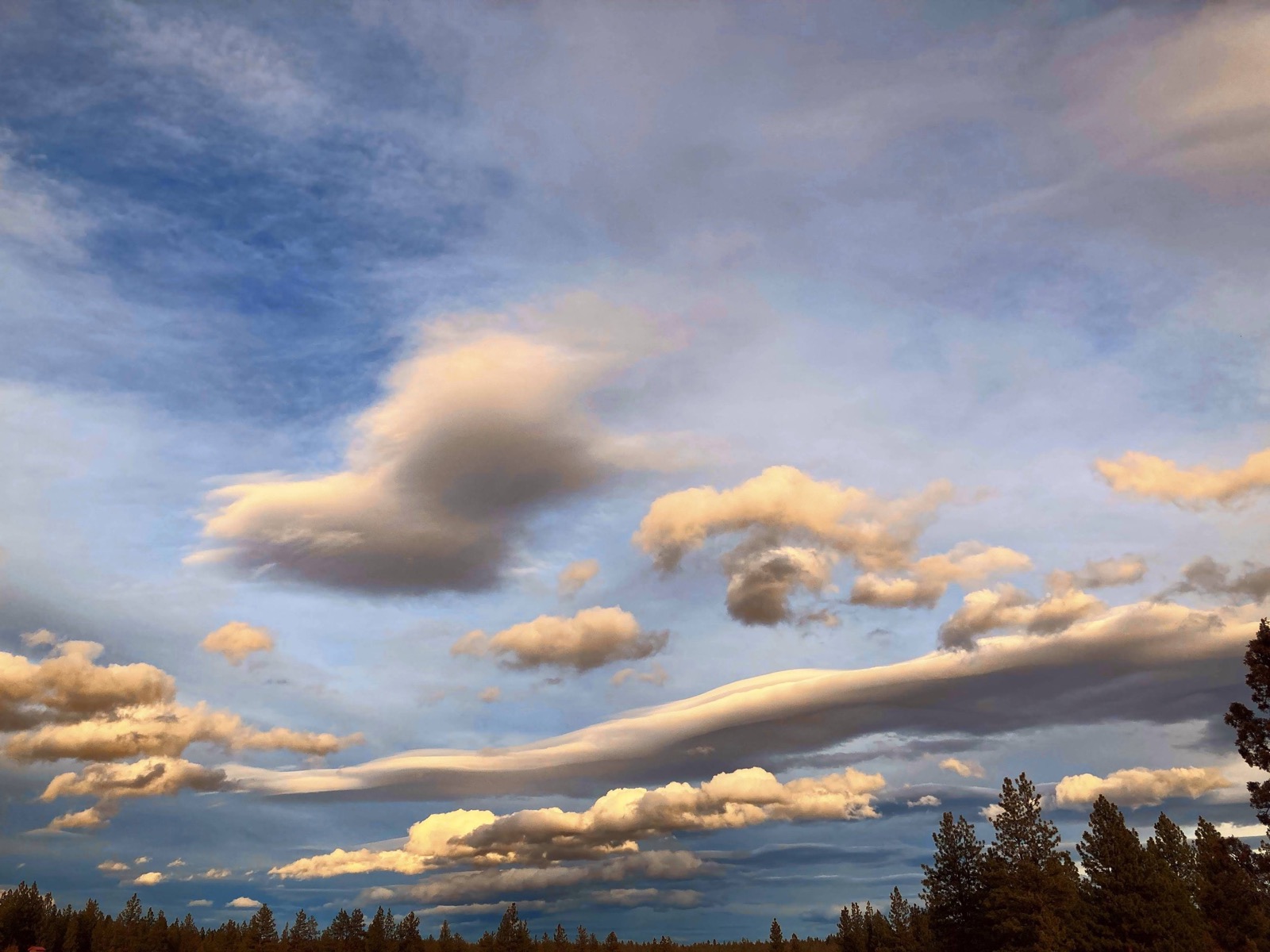
Woodland edges result in impressive avian activity. A mixed sky in the late afternoon, autumn. PNW | my personal archives.

I remember the first time I saw a bird eat a bird: it was probably 18 years ago, during a picnic in Griffith Park with my kids, under live oaks. The twisty branches and sprawling foliage shielded us from the hot afternoon sun.

While we sat on a blanket eating finger foods from little containers, a ruckus came from the canopy. A larger bird ate a smaller one. It was so aggressive and unexpected. I didn’t know much about birds, and I didn’t know it went down like that.

While this may be common knowledge to many, I thought: how did I get this far in life and not know this predator-prey outcome? How do we come to know what we know—by paying attention, by books & periodicals, by the company we keep, or by asking the best questions (or the worst)?

What I witnessed turned me into an emerging naturalist; I went from passive onlooker to active observer, an essential shift for anyone trying to understand nature scientifically. The wanderlust naturalist bug bit me for going off the grid rather than deeper and farther into urban life, its cultural vibes, and art centers.

And I had forgotten my origin story about avian predation until I recently walked outside with the dogs and my daughter, all these years later, a thriving athlete-scientist, back on fall break.  She said, "Look," and pointed.

Two ravens sat on the fence, facing each other and eating a bird. They heard the dogs, dropped the bird, and flew up into the tops of the ponderosa pines. Their wingspan looked like two large black capes floating in the air.

We walked over to find the carnage—its beak’s surgical slice down the thoracic cavity, guts pulled out and on the fence post. Feathers sprinkled all over the ground.
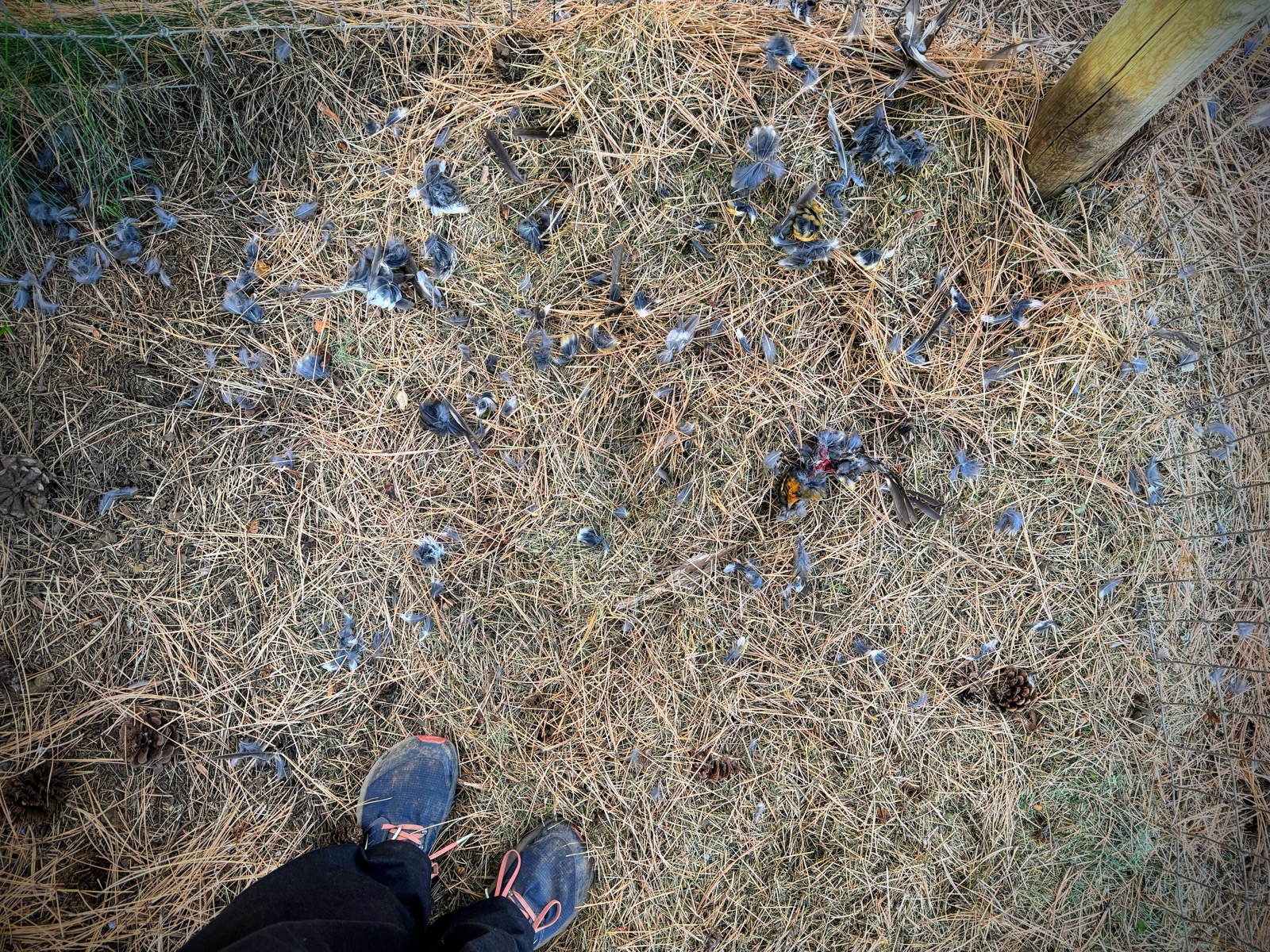
Avian predation aftermath of feathers and body scattered throughout the pine needles. PNW | 2026

“Guts look like a worm,” she said. We both leaned closer to look.
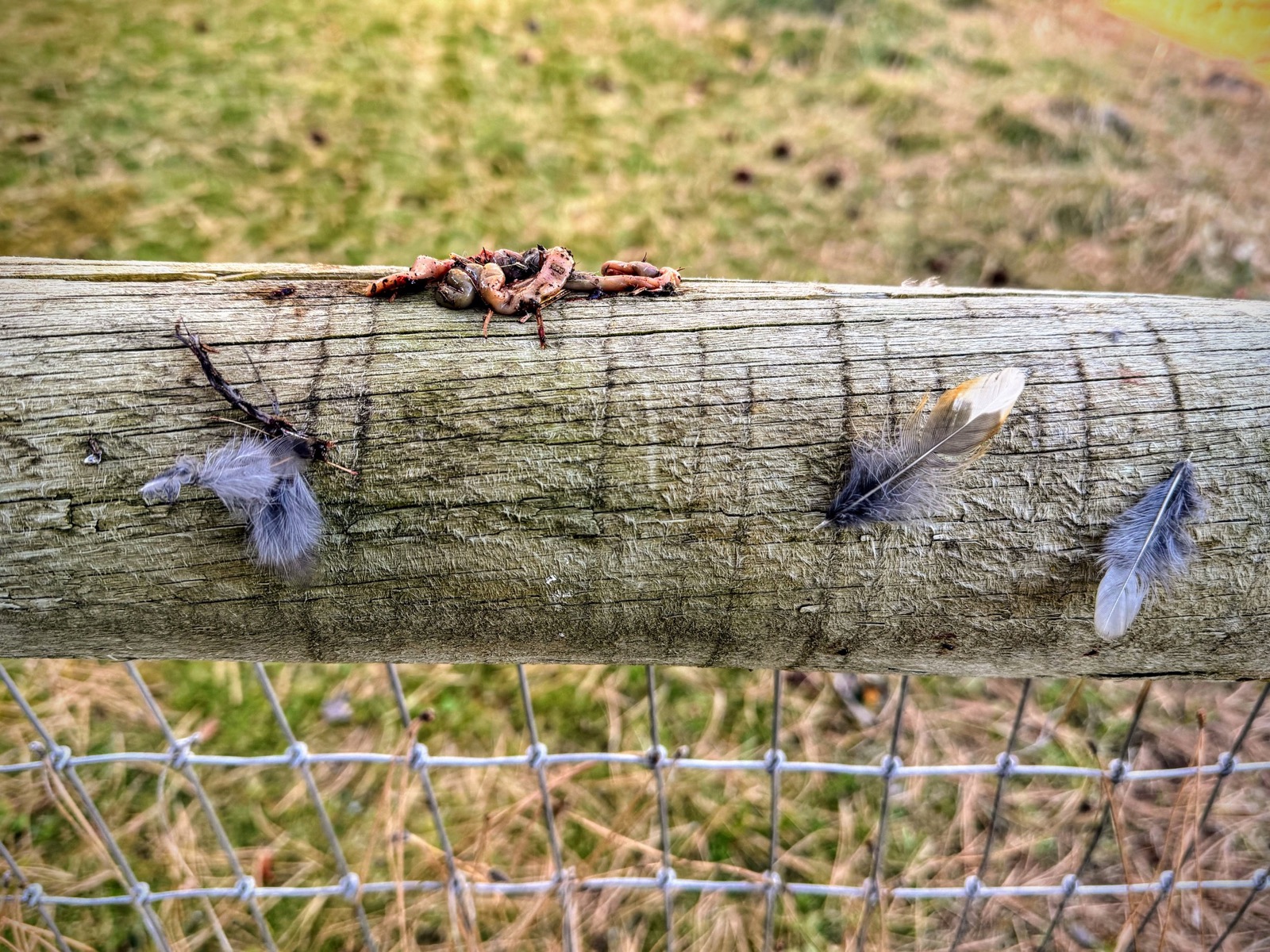
More avian predation aftermath (feathers and viscera) on the fence. PNW | 2026

With a shovel, I moved the bird’s body to the other side of the fence so the dogs wouldn’t inspect it. My attempt to move the gut made it fall and hang on the fence wire like a wet sock.  

I was expecting the ravens to come back for their carcass. And when I checked a couple of days later, something in the ecosystem had finished it. Being outdoors offers a lifetime of discovery and reinforces the scientific mindset. My goal each week is to open my senses and stumble into nature’s unscripted moments.
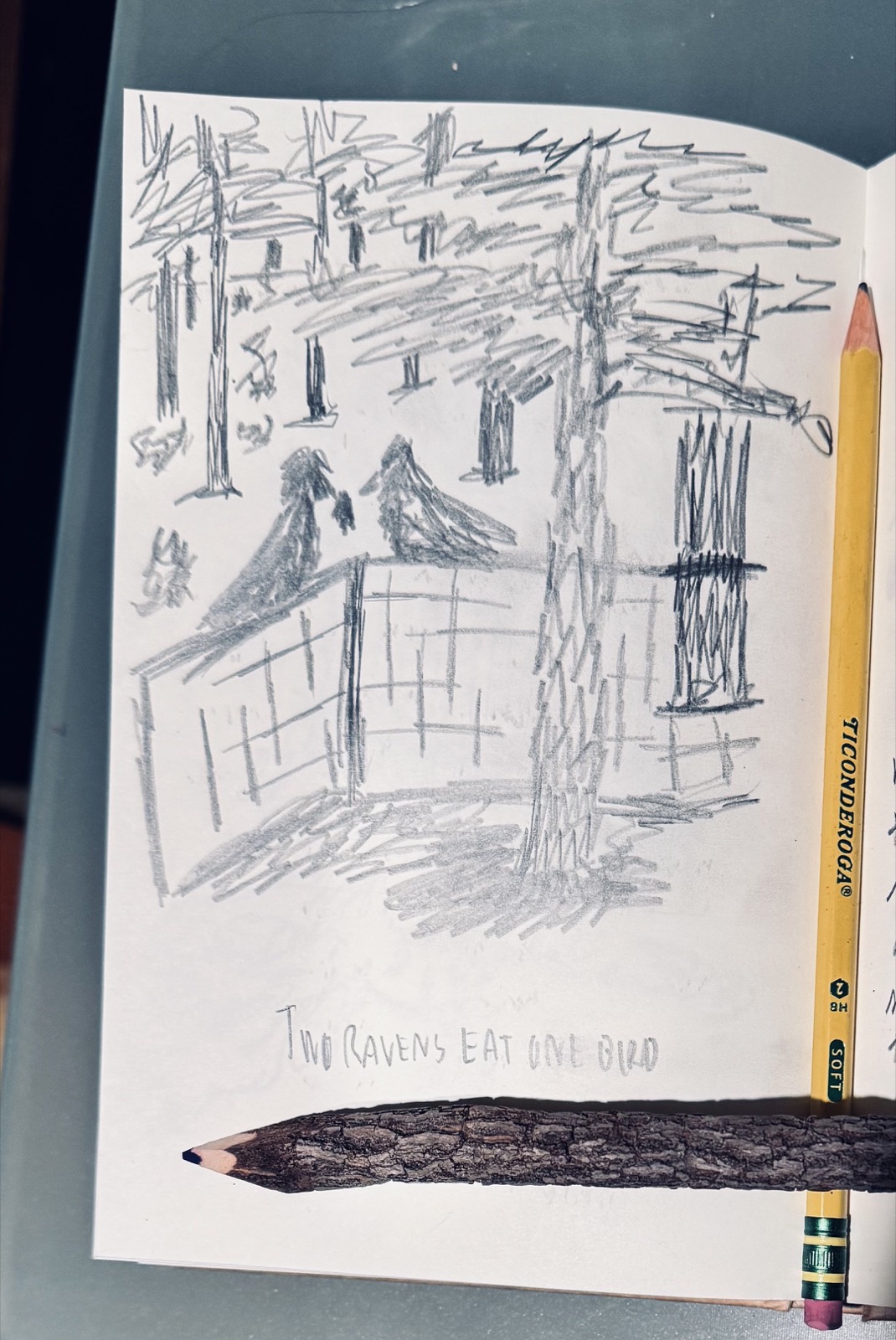
Quick sketch in my field notebook. PNW | 2026

The ravens are still around. The shrill chittering or croaking vocalizations come down from the tops of the pines. They weren’t here all summer, but they're residents here deep into autumn. I need to find out why they’ve arrived now. This is another question I’ve written down in my field notebook—one observation to research at a time.

Additional Resources:
Charlotte Le Marquand, et al. Predation-mediated edge effects on wader nests in rural landscapes vary between species, and with distance to woodland and woodland type. Global Ecology and Conservation, Volume 71, 2026, e04449, ISSN 2351-9894, DOI: 10.1016/j.gecco.2026.e04449.

 Young, A. C., Katzner, T. E., Shinneman, D. J., & Johnson, T. N. (2023). Implications of tree expansion in shrubland ecosystems for two generalist avian predators. PLOS ONE, 18(6), e0286478. https://doi.org/10.1371/journal.pone.0286478
Lumberjacks of the Junipers

Fun fact: two to four tablespoons of juniper seeds make gin. They are steeped or distilled with other botanicals. Biting into a seed cone picked off the tree is a mouth explosion of piney taste.

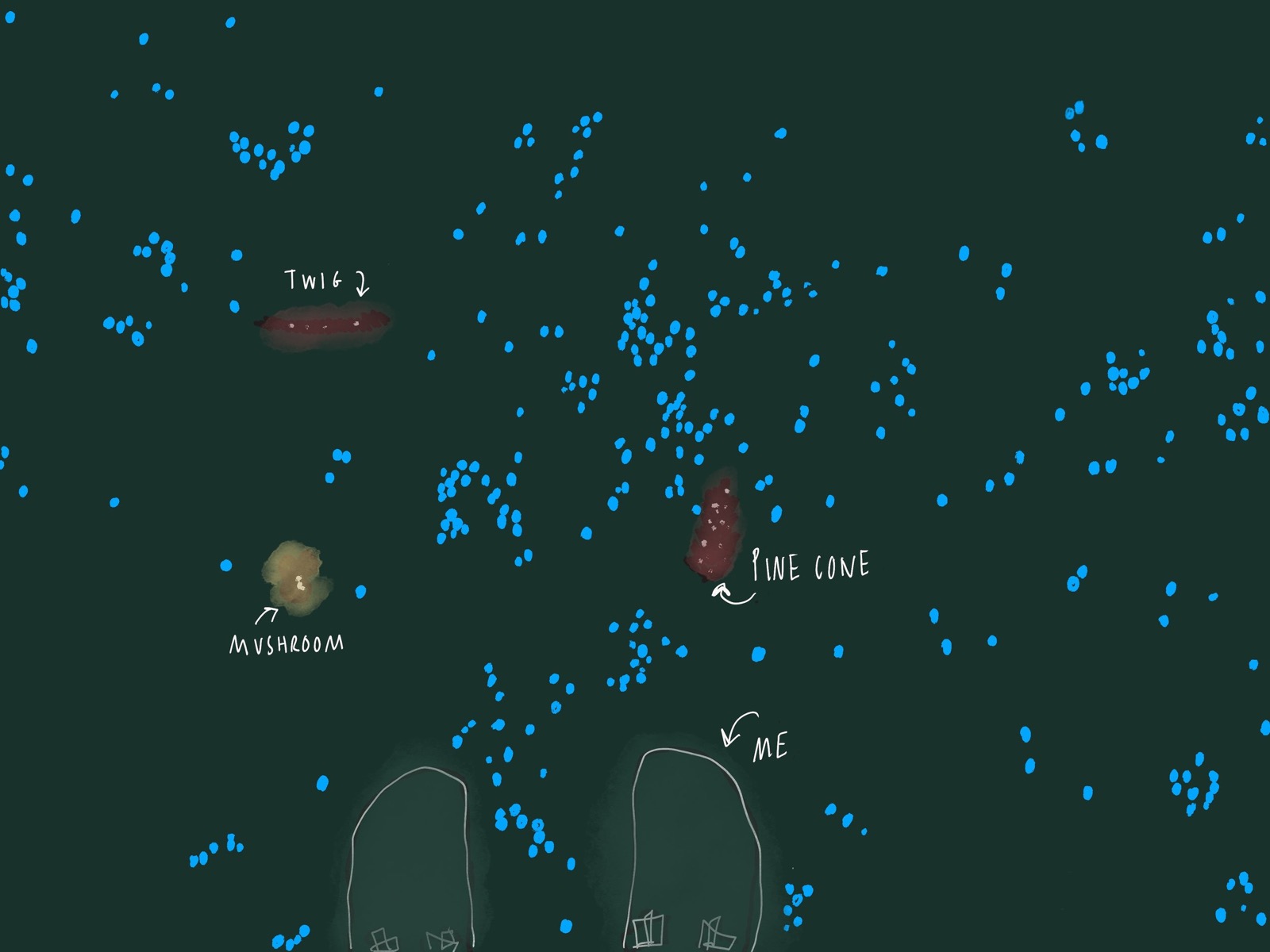
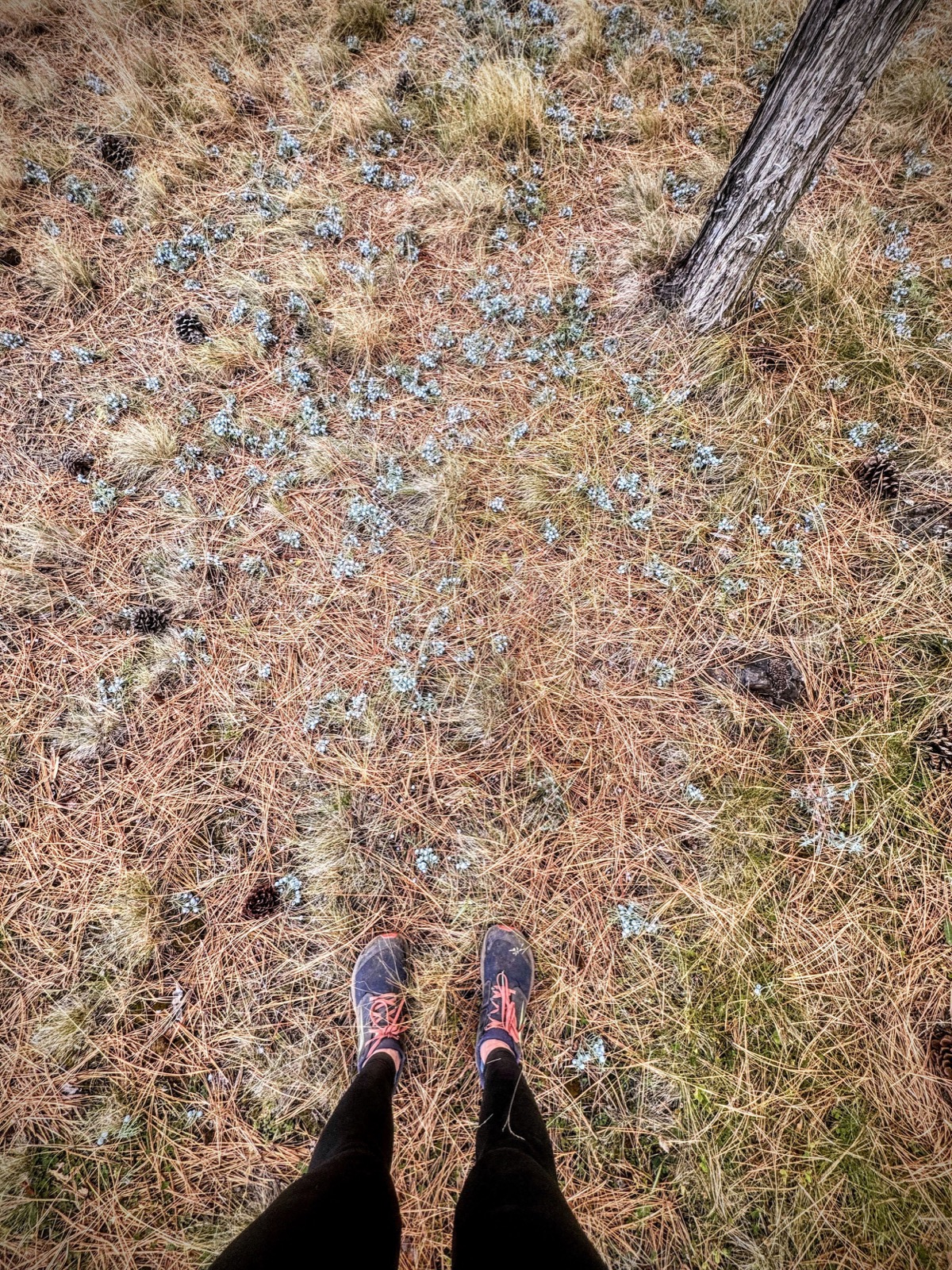
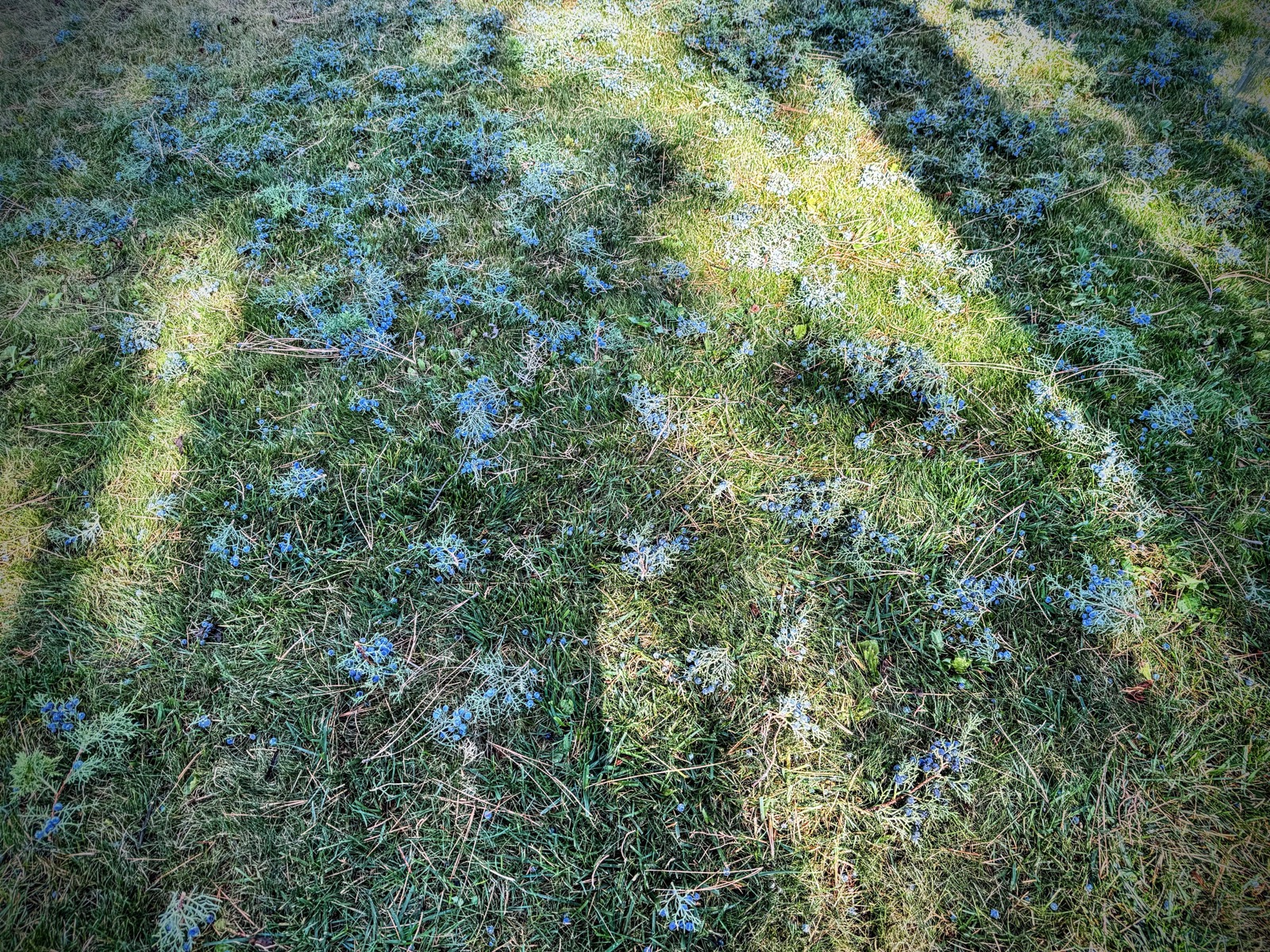
Blue-purple seed cones formed a circular pattern around the juniper’s base. Not even twelve hours ago, none of this was there.

On Sunday night, we had gone to bed satisfied and tired after spending seven hours raking and mulching fallen mixed conifer debris. This scattered-seed cone business happened sometime between sleeping, waking, drinking coffee, conference calling, and answering emails.

Beside the sixty-foot-tall juniper, I craned my neck to see branches jiggling and seeds dropping and bouncing off the ground as if big droplets hitting a puddle. A little tail, like a fluffy wand, flickered on a sturdy branch.

At this point in the story, most squirrels around here were little golden-mantled squirrels, with white and tan racing stripes. They chased each other up and over obstacles and sat on the fences munching pinecones like corn on the cob.

While standing over the super-abundant juniper seed cache, I assumed the golden-mantled squirrel was responsible for the thwacked foliage.

After lunch, I returned to see the squirrel still quickly pruning branches and cone bunches. Then I got a clear view of the coat—no racing stripes.

What did I know about non-racing-striped squirrels? I’d been mindlessly categorizing squirrels into one group, not looking very hard, just sort of quickly and generally.

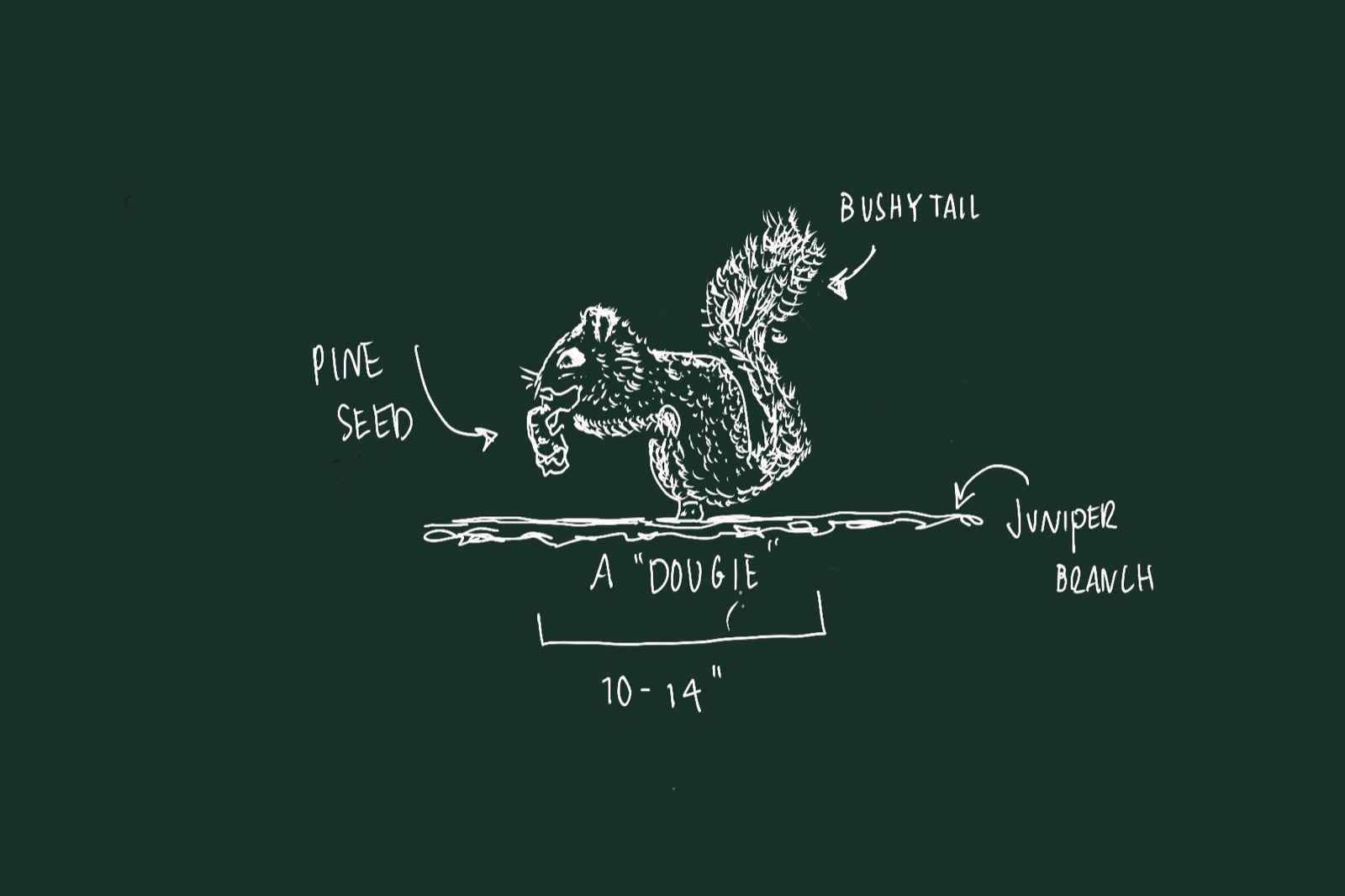
So, I directed myself to stop and watch, not passively but intentionally. The juniper lumberjack had a grayish coat and tan underbelly, with a long fluffy tail that directed it like a conductor. The vocal one that clattered and trilled loudly was a Douglas squirrel, a pine squirrel, also known as “Dougie” or chickadree. Their territorial vocalizations sent my dogs swarming between the trees.

Dougie sounds range from barking chatter (alarm, predator detected!), rhytmic alarm (sounds like a car alarm coming from the tree top but it means this is my territory), purring (hey friend!), high-pitched squeaks (hey sexy wanna mate), and soft chirps (mamaaa where are you).

Dougies are active in the woodlands and clip juniper branches, starting at the lowest limbs and working their way up. They also build middens, those intricate piles at the base of trees where they store cones and seeds throughout the season.

Foliage and seed cones pruned from the branches by the Dougies. Sketch | 2026

Leftovers from their pruning feed deer, birds, and coyotes, like a food drop that supports the wildlife ecosystem’s sustainability. Giving to others is a good way to live for our land and tree dwellers.

 (Check out an engaging scientific article from University of Arizona scientists, in particular Figure 1, as it shows mammalian cache strategy, about scatterhoarding vs larderhoarding, in comparison to brain size [corrected by body size].)

My impulse is to rake them up or mulch them, but I know they feed the ecosystem.

Found another nearby juniper cache after playing with the dogs. PNW | 2026

Moments like this afternoon’s exploration remind me how assumptions can falsely accuse someone or something, with our brains grabbing what is easy and convenient rather than digging into the unknown.

Additional resources:
Tamiasciurus douglas, July 31, 2016. DOI: 10.5281/zenodo.6818748
Mahoney et al. Evolutionary lability of food caching behaviour in mammals, Journal of Animal Ecology, 2024. DOI: 10.1111/1365-2656.14093.

To Make So-So-Bad-Maybe Decent Drawings

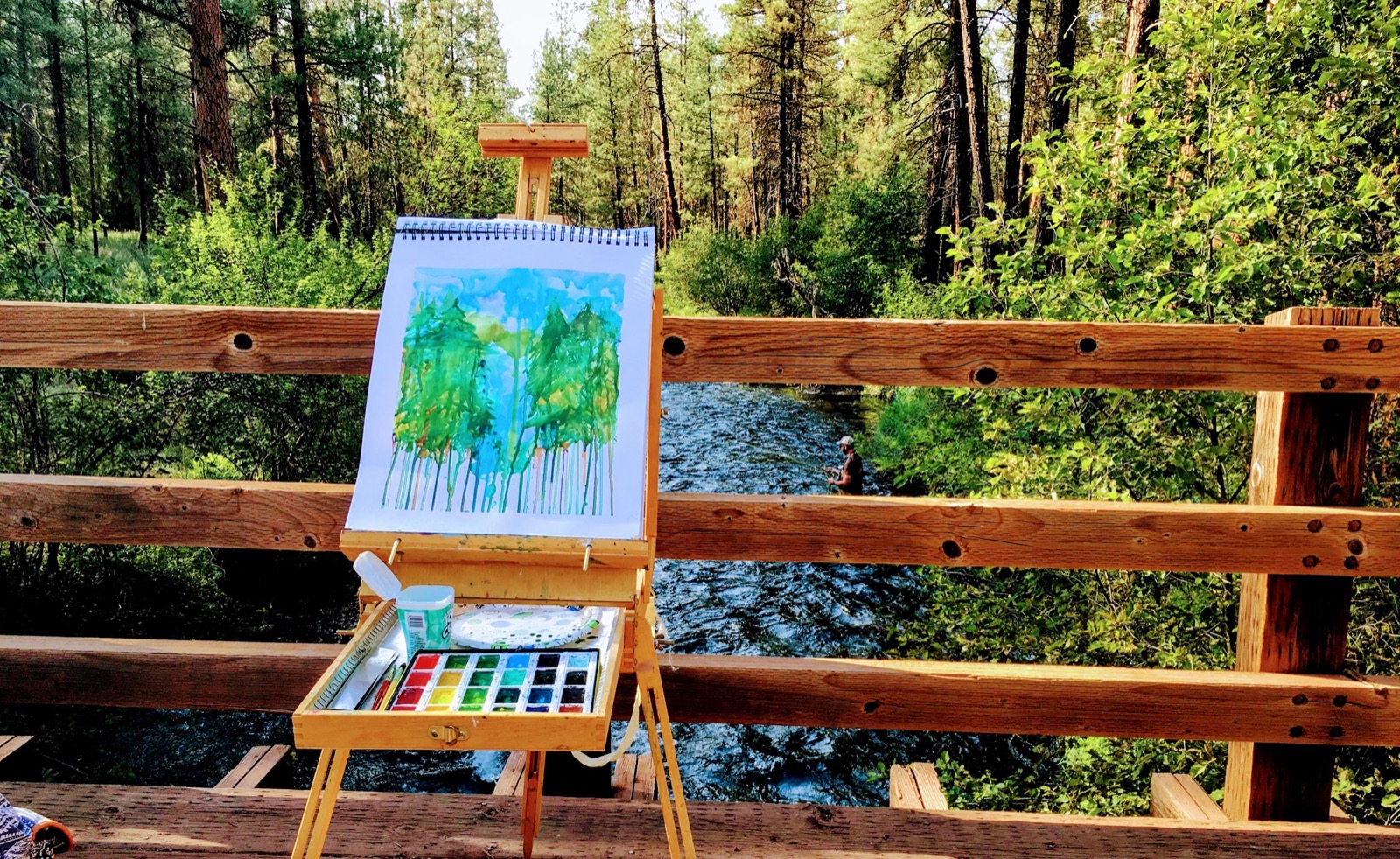
Plein air watercolor afternoon for me. PNW | circa 2018.

A boy paused his football game to watch me as I sat drawing at the park. He settled beside me on the blanket and cupped his chin in his hand. He quietly observed my Micron pen sketching a tree in my ever-present journal.

From across the park, his dad yelled at him to get their ball and to get going!

All these years later, I wonder about him sometimes because, like many people, I stopped drawing during adolescence. Cartoonist and art professor (UW-Madison) Lynda Barry said most people stop drawing between ages five and ten because realism and judgment shut down the impulse to create.

For me, art faded when sports and friends took precedence. Around seventeen, I rediscovered drawing, specifically sketching diagrams from science textbooks. What ensued was a constant tennis match of observation—break the figure into lines and determine how they intersected from brain to hand to paper. Back-and-forth, back-and-forth, I swiveled my head into the night under a nightstand light.

Buying a fresh sketchbook and diving back into drawing has an awkward period: lines feel hesitant, then begin to feel familiar again. It's never too late to come back to drawing or to start for the first time.

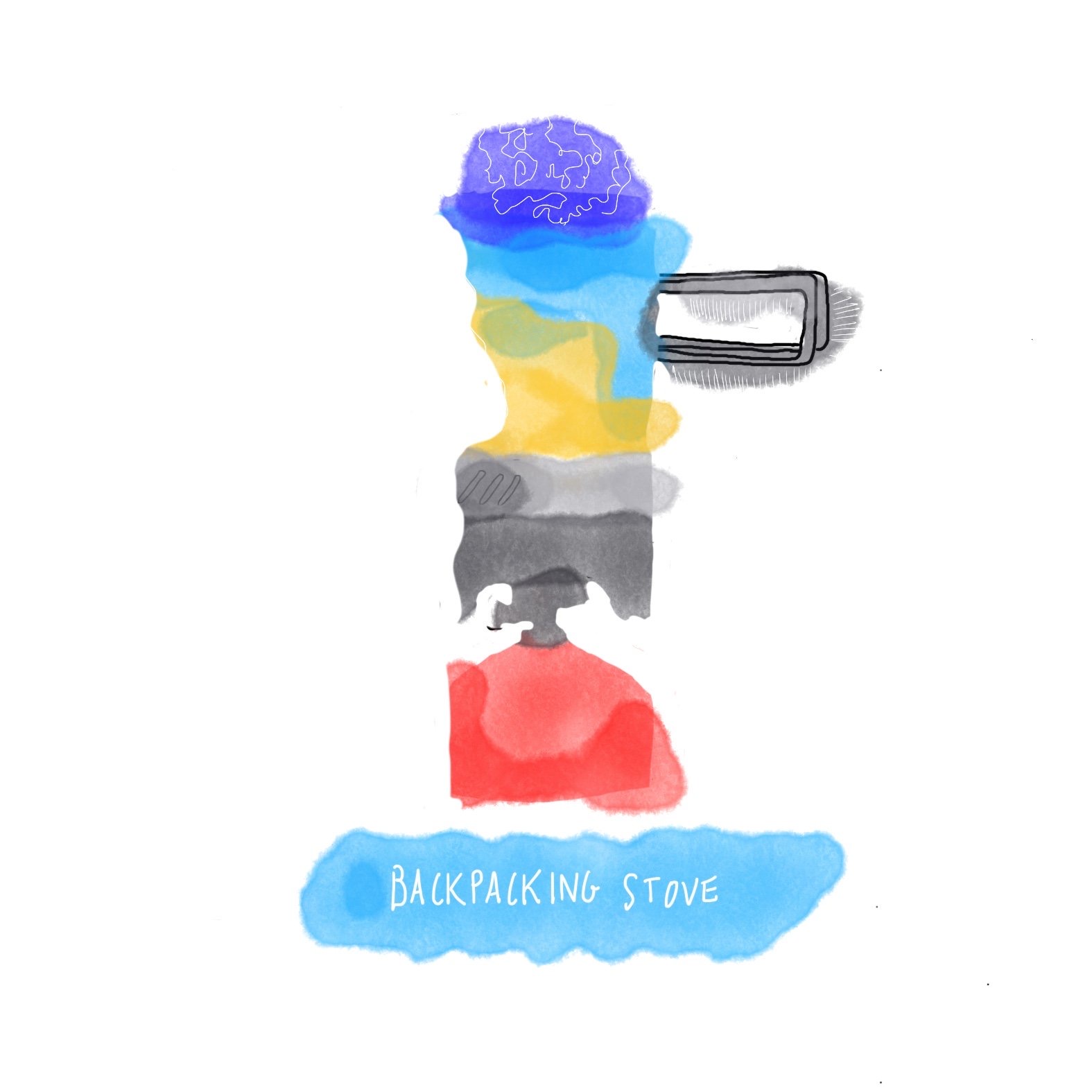
Little renderings from my backpacking and camping inventory. 2026

______

Barry emphasized that drawing is less about talent and more about the tactile focus on what comes to the hand. Drawing is just a series of lines. Don’t be afraid of the line. It can go any way on any substrate. Drawing is a human language, and anyone can do it.

Observation vs. Memory vs. Imagination
If you want to connect with your creative side (and of course you do; it has cognitive benefits!?!), try a simple exercise.

Set a timer for two minutes for each phase of “seeing”. Ground rules: Sketch without judgment (it will be hard to train yourself out of an inner critic, but try).

1.     Take a minute to look at anything nearby. Draw it from observation

2.     Put the object away or look away. Now draw it from memory.

3.     Lastly, use your imagination to draw it, but spin it into some element of imaginative willpower, no matter how silly, unusual, or realistic it may become.

Let your lines wander and fill the page however you like. The goal is to see and invent.

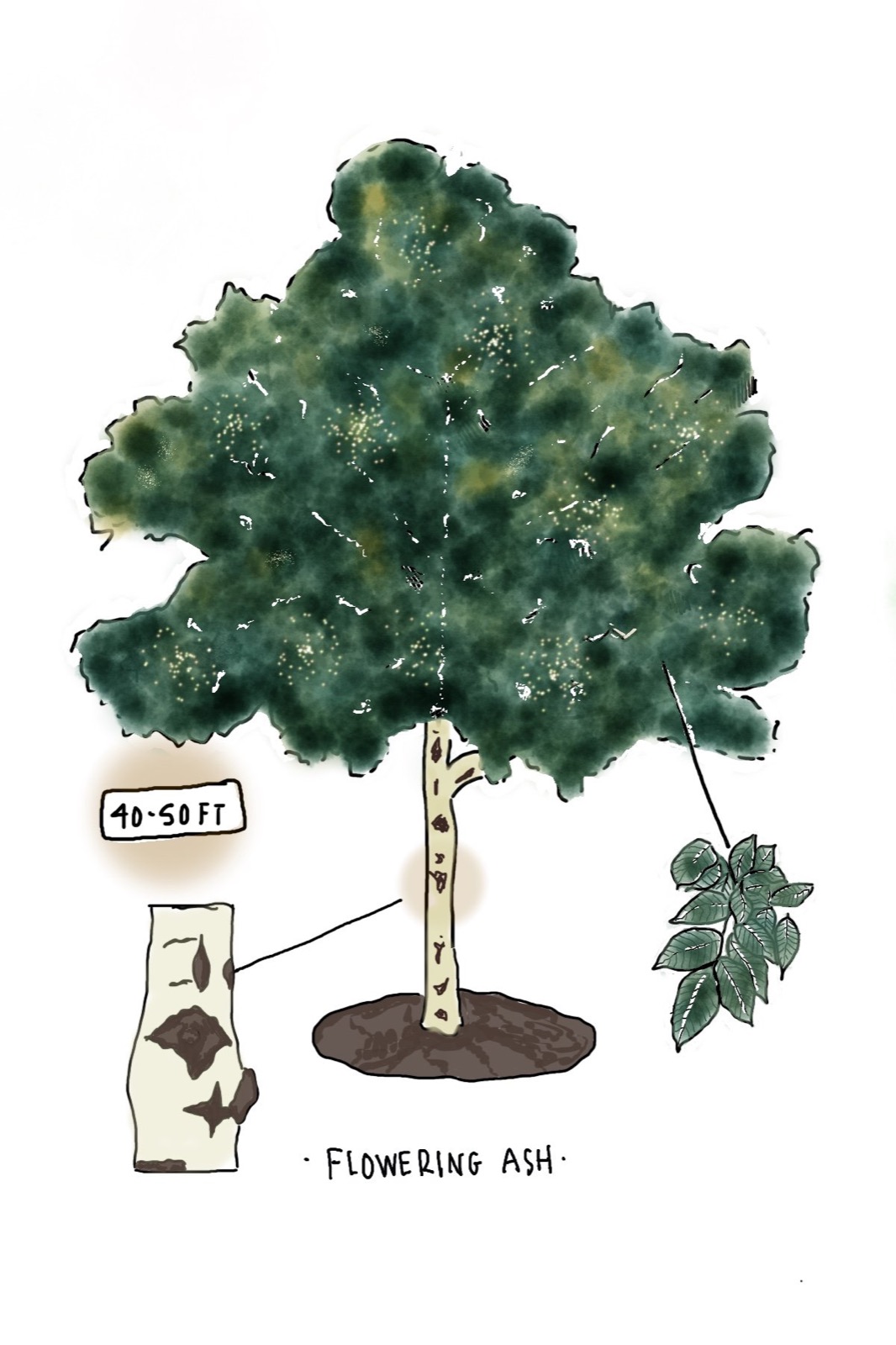
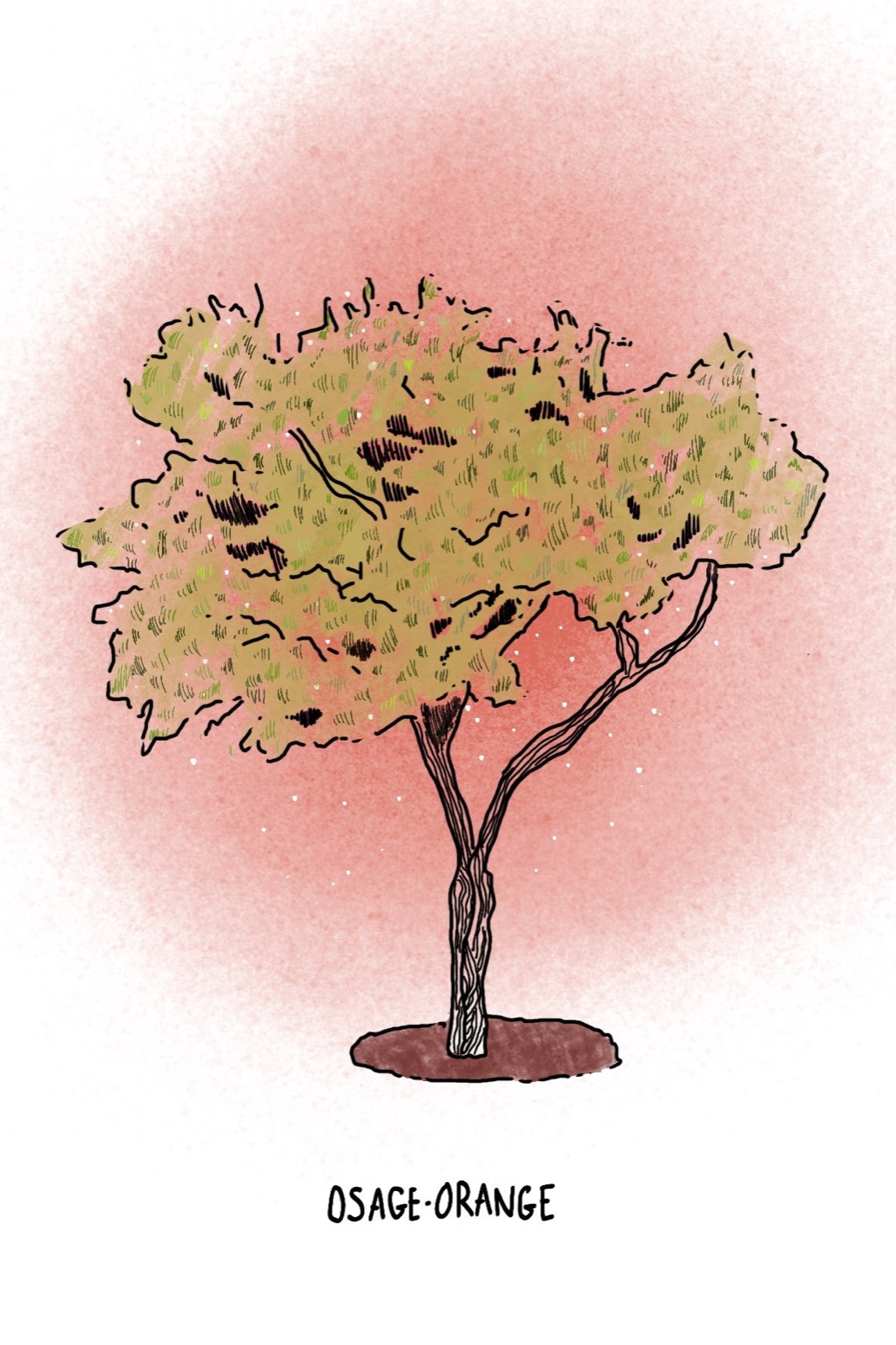
(left) Flowering ash; (right) Osage orange at sunrise. 2025
______

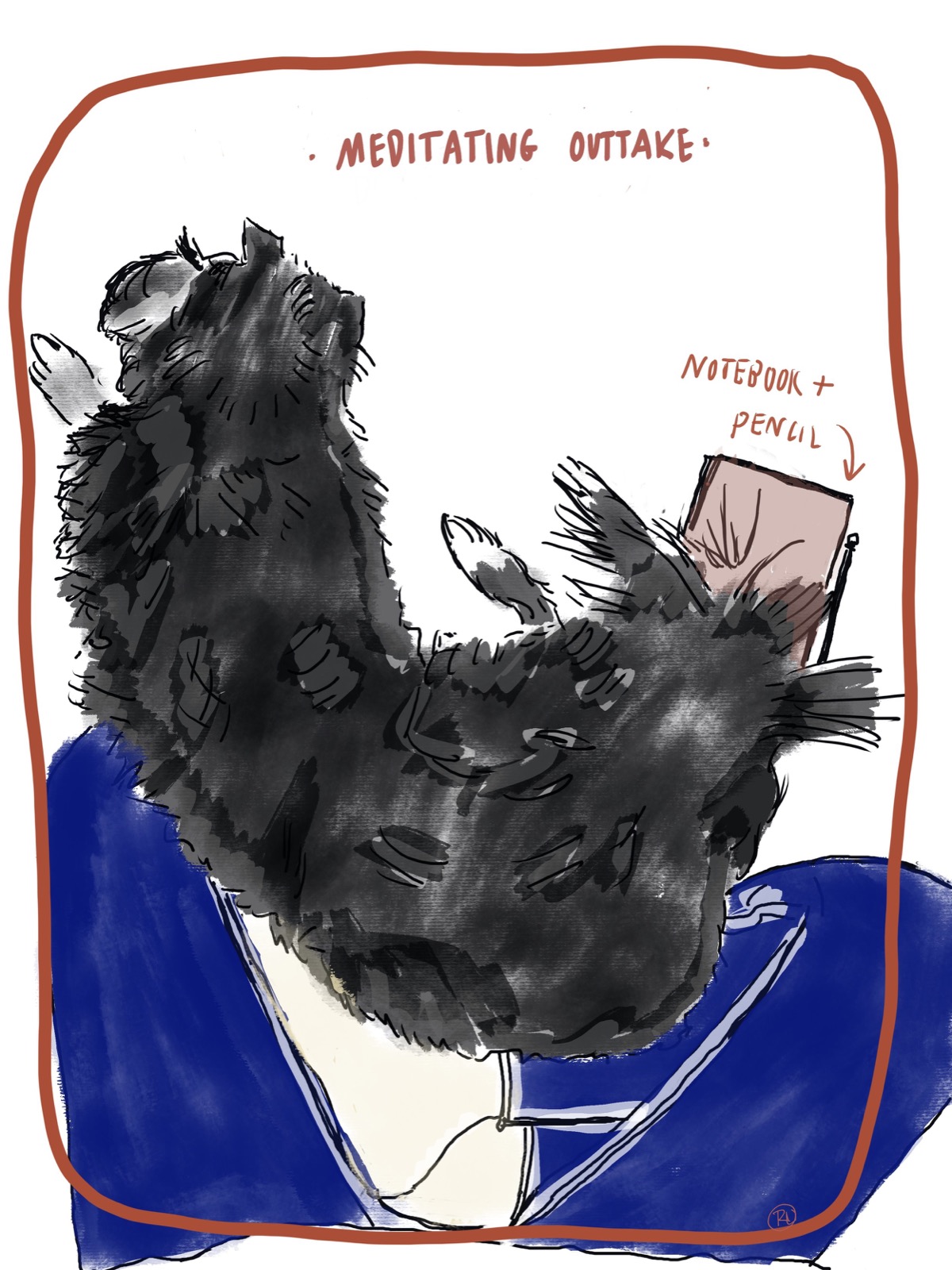
Meditation time and my dog joins me.

Drawing in field notebooks and journals has long helped me manage stress and process the world. You don’t need fancy materials. Barry encourages her students to use whatever is at hand, like a pad and ballpoint pen. From there, just start sketching. I carry a journal and a small portable watercolor set, ready for inspiration. 

Drawing is one of those great brain activities. It activates spatial awareness, hand-eye coordination, and visual regions. The cross-network activation affects memory (i.e., drawing encodes in memory). The more you draw, the more attention you pay to details. And the world is a multitude of details. Slow down and notice life one line at a time. 


Sources of interest:
Barry, Lynda. What It Is. Montreal, Canada: Drawn & Quarterly, 2024. Print. ISBN 9781770467378.
Internet archive version.

Frances J. Griffith, Verner P. Bingman. Drawing on the brain: An ALE meta-analysis of functional brain activation during drawing. The Arts in Psychotherapy, Volume 71, 2020, 101690, ISSN 0197-4556, https://doi.org/10.1016/j.aip.2020.101690.

Jeffrey S. Katz, Martha R. Forloines, Lily R. Strassberg, Barbara Bondy. Observational drawing in the brain: A longitudinal exploratory fMRI study. Neuropsychologia, Volume 160, 2021, 107960, SSN 0028-3932, https://doi.org/10.1016/j.neuropsychologia.2021.107960

Patrick Downing. “Neuroaesthetics and the brain chemistry of drawing.” Art UK. 13-11-2024

Irida Tsevreni. Pedagogical implementations of nature journaling in connecting with the natural world: A scoping review of thinking, skills, and creativity. Volume 62, Part A, 2026, 102249, ISSN 1871-187. https://doi.org/10.1016/j.tsc.2026.102249.

Struck: When Trees Bear Witness

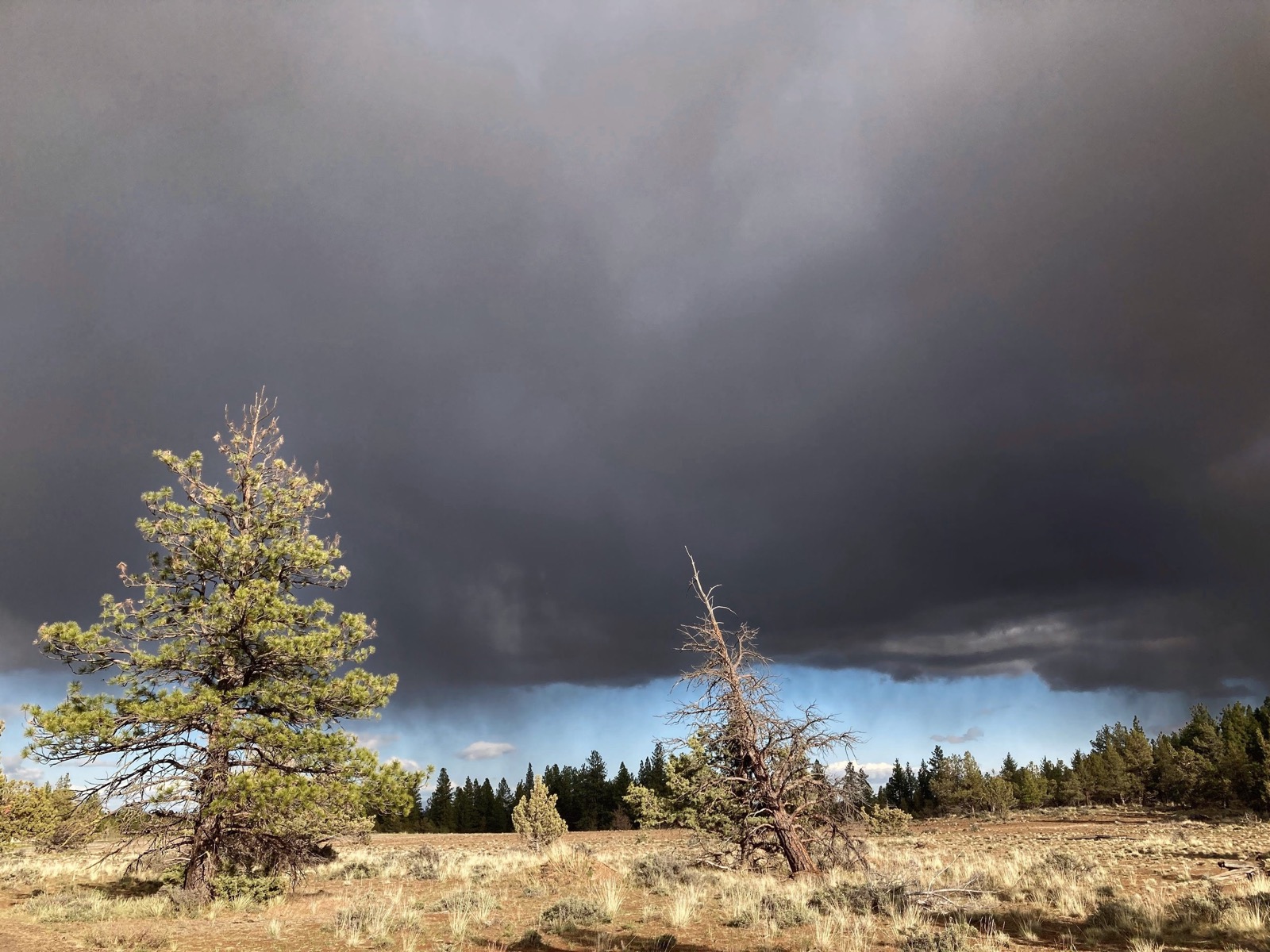
Being caught in a storm; from my personal experience and archives. | PNW.

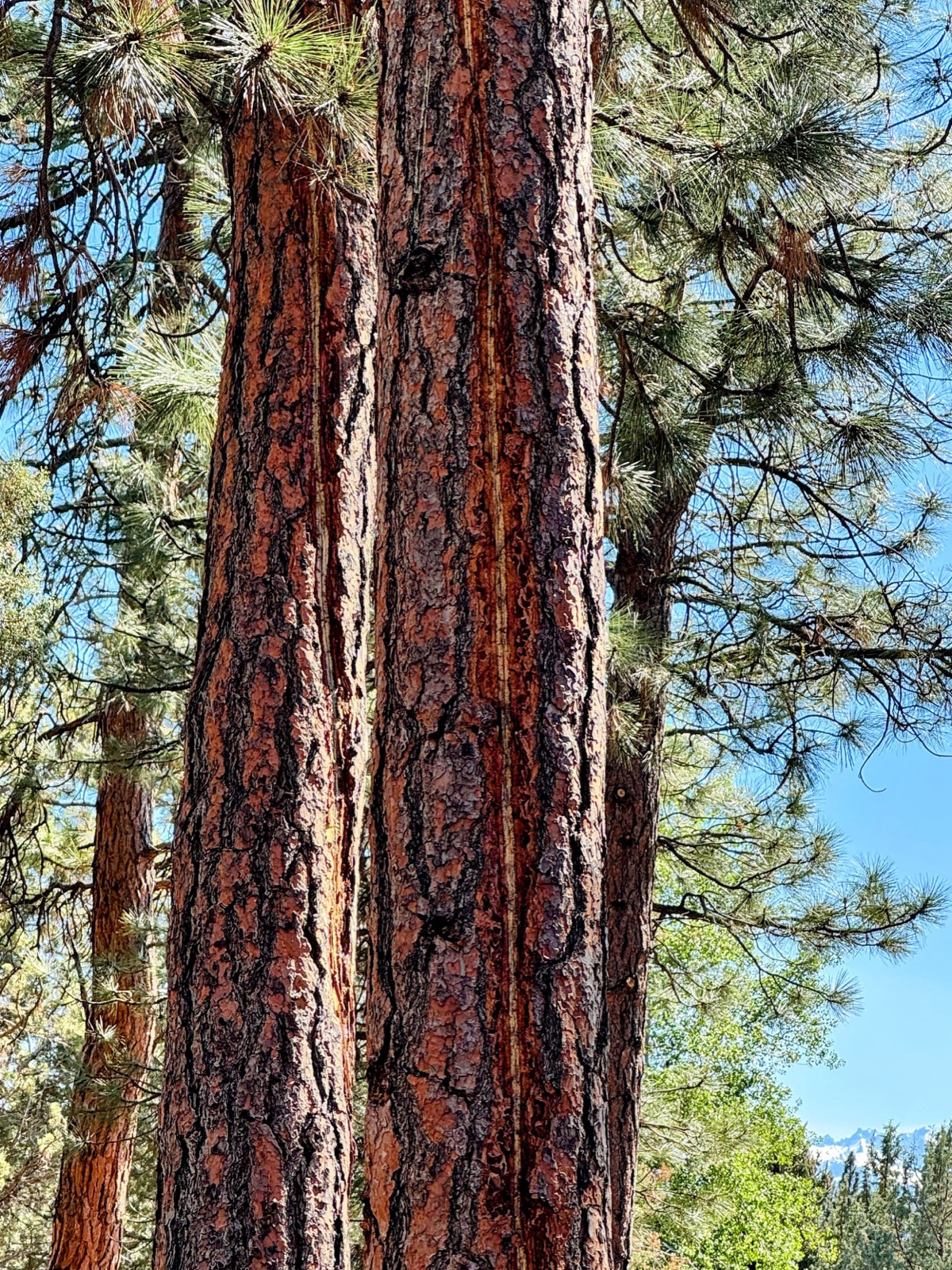
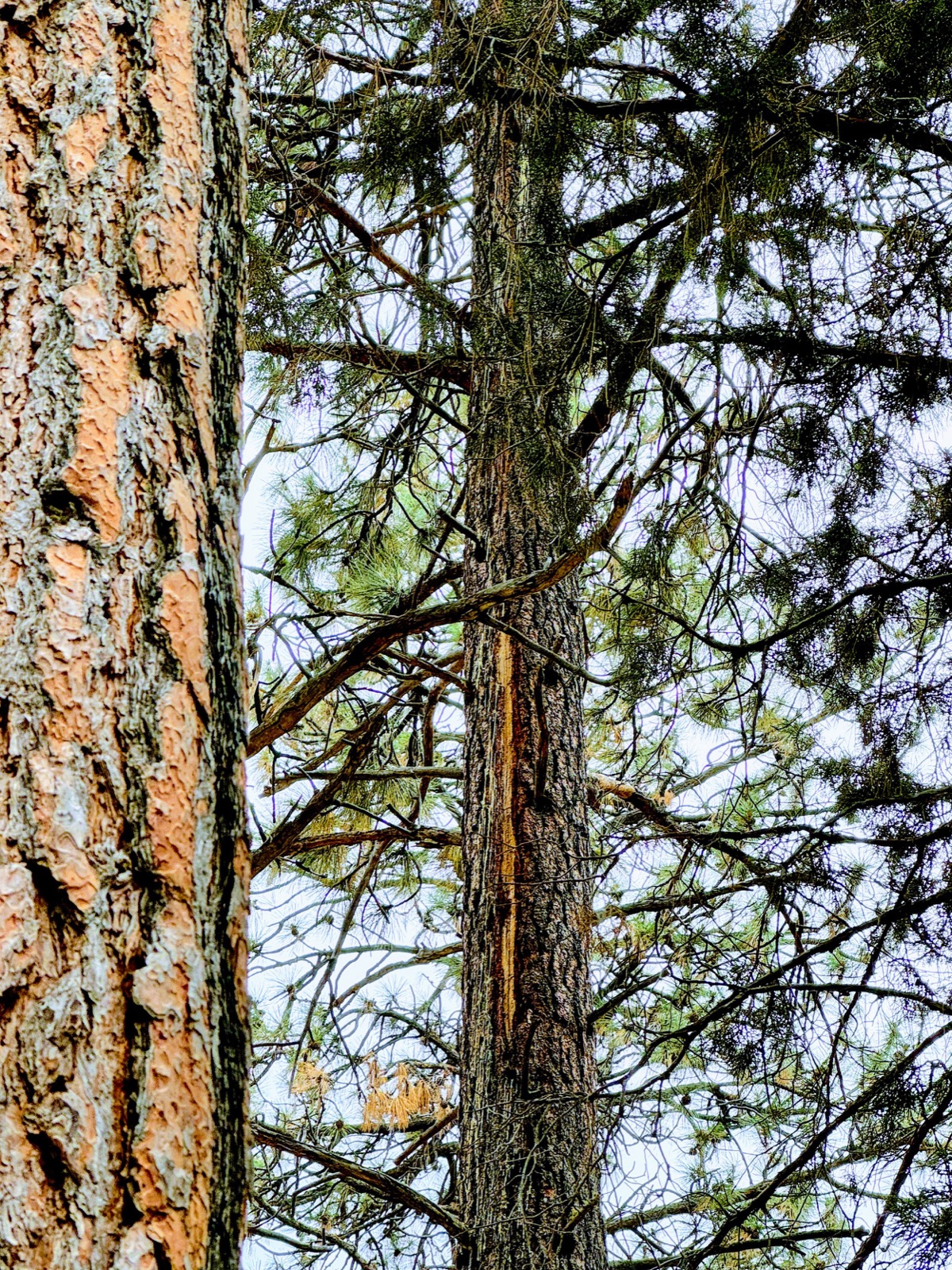
The sky vandalized our trees. Its electric tongue lashed out and wrote its name in tall ponderosas.

A lightning grenade shook the house, and the power cut out. Framed photos hit the edge of their nails, slanted, and crashed to the ground. The dogs whimpered and shook, clinging to my legs.

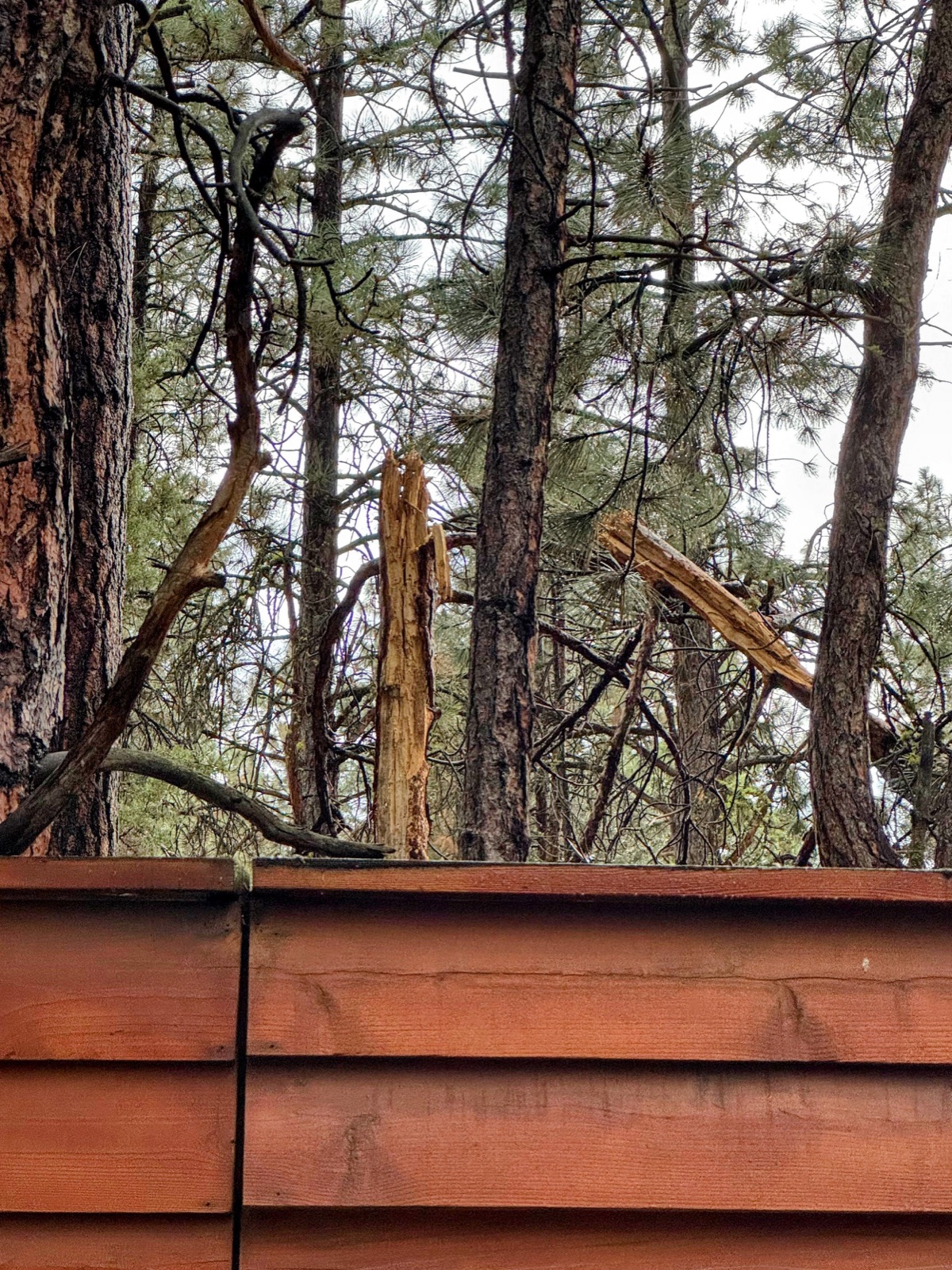
I watched lightning strike another tree, splitting it in half and leaving it fallen and helpless in the stand, as if its branches were arms to catch it. Lightning shredded the bark into shards with a swift thwack all over the ground.

 Left, middle, and right: All ponderosa pines with lightning groves from the storm.

This was an instance when a tree acted upon me, rather than me observing as if it were an inert object. I witnessed and participated in the storm’s surge through the house, which destroyed almost every appliance and made it unlivable for about seven months.

Experiences like lightning taking out my home reminded me I am a guest here, tasked with listening and respecting the forest and nature’s rhythms. I think of tree trunks as collectors of stories—what’s been there, who was it, when was it, and why. For example, trees’ stories may show blister rust, bark beetle, cancerous growth, or open sores, all health stats for an ecosystem.

Just as the thunderstorm left its mark on the trees, people too leave their signatures on the landscape. I have come across humans who carved their initials or messages into trees. Perhaps they’re wishing for impermanence, an elusive concept unless you’re a rock that can withstand time, pressure, and weather for millions of years. And even then, there’s an end point ahead.

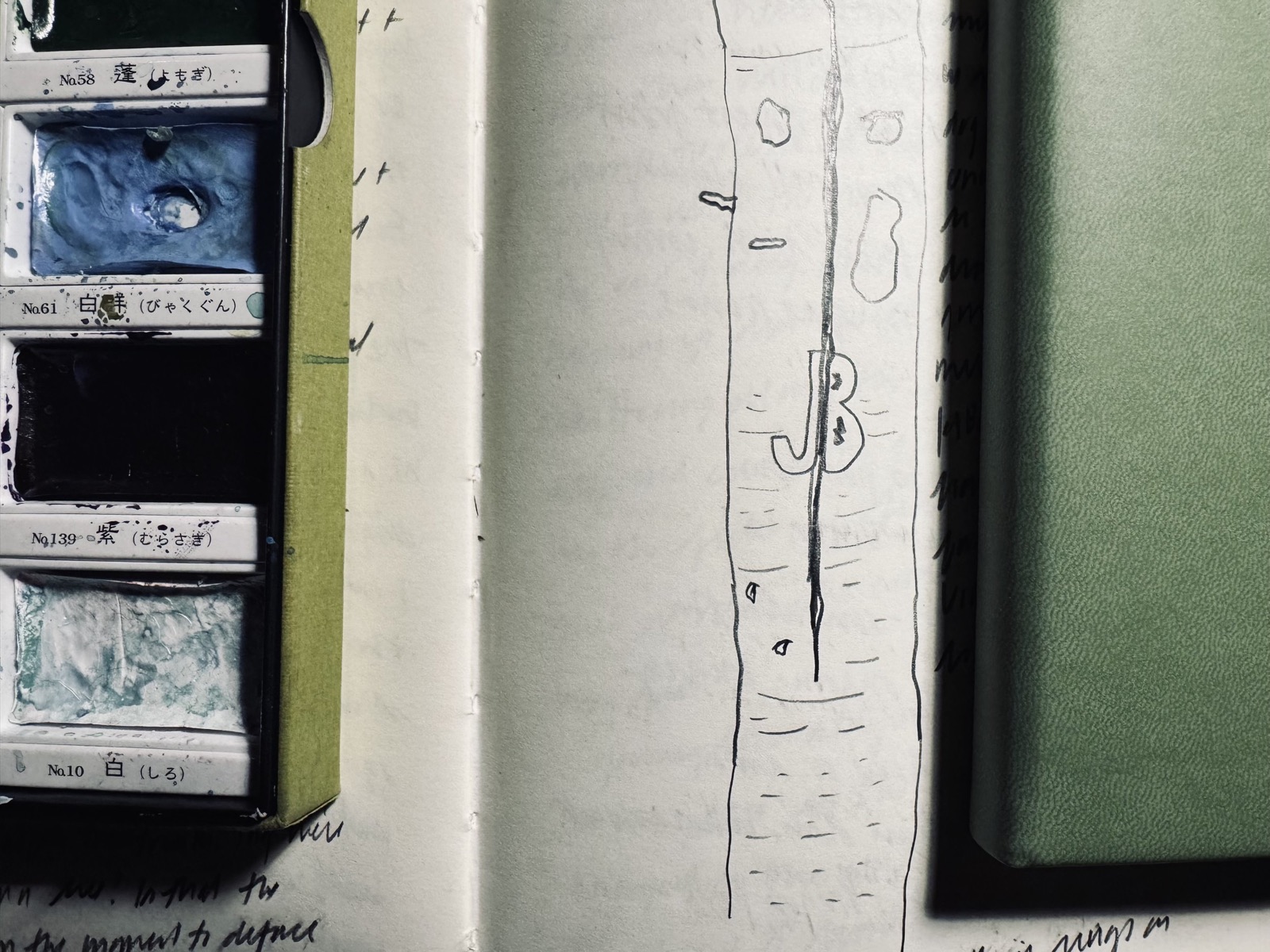
Sketch from my field notesbook while backcountry camping, with watercolor set and another watercolor journal. Someone had carved the initials J&B into a Quaking Aspen’s fissure. Uintas Moutains, Utah. 2026

People may be less likely to harm what they feel belongs to them. If we saw the planet as our own to steward, respect would follow. If you can name your environment, you’re more likely to support its needs. Creating a care plan for your space—your habitat—is one more remedy on this great planet we share.

Returning to that exploded tree, I thought about how lightning can linger in a tree unseen in its wood, creating a holdover period. When lightning hits a tree, the heat lasts milliseconds. However, a holdover period may lead to a continuing current into the heartwood or duff, smoldering for days and, if conditions are right, starting the tree on fire. And one tree fire often becomes many trees on fire when the canopy overlaps.

After the storm ended, I walked to my neighbors and told them about the struck tree. We agreed to keep an eye on it.

The next day, a chainsaw pulsed and whined, a usual familiar distant sound, ricocheting off hills, obsidian, brittlebush, junipers, and pines. But this time, it was close. They cut down the remains of that zapped tree out of caution. I watch and live, hoping for communal homeostasis in an ever-changing world.

Sources of interest:
A Match to the Heart: One Woman’s Story of Being Struck by Lightning. Gretel Ehrlich. 1994. Pantheon.

Moris, J. V., Álvarez-Álvarez, P., Conedera, M., Dorph, A., Hessilt, T. D., Hunt, H. G. P., Libonati, R., Menezes, L. S., Müller, M. M., Pérez-Invernón, F. J., Pezzatti, G. B., Pineda, N., Scholten, R. C., Veraverbeke, S., Wotton, B. M., and Ascoli, D.: A global database on holdover time of lightning-ignited wildfires, Earth Syst. Sci. Data, 15, 1151–1163, https://doi.org/10.5194/essd-15-1151-2023, 2023.

Taylor, A. R. 1969. “Lightning Effects on the Forest Complex.” Proceedings: 9th Tall Timbers Fire Ecology Conference 1969.

Pérez-Invernón, F. J., Moris, J. V., Gordillo-Vázquez, F. J., Füllekrug, M., Pezzatti, G. B., Conedera, M., Lapierre, J., & Huntrieser, H. (2023). On the Role of Continuing Currents in Lightning-Induced Fire Ignition. Journal of Geophysical Research: Atmospheres, 128(21), e2023JD038891. https://doi.org/10.1029/2023JD038891


How to Get Unstuck

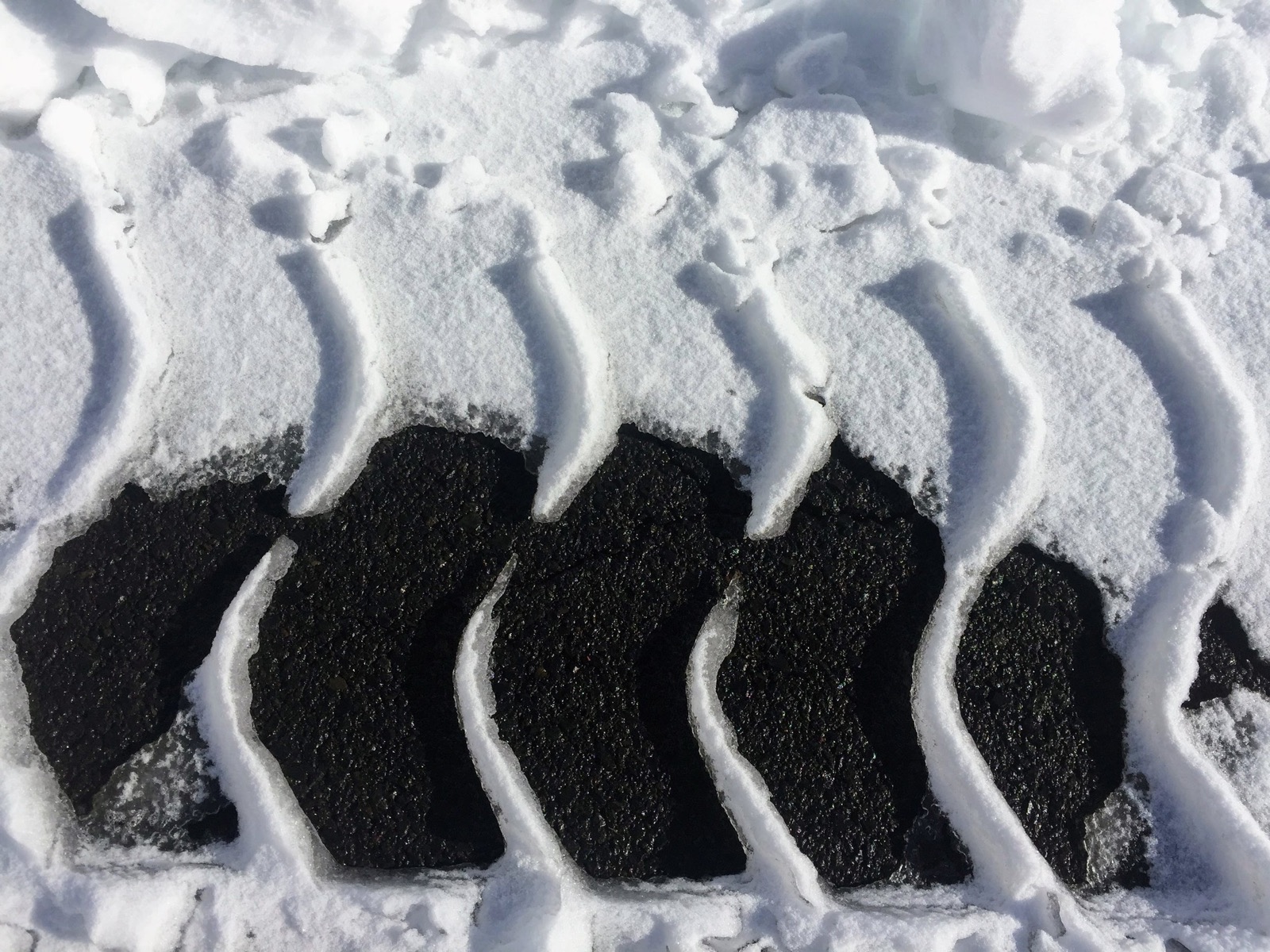
Tire tread left in snow and melting into its pattern against blacktop road. PNW | my archives

A runner I saw regularly stopped me after the sun broke. She said that our neighbor, another usual morning runner, had died in a freak summer snowstorm. While hiking, she and her partner encountered whiteout conditions at 14,000 feet, hid in a tree well, and she died.

I remember walking home, stunned, with caked sweat drying to salty crystals. She died. From summer snow. But she was so fit and a scientist. If it happened to her, it could happen to anyone.

Not long after that exchange, as I was walking my dog past the dead neighbor’s house, a woman came out of it. I waved. She stopped me, saying she was cleaning out the woman’s house, and asked if I wanted to come in, look around, and take anything. Looking at the open front door and the polished, dark wood floors, I declined. 

How do you prepare for dangers in nature? Erratic weather and unstable terrain become problematic when people intersect with them.

An Invitation to Remember

A few months ago, I attended a workshop about getting unstuck in the backcountry. Wildlife biologists in Carhartt jackets, work boots, beanies, and coffee thermoses shared their best stuck story and how they got out.  

What stuck with me (terrible but fun pun) was what a former Marine, turned wildlife officer, said. “I don’t have an unstuck story because I don’t get stuck.” The group laughed. “If I think I’m going to get stuck, I abort and turn around; it’s not worth it.” 

He advised never to underestimate the first snowdrift you see. “Turn around,” he said. “It only gets worse.” 

If in the desert, leave right before sunrise, when the ground is coldest; otherwise, your tires may sink when the ground warms. 

This past spring and summer, I used his advice in the backcountry across all kinds of terrain. This hardy group also taught me not to get into a situation you cannot get out of on your own. Self-reliance is everything in outdoor recreation. Don’t overestimate your abilities. Everything takes longer than you think. Prepare for the worst. 

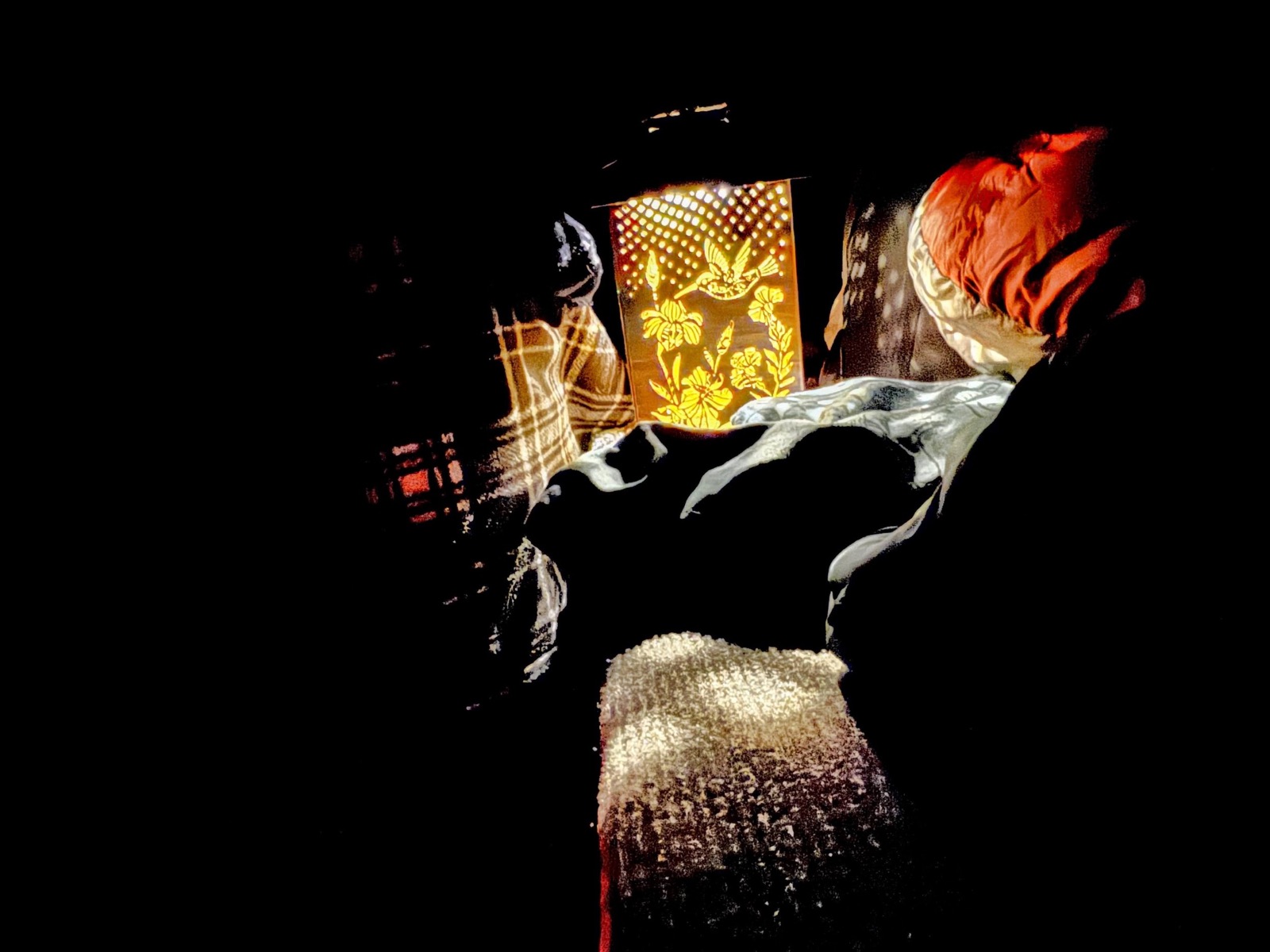
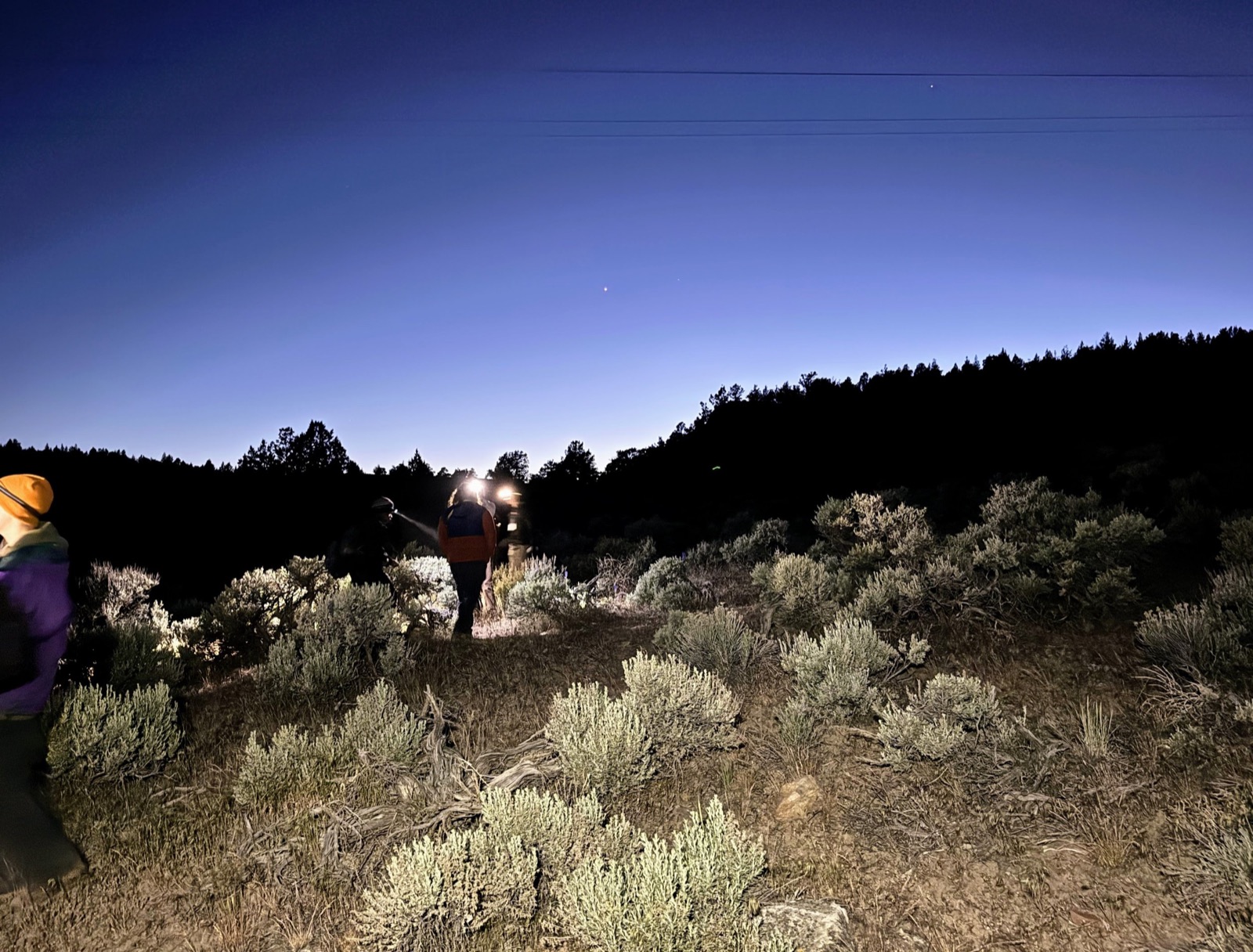
(Left) Insomnia reading light while solo camping. PNW 2026 (Right) Part of the workshop involved orienteering in the dark. My headlamp looks like something out of Tron—it has a 180-degree band of light, rather than a single focal point.

During random insomniac bouts, I read backcountry search-and-rescue narratives under the covers. These are factual squibs: “Twenty-eight-year-old male and his hiking partner got stranded by a lightning storm while in Yosemite…” I read for the lessons: what not to do, what not to repeat if I were in those situations, how people end up in bad situations. I think about my neighbor and wonder whether she studied the weather patterns days before the trip or observed clouds, wind, and animals during that deadly hike. 

Adapting Advice in the Backcountry

Before and during a backcountry trip, I watch weather patterns. I’ve called off trips before ever leaving because of impending mountain weather. But one recent spring trip to the Uintas Mountains went a little differently. First, while driving on the single-lane mountain road, my intuitive radar went off: it was deeply rutted, with small streams of water trickling through it. 

“I don’t like this road,” I said. 

“It’ll be fine,” said My Guy. 

Beginning the ascent into the Uintas Mountains, Utah. 2026

We found a dispersed spot, set up camp, ate, read, and tucked in for the night. The wind shrieked and beat the tent while it poured. The dogs were curled in tight balls against us. While awake, my brain spun out narratives: that road—the only road here--is going to be impassable or washed out. This was not relaxing or fun. 

Each day yielded periodic adventures: waking to the sounds of porcupines fighting, hearing two stags fall in the 60 mph winds, and eight hours of lightning that forced us to stay in the rig. I watched the satellite’s weather patterns and didn’t like what I saw: heavy snow and ice were coming our way. The dismal weather would land at 5 PM. I told our group to cut the trip short; we had to be gone by three. 

We took down our camp and headed back down the mountain. The sky got darker with charcoal gray and navy clouds. As we made our way down, we threaded past large pick-up trucks towing immense fifth-wheel trailers going up the mountain pass.

Did these people not read the imminent weather report?  The problem is that the weather where people start—often at lower elevations where it's completely normal—is very different at 10,000- 13,000 feet elevation. But I get it: you’ve had a weekend trip planned, those are your days off, all the gear is packed, so don’t let weather sideline your plans. 

Risk, Reward, and Decision-Making

When we got to Salt Lake City that evening, we all showered, changed into the remaining clean clothes, and went to a popular pizzeria. The rain poured against the restaurant’s windows, and we were layered in fleece. “Imagine the snow falling up there now,” I said. 

How we calculate risks varies among us. Some push the edge, pull back, or don't go anywhere at all. 

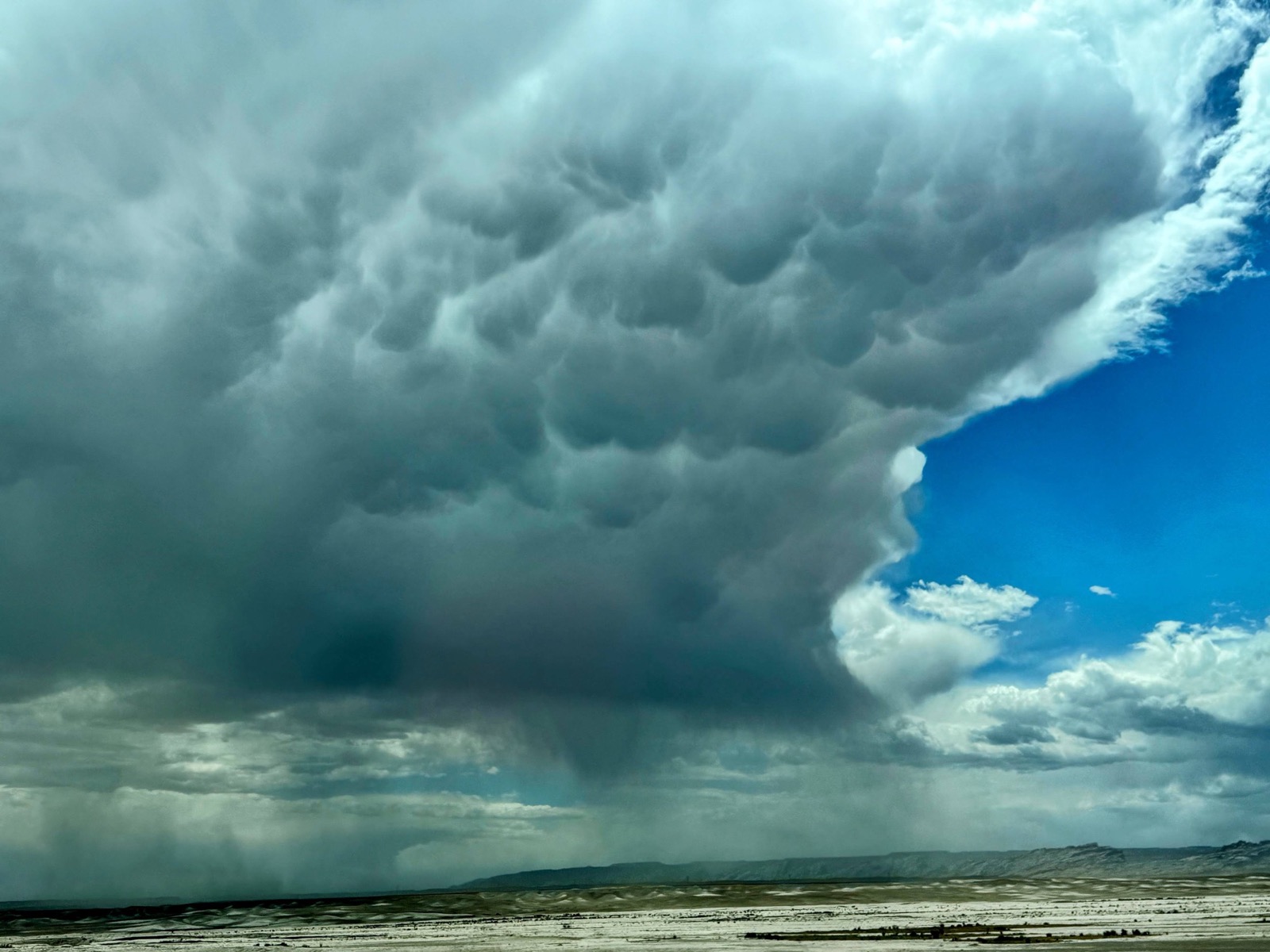
Classic Utah high desert landscape with weather front. 2026.

In case you’re interested in the science and preparation behind wilderness travel, consider these resources:

Wilderness Risk Assessment & Decision-Making

Risk Management for Outdoor Leaders | National Outdoor Leadership School (NOLS)

Mountain Weather Patterns & Backcountry Forecasting

Mountain Weather Forecast
National Weather Service

 Rotach, M. W., and Coauthors, 2022: A Collaborative Effort to Better Understand, Measure, and Model Atmospheric Exchange Processes over Mountains. Bull. Amer. Meteor. Soc., 103, E1282–E1295, https://doi.org/10.1175/BAMS-D-21-0232.1.

Human Factors and Cognitive Bias in the Outdoors

Human Factor, The Avalanche Triangle | Avalanche.org

Role of Heuristics in Avalanche Education. Center for Health Decision Science, Harvard T.H. Chan School of Public Health 2021.

Outdoor Accident Statistics and Case Studies

Incident Data from National Park Service | NPS

Wilderness Medicine and Preparedness

Wilderness First Aid: What You Need to Know |REI  

When the Sky Brings Ash: Reflections from the Farm Table

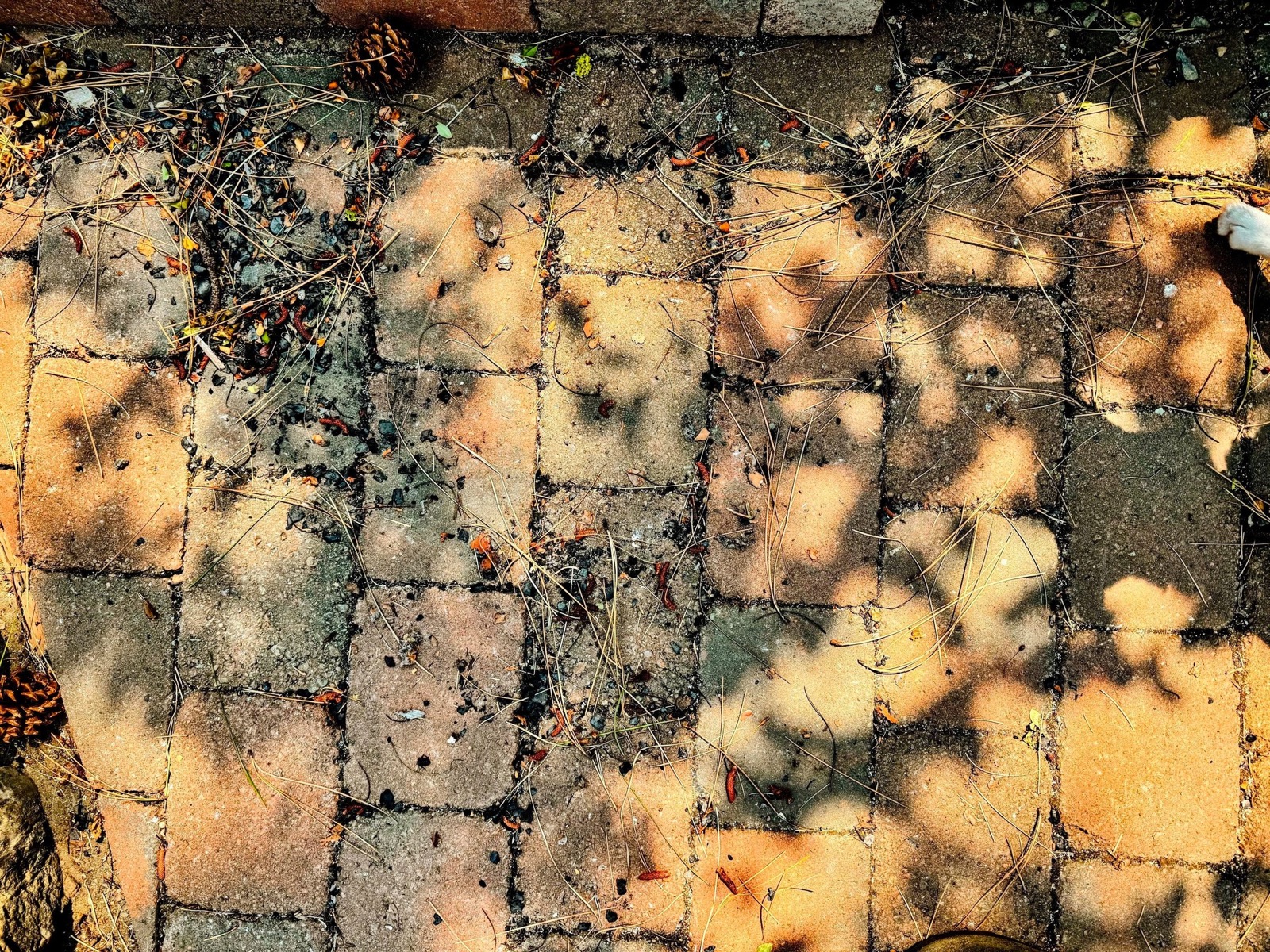
Wildfire ash scattered along the brick walkway. PNW | 2026

The other day, I worked outside at my long farm table, a space used for endless family meals where we pass bowls, plates, and wine to one another under the ponderosa canopy. I noticed the sky’s ashy dandruff floating around me. Their little particle charges were enough to glom onto the laptop screen and swirl around my shoulders.

I looked at the AirNow app, and the AQI was under 100. It didn’t smell like campfire, so wildfire smoke from Canada to the Pacific Northwest still circulated and fell.

How long will smoke and ash continue, I wondered, and who is studying this? Such questions led me to current peer-reviewed literature on wildfire atmospheric transmission in fire science.

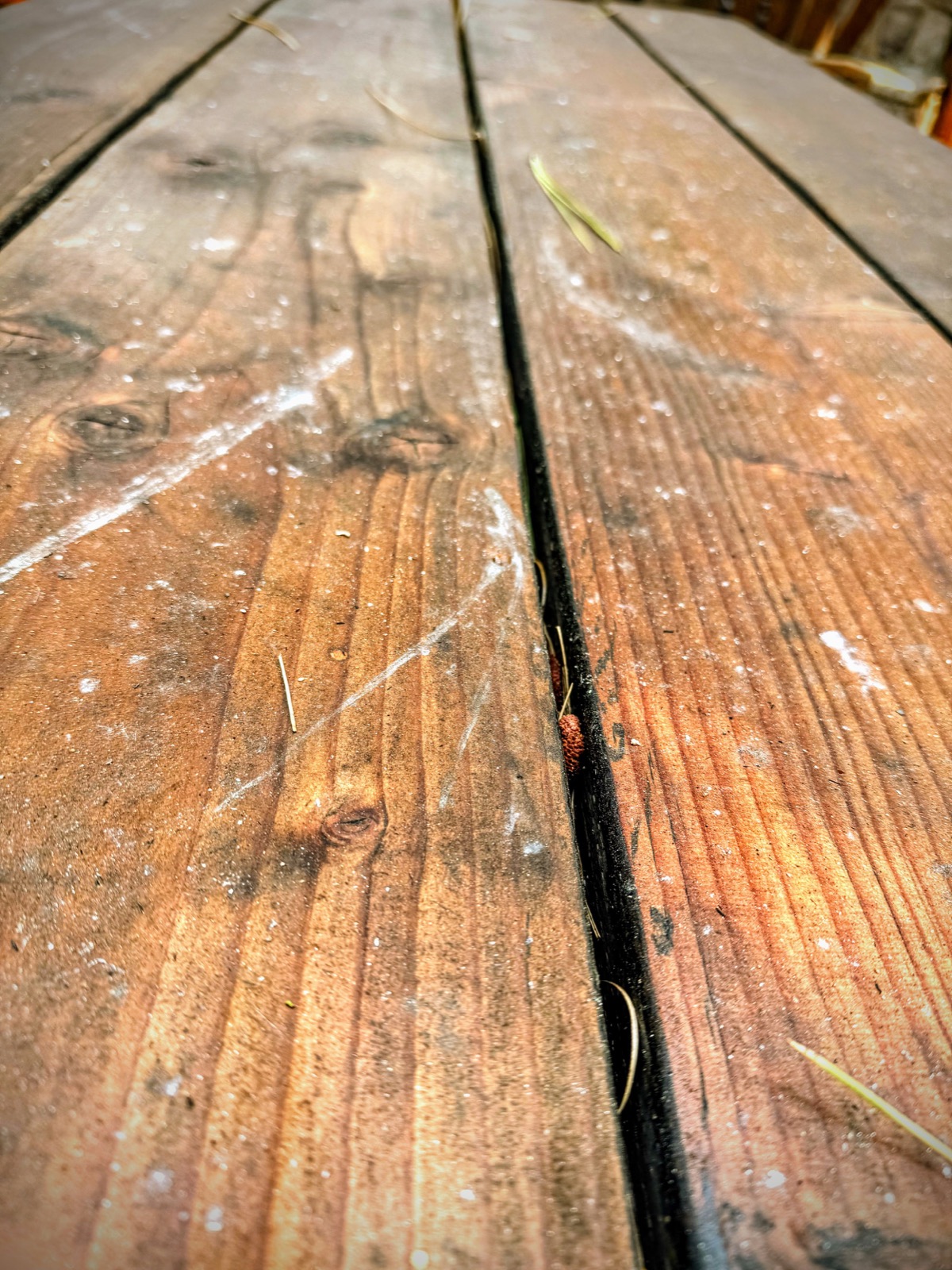
Wildfire ash on the farm table. PNW | 2026.

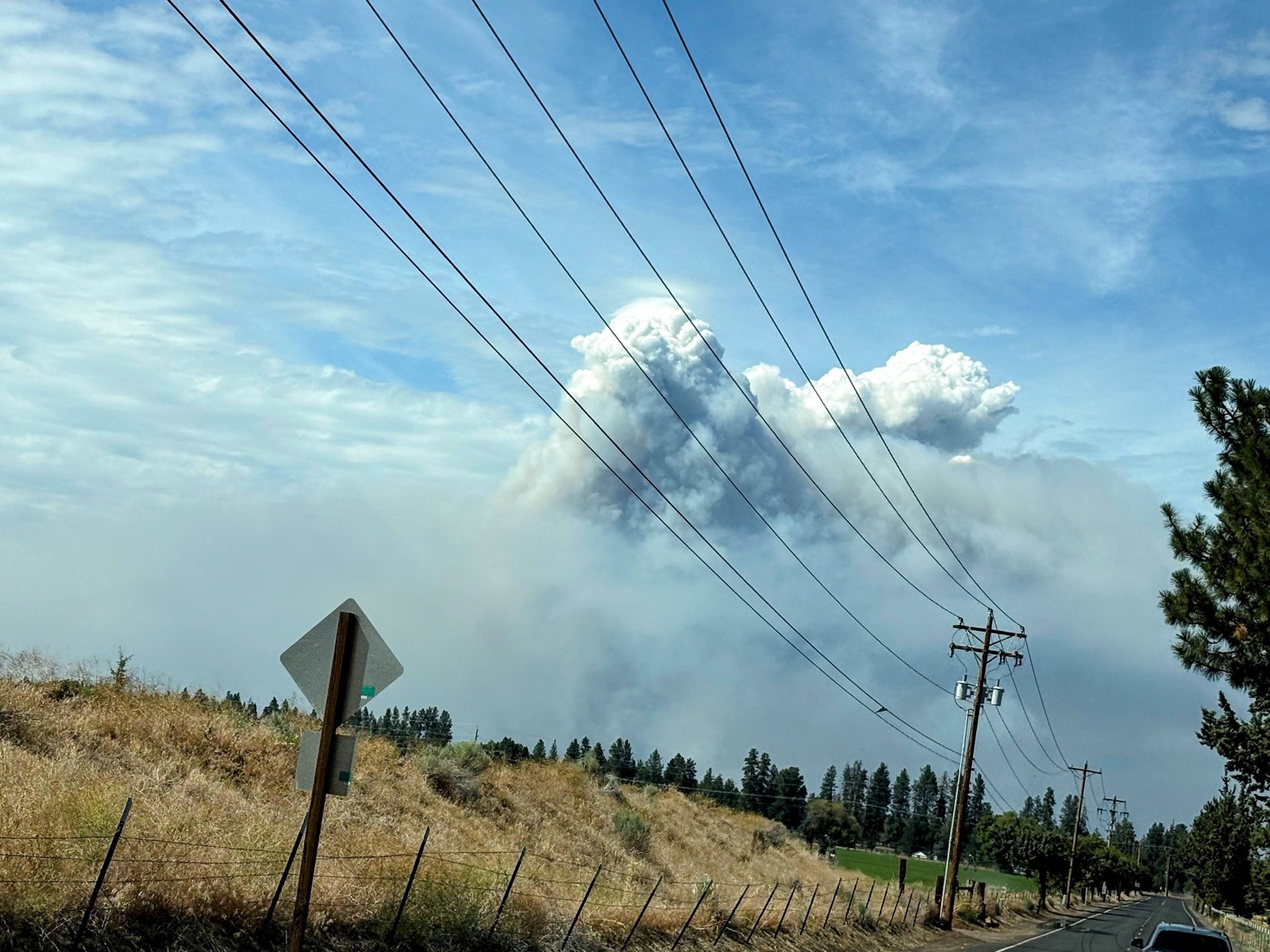
The local wildfire created pyrocumulus clouds, with intense heat ricocheting in the pyroconvective plume to form a firestorm, complete with its own lightning. The plume's height and the wind’s speed and direction worked together to loft ash and debris high into the atmosphere, allowing them to travel long distances before falling back to the ground. Transport distance can be 5 to 20 km, or roughly 3 to 12.4 miles from its origin.

The ash is chemically encoded, its composition is a complex mixture. Wildfire ash contains plant nutrients (e.g., calcium, potassium, and magnesium). It can also carry toxic metals (e.g. lead).

The Scordo et al (2026) paper stated that “deposition of about 10g/m2 across 1 square kilometer translates into ten tons of ash and pyrogenic material entering soils, surface waters, and vegetation in just over 2 weeks.”  Think of that kind of continuous deposit over the summer weeks at a time while a wildfire rushes through the landscape before containment and lands all over other ecosystems.  

Ash settles on the ground, altering soil chemistry and growth patterns. It washes into bodies of water, where nutrients or toxins harm aquatic life. Airborne, the particulates reduce air quality, making it dangerous for people and animals to breathe, sometimes for days or weeks after the flames die. Whenever wildfire smoke hits an atmospheric inversion, the air hangs low and yellow-to-orange; the birdsong stops, windows close, and people tuck away.

We breathe in the burnt forests and grasses, and swim in its sedimentation. In fire ecology, periodic fires play a crucial role in nutrient cycling and shaping plant communities. Wherever we live, work, or play, ash records our planet’s fire history, marking its shifting balance between destruction and regeneration.

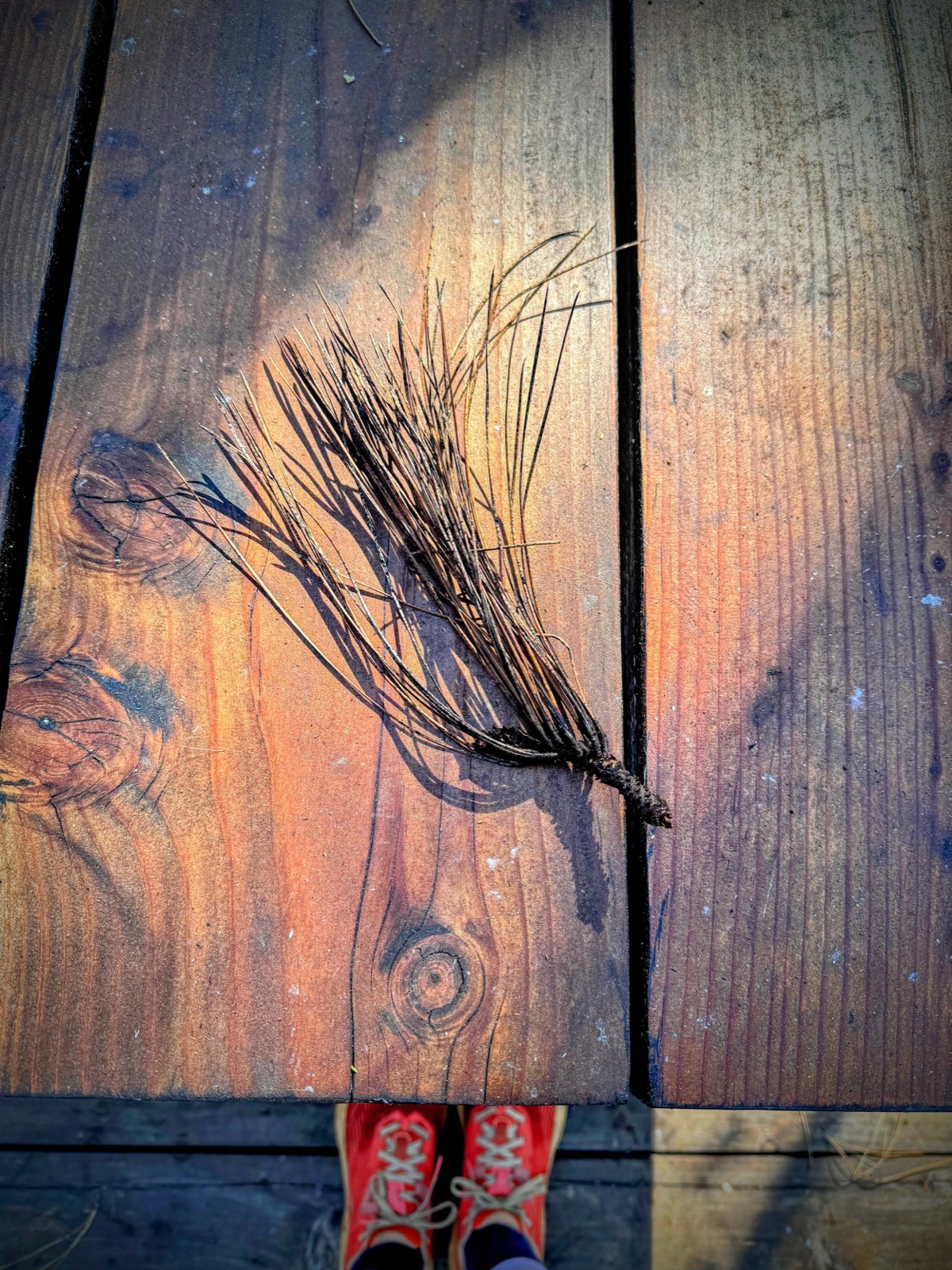
While out with the dogs, I came across a charred needle cluster lying on a patch of my grass. I picked it up. The black-to-golden gradient of the charred needles told me this didn't fall off the tree but was scorched and launched as a firebrand. The dark needles snapped off with a brittle crack. Darker on one side, probably to the heat source, and lighter on the other side does not indicate equal decay, as if it had fallen off a tree above me. I have lived here long enough to recognize this scorched specimen as an anomaly that arrived here by the gusty wind.
Self-portrait with firebrand placed on farm table. PNW | 2026

Peer-reviewed articles I consulted:

Paul MJ, LeDuc SD, Boaggio K, Herrick JD, Kaylor SD, Lassiter MG, Nolte CG, Rice RB. Effects of Air Pollutants from Wildfires on Downwind Ecosystems: Observations, Knowledge Gaps, and Questions for Assessing Risk. Environ Sci Technol. 2023 Oct 10;57(40):14787-14796. https://doi.org/10.1021/acs.est.2c09061

Sanchez-Garcia, C., Santín, C., Neris, J., Sigmund, G., Otero, X.L., Manley, J., Gonzalez-Rodriguez, G., Belcher, C., Cerdá, A., Marcotte, A.L., Murphy, S.F., Rhoades, C., Sheridan, G.J., Strydom, T., Robichaud, P.R., and Doerr, S.H., 2023, Chemical characteristics of wildfire ash across the globe and their environmental and socio-economic implications: Environment International, v. 178, 108065, 16 p., https://doi.org/10.1016/j.envint.2023.108065.

Scordo, F., Bavandpour, M., Or, D. et al. Downwind deposition of pyrogenic particles from wildfire plumes. Commun Earth Environ 7, 487 (2026). https://doi.org/10.1038/s43247-026-03660-3

Displaced by Uncertainty

“What are you going to do if your house burns down?” my boss asked. I let out an audible sigh. “Campfire Christmas, I guess.”  I was on a Teams call and unsure what my face said.

Mother texted this photo, while enroute to my house when the wildland fire broke out. July 2026.

I channeled the Buddhist insight of non-attachment. Let.Go.Of.Things. Let go of the outcome.  

The nearby wildland fire started from one of the 14,000 lightning strikes that hit the PNW in mid-July.  

But here’s the thing: we left home before the wildland fire started. We brought only minimal supplies for a long road trip, with the intention of returning home.

There were things left to do before evacuating the property to make it a defensible space for the firefighters—everything else we had done in the spring and summer to make the home firewise.

I texted Dad with the final list: unravel and lay out the hoses around the property, take down the hammocks, leave on lights inside and out, and cross your fingers. Being a first responder in his early life, he called with his matter-of-fact checklist completed in addition to other items he did.  

Being a camper and outdoor enthusiast, I understand what I can live with and what I can live without. The list of needs is short when I look around and see all the gadgets, clothes, and stuff that pulsates people’s need for new, improved, seasonal merchandise. If anything, I am inspired by people who live a minimalist life.  
 
Family and friends sent photos as updates while displaced, living out of our camping tent/gear and with extended family’s gracious offerings, including their splendid Breville coffee espresso maker. I went to the local Target, stocked up on Cocojune yogurt paired with homemade granola bars and a local roaster’s whole coffee beans. I dug into a new book: Rick McIntyre’s The Rise of Wolf 8.

My son texted updates, tracking with precision the aerial assaults from FlightRadar24: the number of helicopters, airplanes, and the CalFire’s DC-10 Air Tanker brought in from Sacramento.

He calculated how many minutes it took for an aerial assault to launch, drop, and reload. He studied the flight patterns overlaid with Watch Duty maps, ArcGIS maps, and Google Maps. He was in his flow.

Over 1,000 men and women from ground crews to aerial assaults hit the wildland fire and demanded that residents get the hell out of the area.

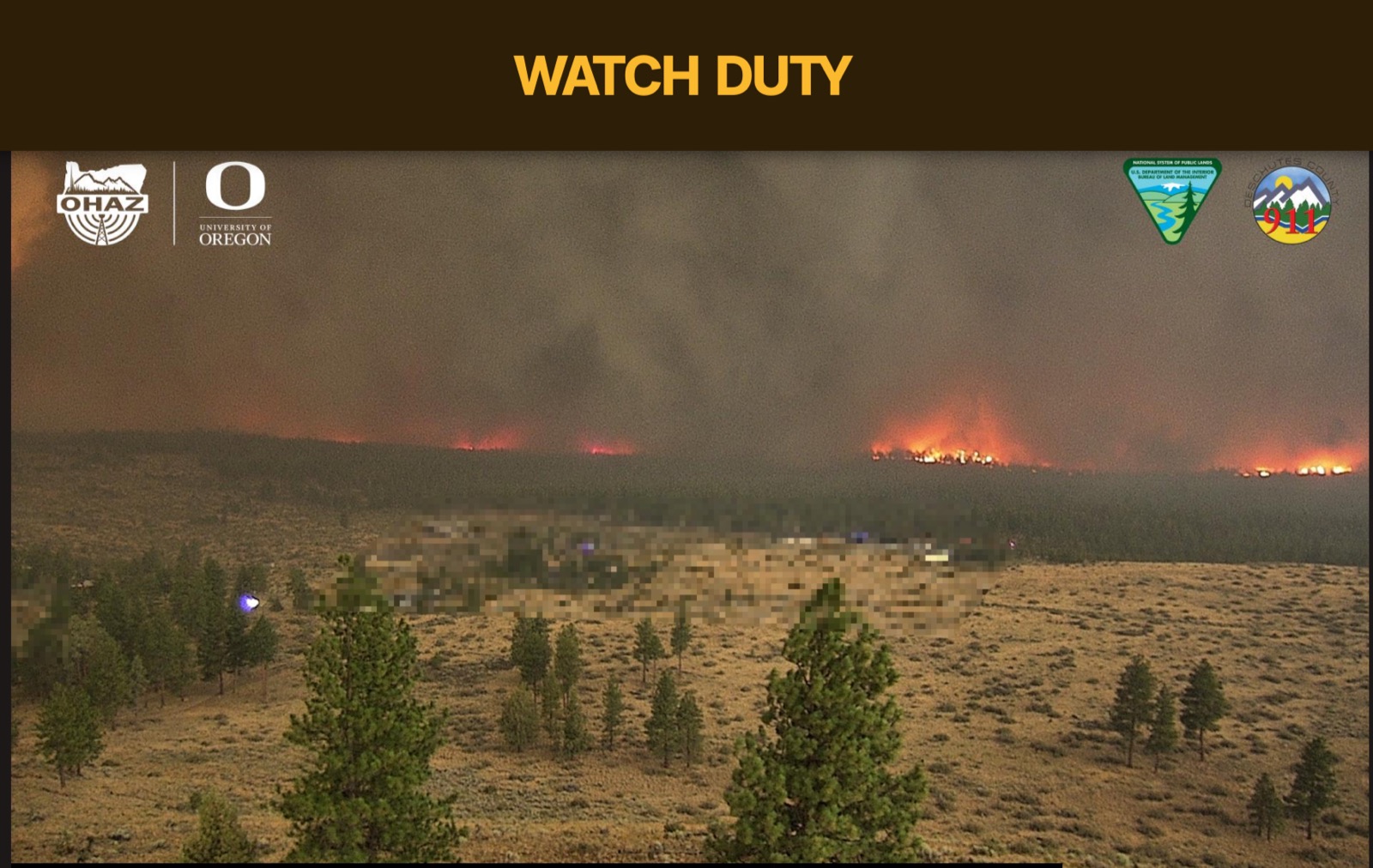
My son texted me the fire lookout camera view. “2 National Guard Blackhawks keep dropping by our house.” “ They drop every five minutes or less.” “Helicopters are dropping on your trails rn, mom.”

Much of July became about seeking higher elevations to avoid heat domes, enjoying an outdoor shower from a spritzing water bottle, and listening for wildlife at camp.  

Now that the wildland fire is contained and we are allowed to return home, I am thankful for what still stands. While driving home from the grocery store, I passed a light green wildland firefighter rig. The driver and I waved at each other.

Homemade signs line the roads, thanking the firefighters, our true heroes who work on non-stop schedules in dangerous conditions and strive to protect the forest and structures..

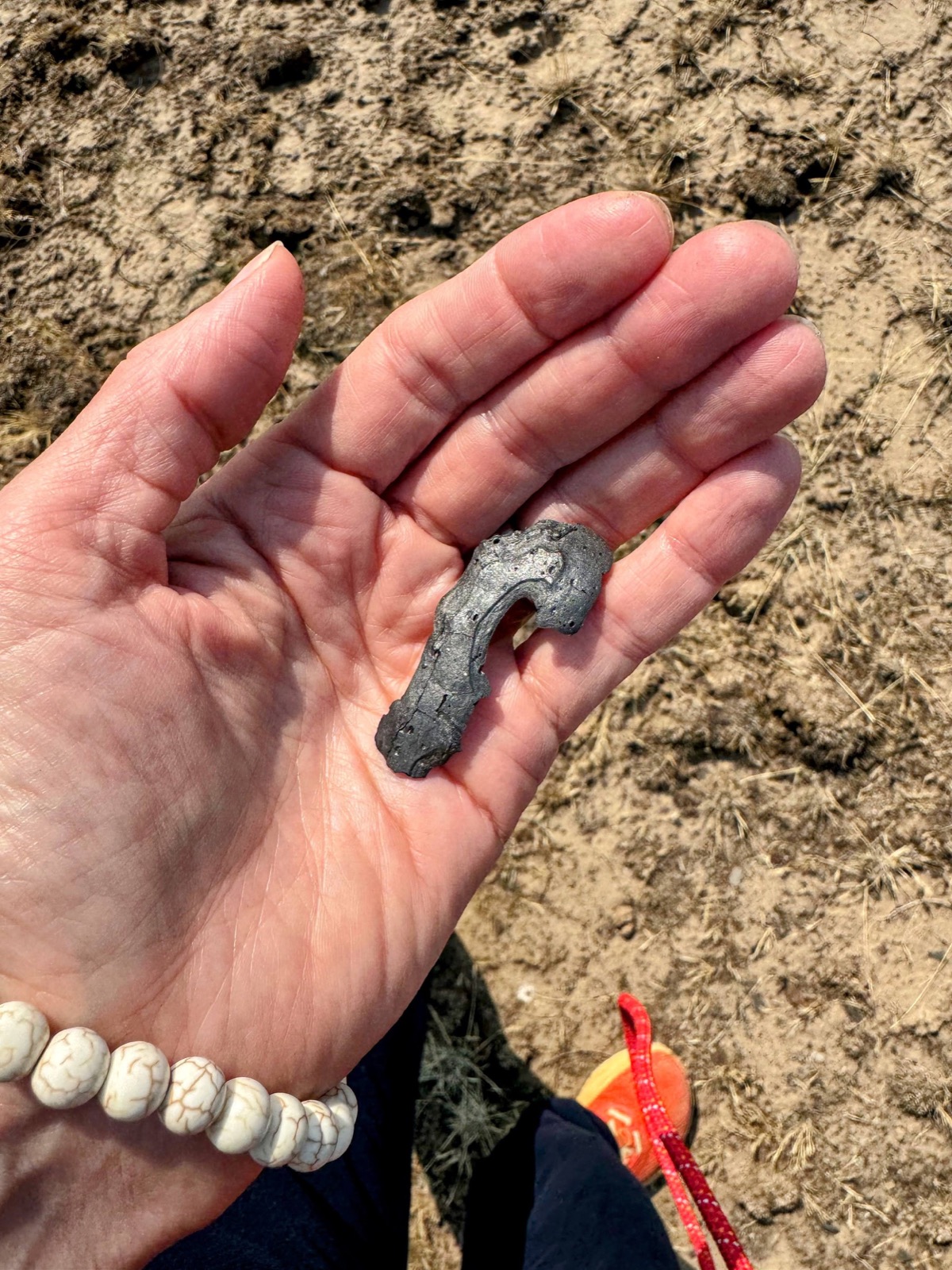
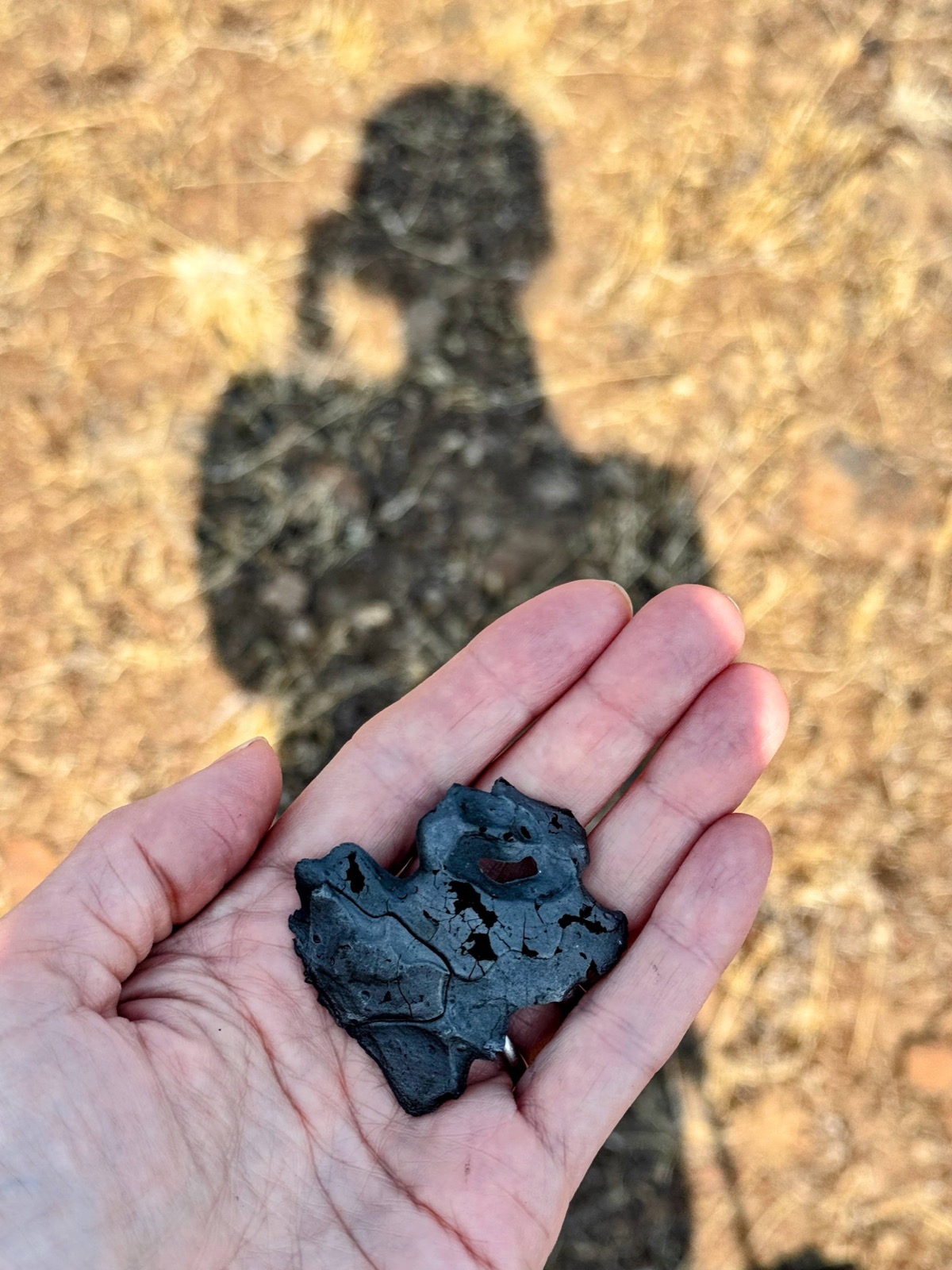
This afternoon the dogs and I walked to inspect the property. I came across firebrand, debris within a short-range band of the fallout. Thick, corky, spongy ponderosa pine bark plates were skeletonized and scattered. It’s very cool how the plate’s carbon lattice retains the original structural framework of the bark even after all the combustible material is gone. Its texture reminded me of a light-as-air meringue cookie.    

Within the blast radius: I am holding two different ponderosa pine plate’s carbon lattice that retained the original structural framework of the bark. l August 2026


Knowing the fire-adapted evolution of the ponderosa pines, I know they will thrive again into a dense forest in 30 years. What’s a little more waiting to see the trails come back to life? What’s another forest project to show you all how a forest comes back to life? Stay tuned, as I study its death and rebirth.


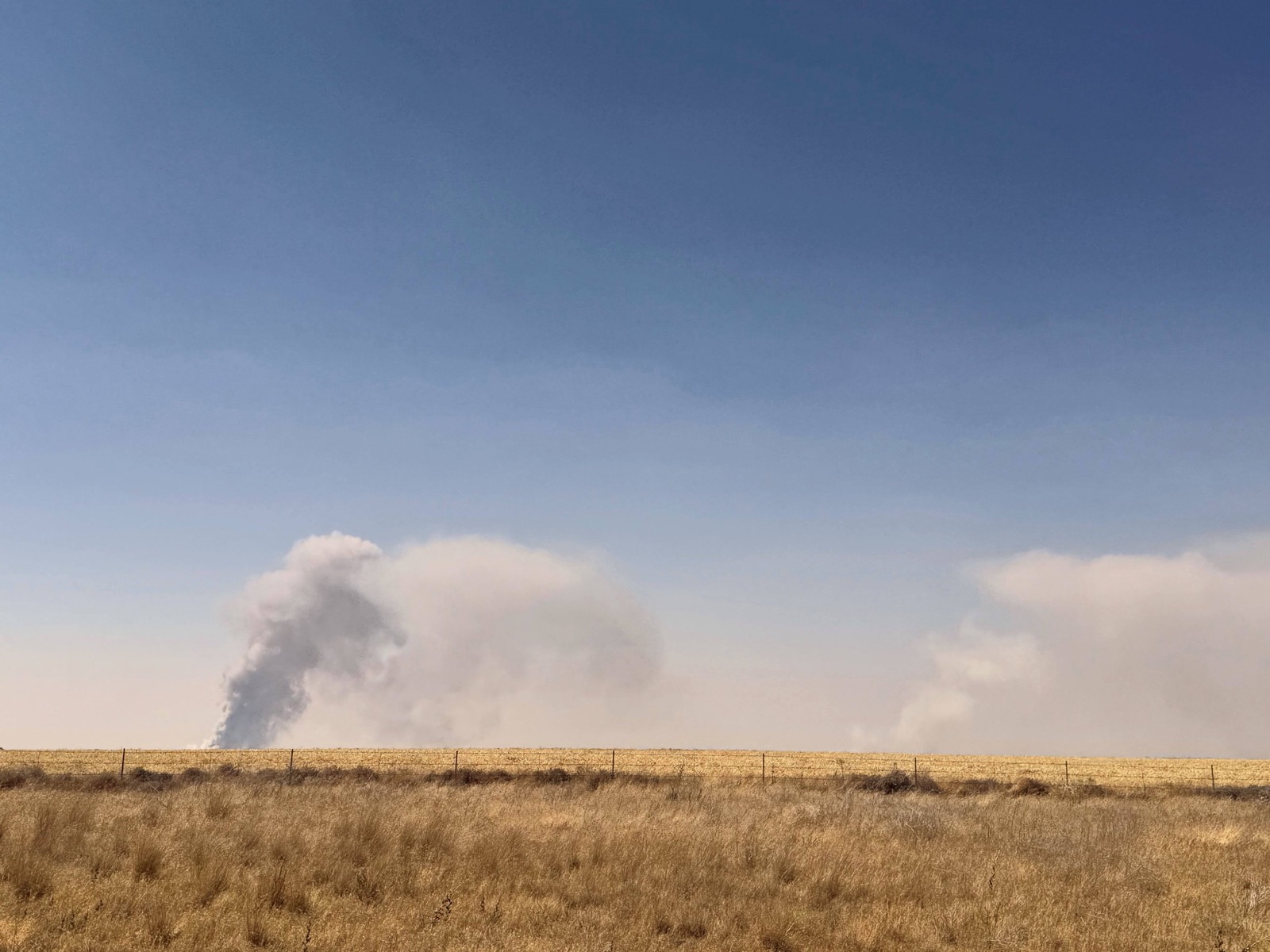
With climate change, especially the increase in Red Flag Warnings, the wildland fires move fast with gusty winds, low humidity, and drought conditions. | Driving in eastern Washington, south of Spokane. August 2026.
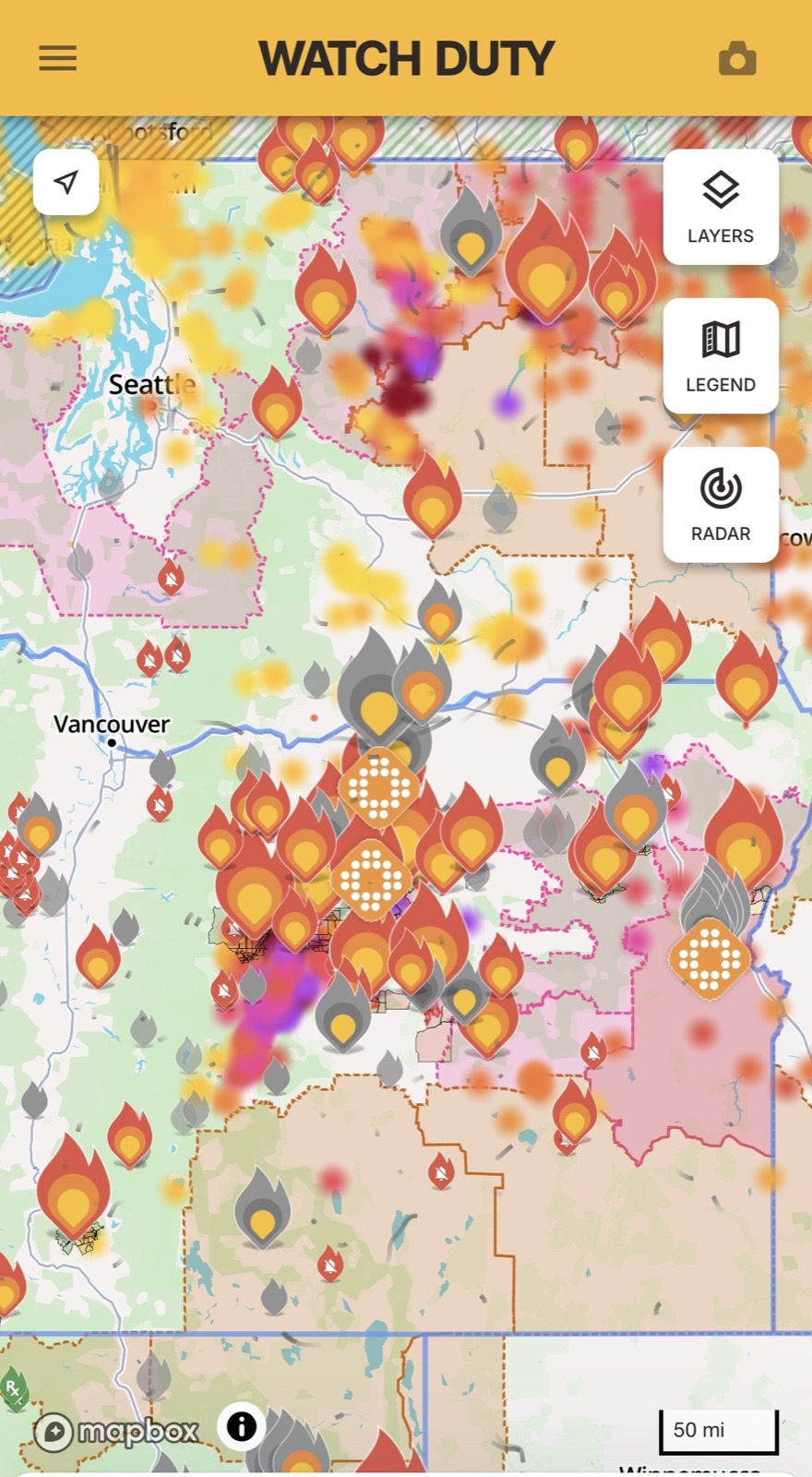
Watch Duty map shows active and inactive wildland fires in the PNW. A snapshot in real-time of the PNW in summer. Wildland firefighters are the heros protecting our forests, grasslands, and structures. l. July 2026

Juniper Woodland Series: Part 2 – Looking Out and Up for Weirdness

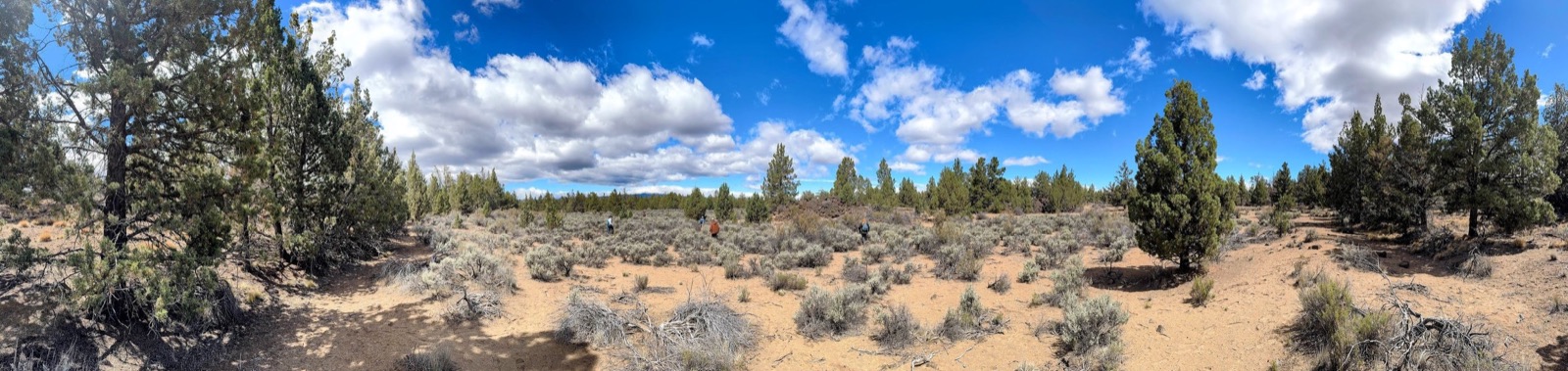
Panoramic of the old-growth juniper woodland I observed on a private preserve. Central Oregon. 2026

Looking up is a game-changer in an old-growth woodland. It’s like going from grayscale to full spectrum with a single head tilt.

The land expresses itself through what it grows, what lives there, and what we take from it. Today, my only task was to observe this 40-acre preserve with a few others and a forester from Oregon State University. The woodlands of this juniper old-growth private preserve showed no disturbance history: no visible lightning or wildfire scars, untrammeled native grasses, and no invasive species (i.e., cheatgrass).

I. A Tree Unlike Any Other

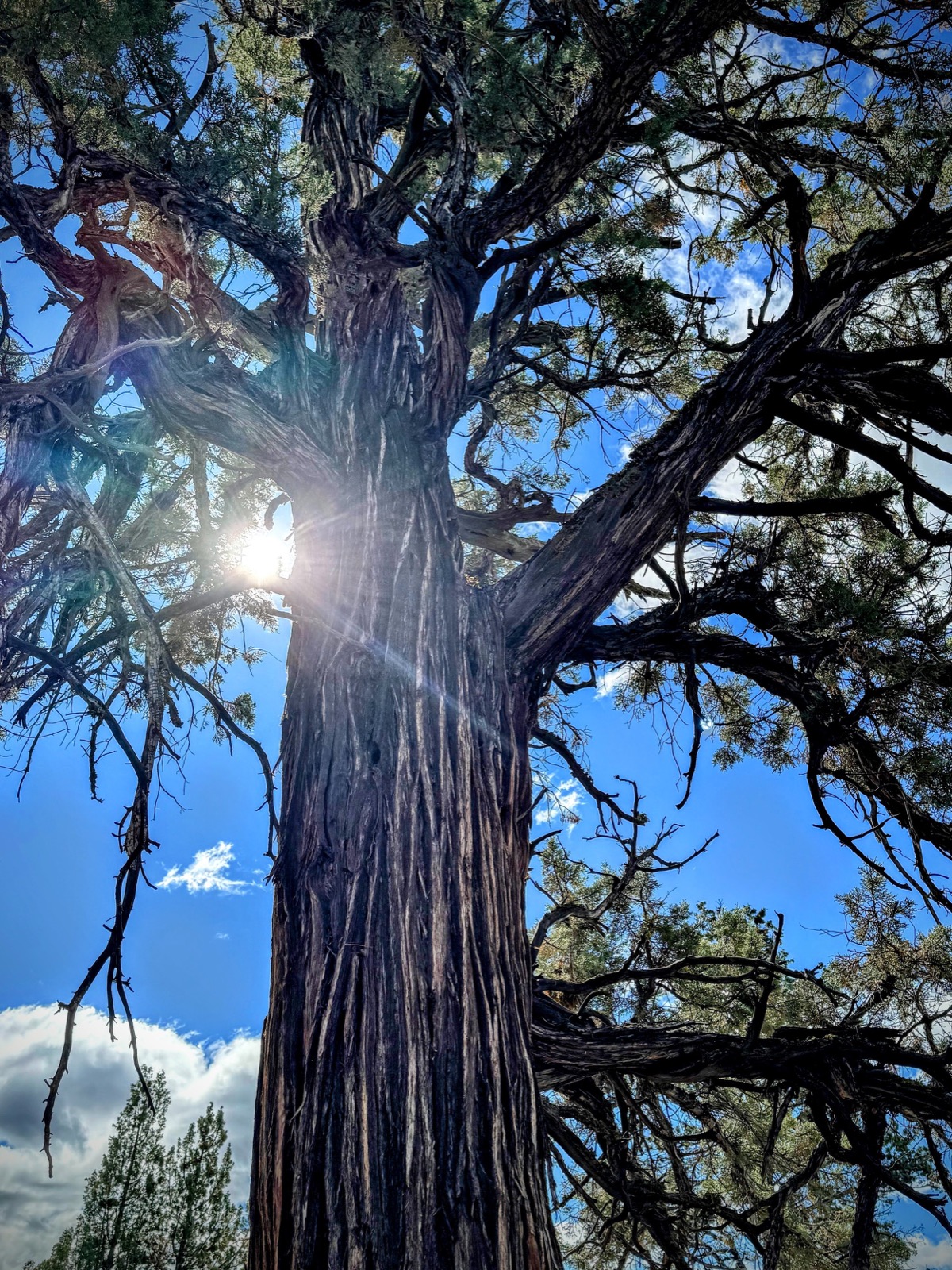
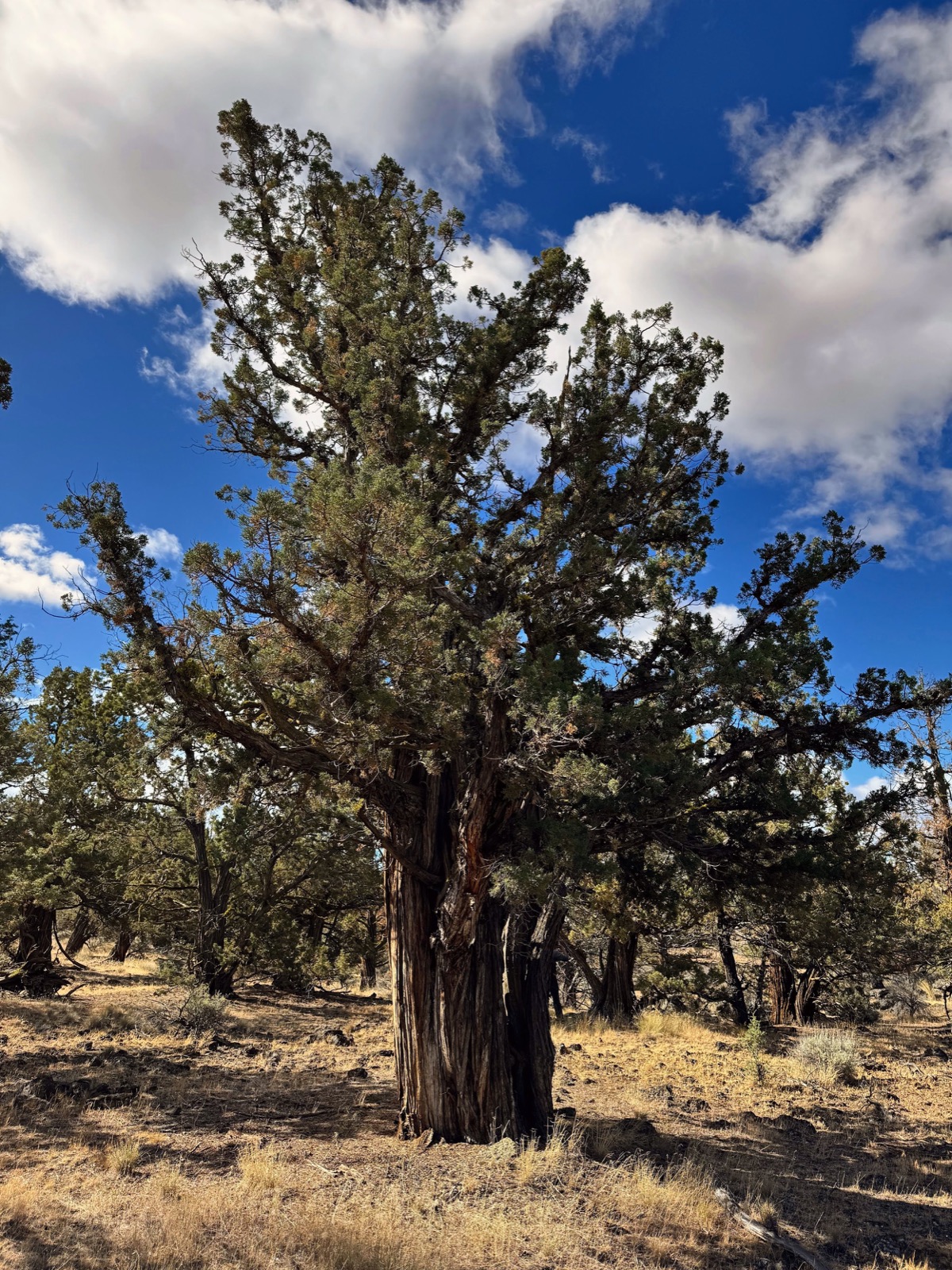
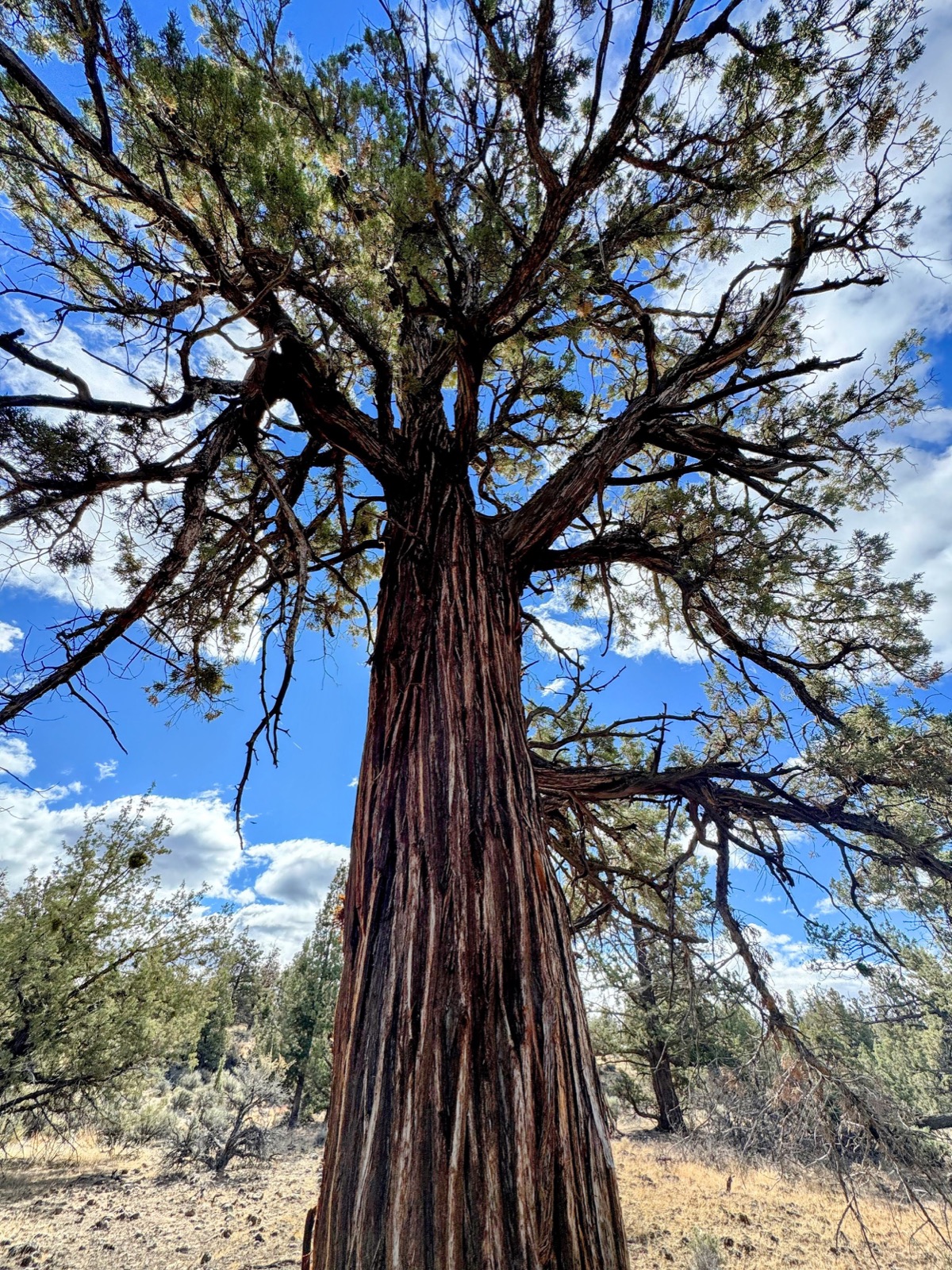
The old-growth western juniper is an oddball among us, in the most endearing way. If Oregon’s big city slogan is “Keep Portland Weird,” then the junipers (Juniperus occidentalis) would be “Keep Junipers Wonky.” Unlike most trees, their age isn’t measured by height, but by their gnarly, twisting trunks and asymmetrical canopy shapes—the weirder, the older. Sometimes their branches resemble a Medusa-inspired wig.

 Centuries of ill-advised factors like wind, drought, bark beetle, fires, and lightning wipe out many forests, but junipers lean into the disarray. They’re like, Yasss, we love drought and chaos; this is our home! They are the “get comfortable with discomfort” species in a semiarid ecosystem.

Caption: left to right - old-growth junipers (approximately 700 years old), as evidenced by (1) gnarly, asymmetrical canopy; (2) wolf lichen, and (3) furrowed, twisted, striated reddish bark.

——

II. Survival Strategies

Their slow accumulation over centuries isn’t just about survival. They thrive in places where other trees simply can’t make it.

The older juniper’s bark texture is shreddy like brisket before it lands on a bun, and its color ranges from gray to cinnamon. Twisted branches ward off wind damage, and their seal-don’t-heal ability protects living wood from dead sections in the harshest conditions. It’s not uncommon to see deadwood and live wood coexisting on the same trunk—this is a snag-with-a-pulse. These stress responses benefit junipers and the wildlife that make homes in pocket rot.

 Most of the old growth around us was 500-800 years old. For perspective, the USA is just celebrating its 250-year anniversary in 2026—happy birthday! Junipers have the oddities of wolf lichen, an arresting chartreuse shrubby tuft of bright color that’s metabolically alive on a silvery gray branch that is dead. The ability to be alive and dead, based on its internal hydraulic system, is known as juniper cavitation. Basically, the vascular system reroutes water around the dead parts to its thriving parts.

Sadly, junipers are vastly understudied because they haven’t been commercially viable, so few research dollars are invested in them. Their slow-growth accumulation produces dense wood that would probably break an increment borer if someone attempted a dendrological study.

III. A Living Legacy

In any region of the world, human development for humans creates a problem. “We” are not the only ones living here. Thankfully, some humans want to do the right thing and leave some land alone—wild in its own way—for future generations to observe and study. That is why I spent time on this toenail-sized piece of land, a private preserve surrounded by an expansive swath of developed, owned, and controlled parcels. On this private preserve were old-growth junipers, a species highly politicized as an elder or encroacher post-settlement (i.e., white folks seizing the land from Indigenous peoples).

Junipers, native to Oregon, have been around for thousands of years. The oldest is 1,600 years old, east of where I stood. They're an opportunistic species, however, pollinated by the wind and birds; they monopolize resources in an arid, rocky landscape at a certain elevation. They guzzle groundwater and hog drizzle with their canopy, so nothing grows below them. Land managers in cattle ranching disdain them because they use groundwater that native vegetation needs. Wildland firefighters frown upon junipers because their volatile oils burn hot and fiercely, making a wildland fire hotter and angrier. The Firewise neighborhoods encourage homeowners to cut down junipers to help raise groundwater levels.

 They are a nuisance unless deemed old-growth (200-900 years old) or new old-growth (around 200 years old). The question is whether to leave the new old-growth or remove it; the forester said it was hotly contested among natural resources personnel. What we know is that they could be here longer than many more generations of us. They thrive in soil that barely qualifies as such.

BONUS No. 01: A trail run cool finding of mine
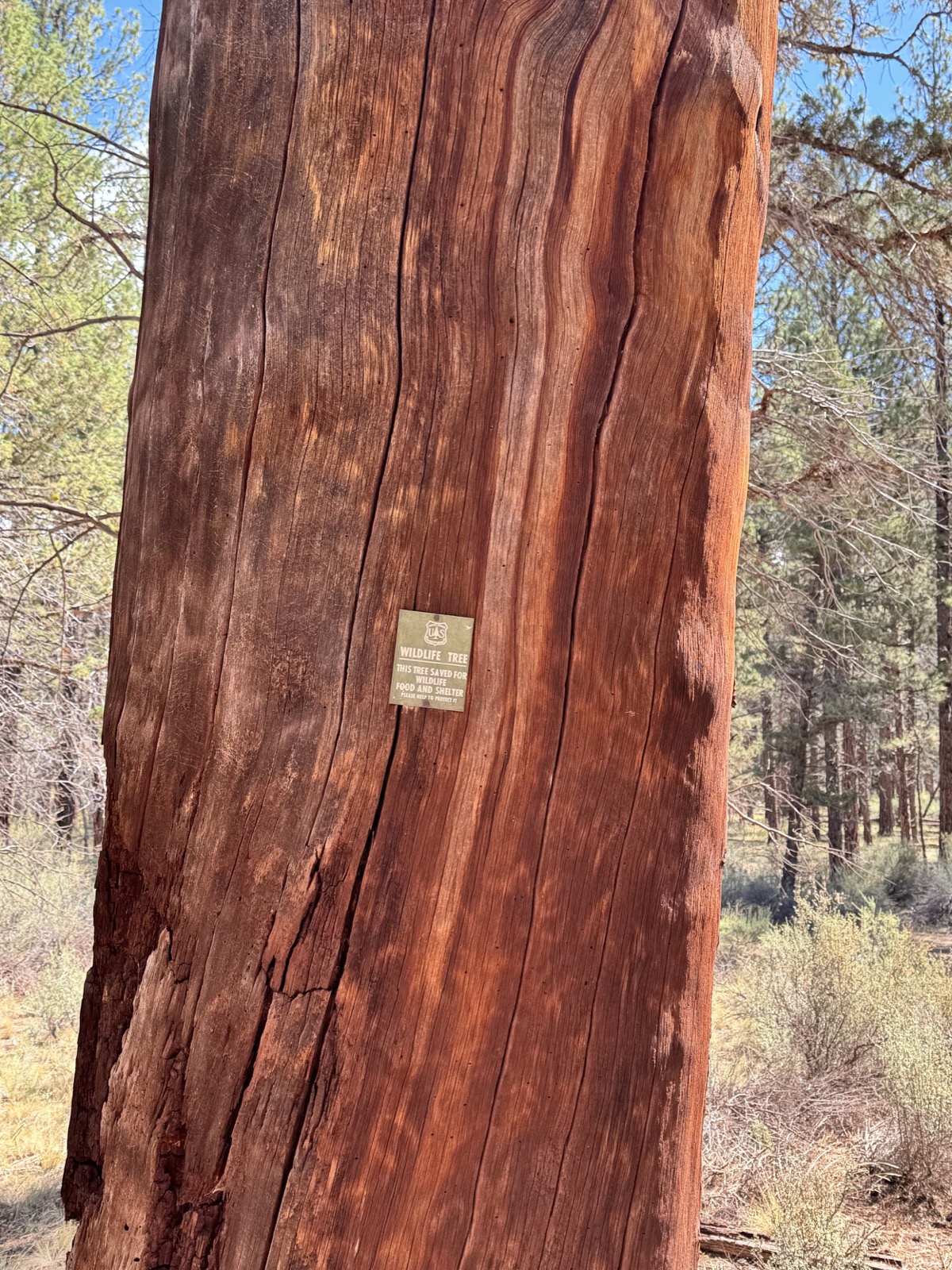
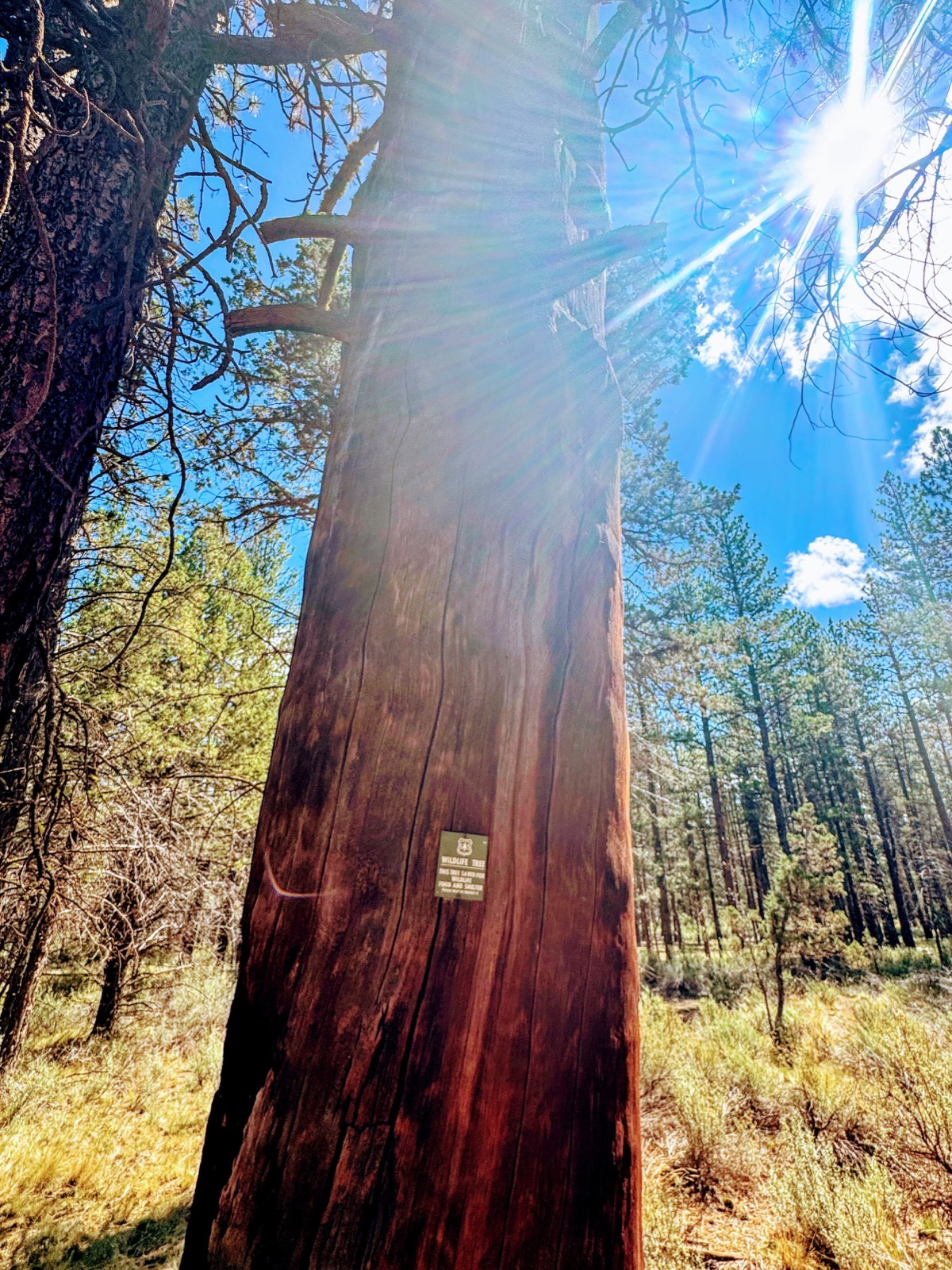
While trail running deep in a mixed conifer forest, this USFS Wildlife Tree tag stopped me (see photos below). A forester deliberately decided to retain this juniper during whatever management activity occurred in this area. It adds immense value to the ecosystem, rather than removing it. It’s a giant beauty that’s probably 900 years old.

Caption: The US Forest Service designates certain snags and declining trees with these Wildlife Tree tags rather than removing them, precisely because standing dead and dying juniper provides irreplaceable habitat.

—-
BONUS NO. 02: Scholarly literature on junipers!
- Echohydrology study - Camp Creek Paired Watershed Study OSU
- Peer reviewed: Management of the Western Junipers

Juniper Woodland Series: Part 1 - Looking Down

I - Lunar-like
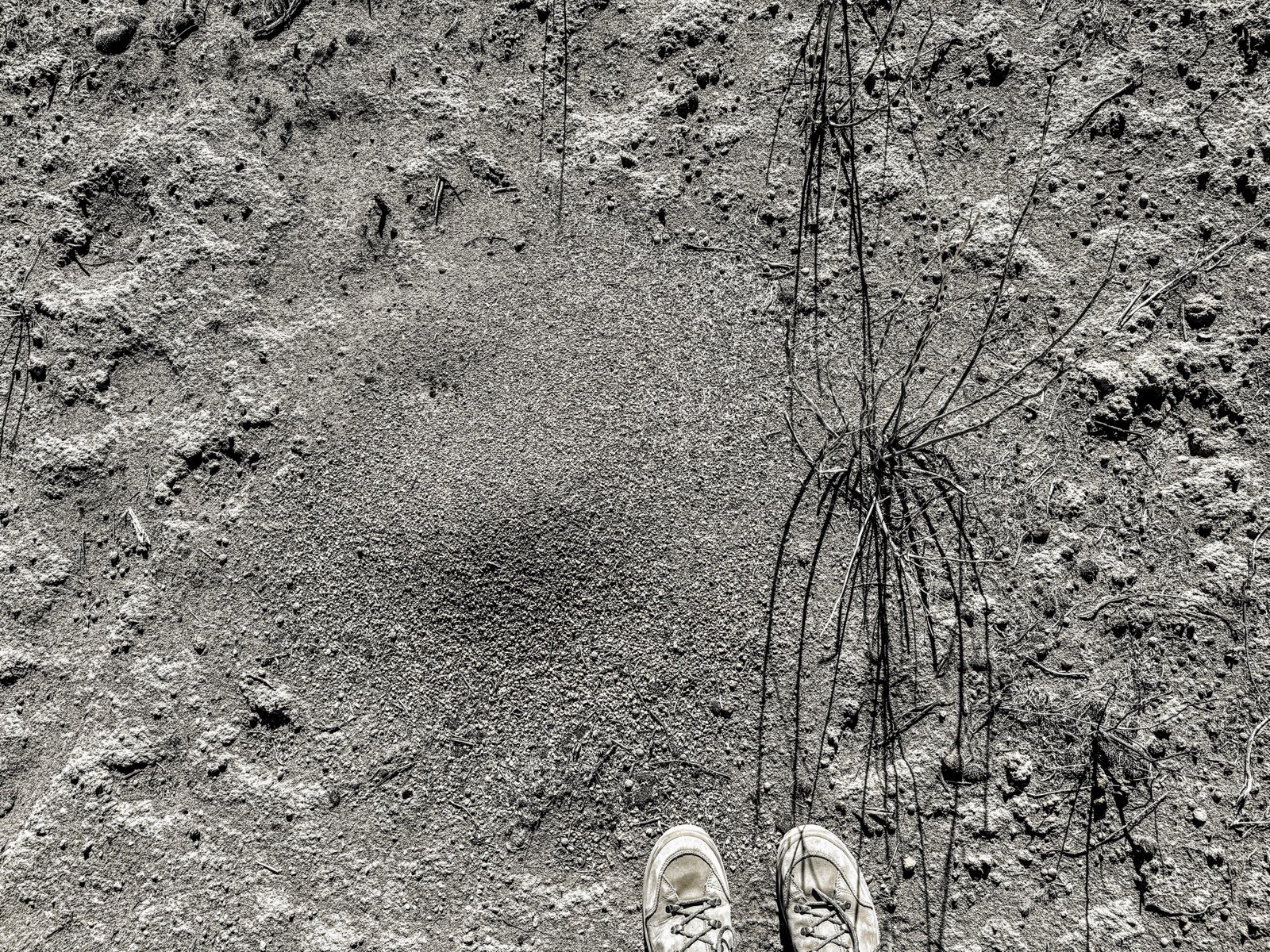
There was no crunch underfoot. The ground wasn't right, not in the quicksand kind of way, but a soft, fluffy, beachy way in the high desert. It felt like the earth was giving me a gentle foot-hug with each step. My lug-soled footprints stayed put, which was why eight of us were instructed to spread out on this protected woodland preserve in Central Oregon.

Self-portrait with Owyhee harvester ants and skeleton plant. Old-growth juniper woodlands. Central Oregon. June 2026.

A colony of Owyhee harvester ants was hard at work. (Note: You don’t camp next to them, unless you enjoy pugnacious, aggressive, and venomous little warriors.) They evolved to get shit done and be together. Some colonies thrive for 30 years. One study east of here at Horse Ridge Natural Area found about 40 nests of Owyhee harvester ants. Each colony showed seed predation, enabling a transformation of 46,000 square meters of barren landscape. They re-engineered the landscape into barren zones. Grazing behaviors of sheep, cattle, and ants perform similar functions, just over different time scales.

——-

“No walking in a single-file line. Don’t follow each other," the Oregon State University forester said. “Any trail you see is from animals, not humans.”  

At home on my parcel, I adore finding animal trails. I think of them as little wildlife highways. Order and sequence permeate all nature, not just humans' “ownership” of the planet to carve roads.

"Remember what you see,” she said, and vanished into the brittlebrush, sagebrush, and old-growth juniper woodlands off to the next rendezvous point by the open meadow.

Separately, we made our way across the preserve and looked down.

Sound came from the distant highway; tires pulsating speed on an overcast Saturday morning. I dressed for the whiplash weather on a summer day in Central Oregon: long underwear, rain-resistant pants, a puffy jacket with a hood, hiking boots, and a backpack. Just three days ago, it was 88 degrees F. I wore a tank top and shorts for trail running. Now the wind made it feel 38 degrees F.

What I also didn’t hear: birds. Didn’t see any either. This broke my heart. I kept my head down and stayed curious.

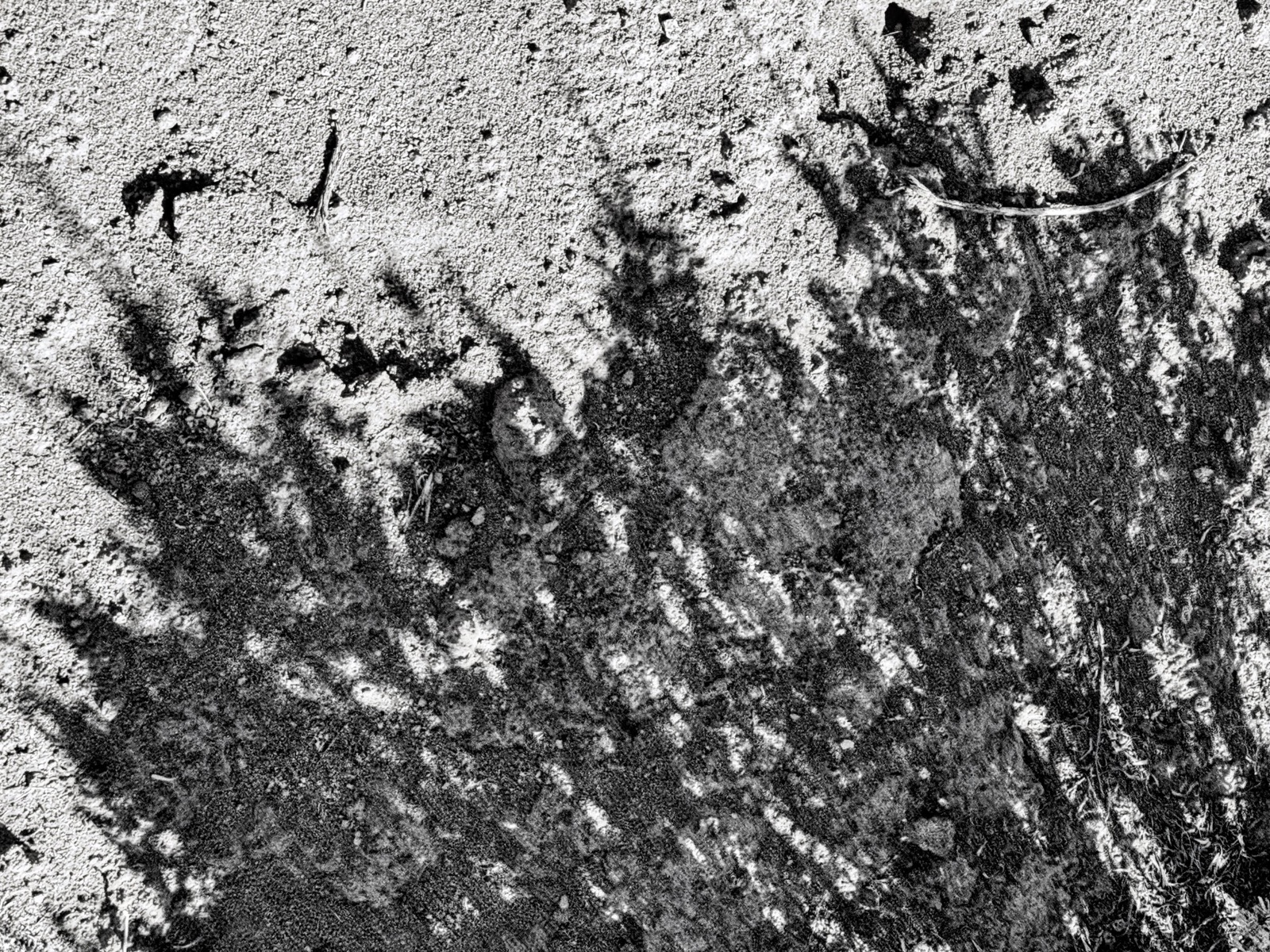
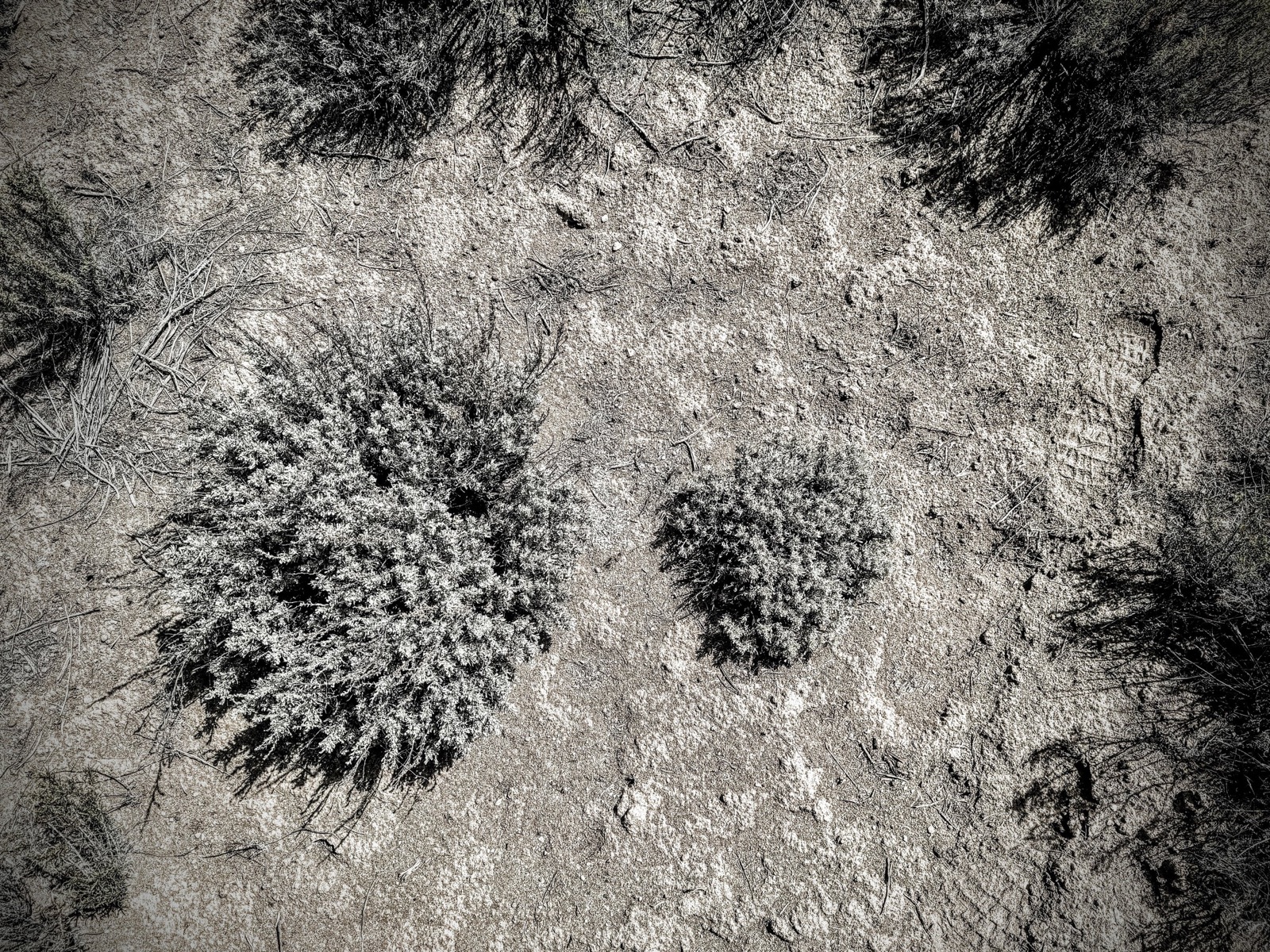
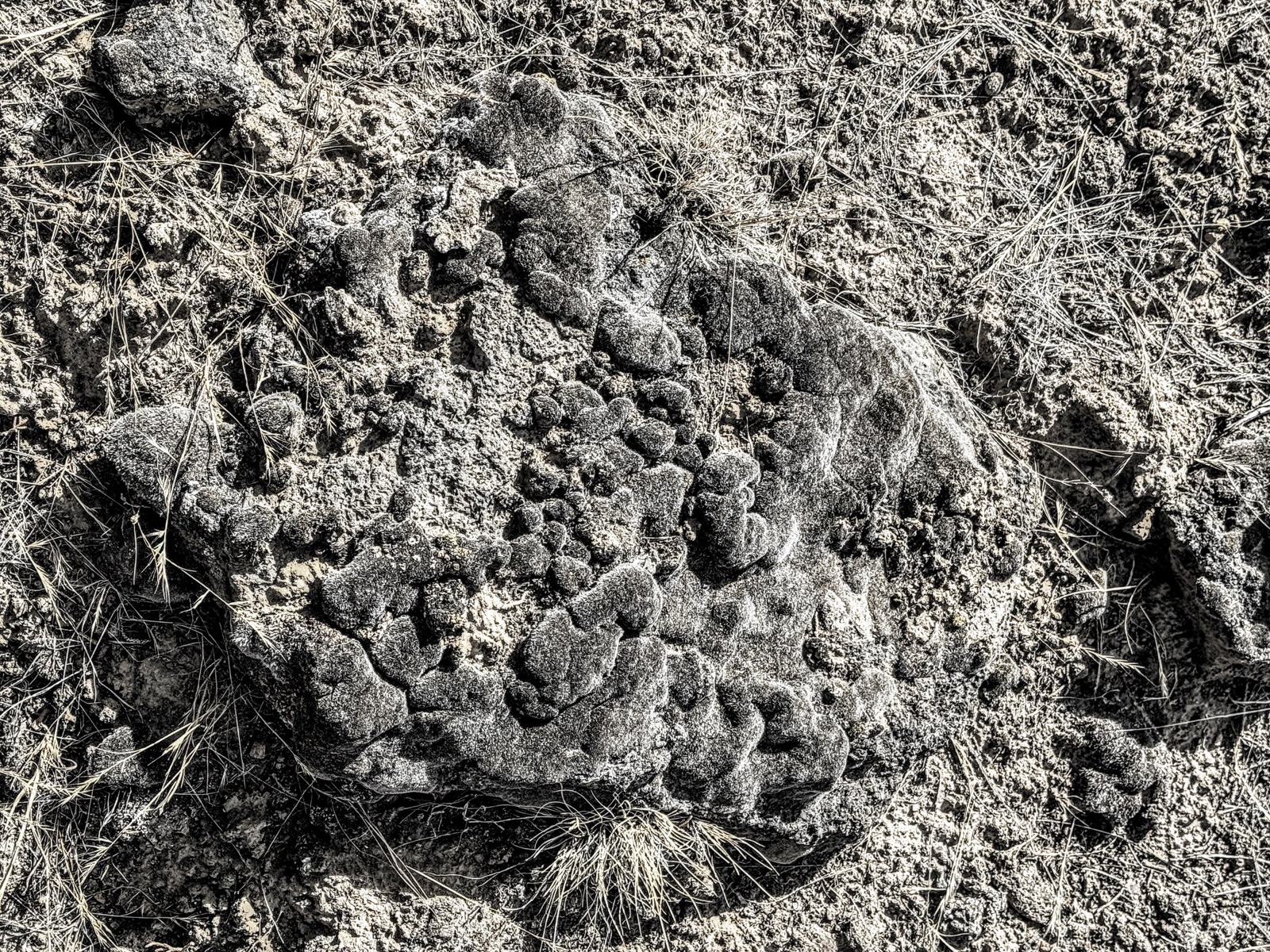
Caption: left to right are my photographs of the pumice province (i.e., pale, open, coarse, almost no organic layer visible). Old-growth juniper woodlands. Central Oregon. June 2026.
——

An older man in a sun hat and a CT scan scheduled for 11 AM, yelled to me, “Whadda ya suppose this scat is from?”   We stood over the clump and bantered about wildlife scats.  

The forester eventually came around and bent down. With bare hands, she broke apart the scat like I had seen her do earlier with a lemon butter cookie. She looked inside. She dropped it and brushed her hands off on her cargo pants, which had muted tribal salmon-silhouette iron-on patches. “Not sure. Gonna think about this one.” And she continued into the preserve.

This forester, with a septum ring and thick silver rings, WAS a former wilderness ranger who spent long stretches in the backcountry observing and analyzing what the land had to say. I hadn’t become her wild, yet, but I was thoroughly impressed with such rugged grace.

Basalt with blackish-gray fuzzy moss on the pumice layer with native grasses sprouting randomly. Old-growth juniper woodlands. Central Oregon. June 2026.
——

II - AIRBORNE

What I learned from the ground began 7,700 years ago. When Mount Mazama erupted, it imploded to create Crater Lake (forming the deepest inland lake in North America), and its contents drifted and coated 24 cubic miles and hundreds of miles of the PNW in a pumice layer.

We stood on the Mazama Soil Province: a coarse, pale, almost lunar-like material with textures but no rich loam for vegetable gardens. What was below my feet was an aeolian deposit. The ground literally landed here. The wind brought it and said, " Stay here until I move you again.”

The pumice is the gauntlet, a landscape basically made of volcanic glass, and what grows here tolerates low fertility, rapid drainage, and thermal extremes at the surface. And whatever can survive in such conditions becomes the high desert ecosystem. What made it through was what was around us.

This private property preserve hadn’t been touched by humans since the 1930s. No recreating, no flagging, no government edicts. The only apparent evidence of human interference was a portion of overgrazed land by sheep, and in 1915, the homesteaders dug a channel to capture water. The channel was deep to chest high back in its original state. Over the last almost 100 years, the wind has moved the soil, leaving the channel to appear as a long divot, maybe six inches lower than its surroundings.

“Soil moves,” the forester said. “And another rain will come; the wind will come and cover up our footprints.”  

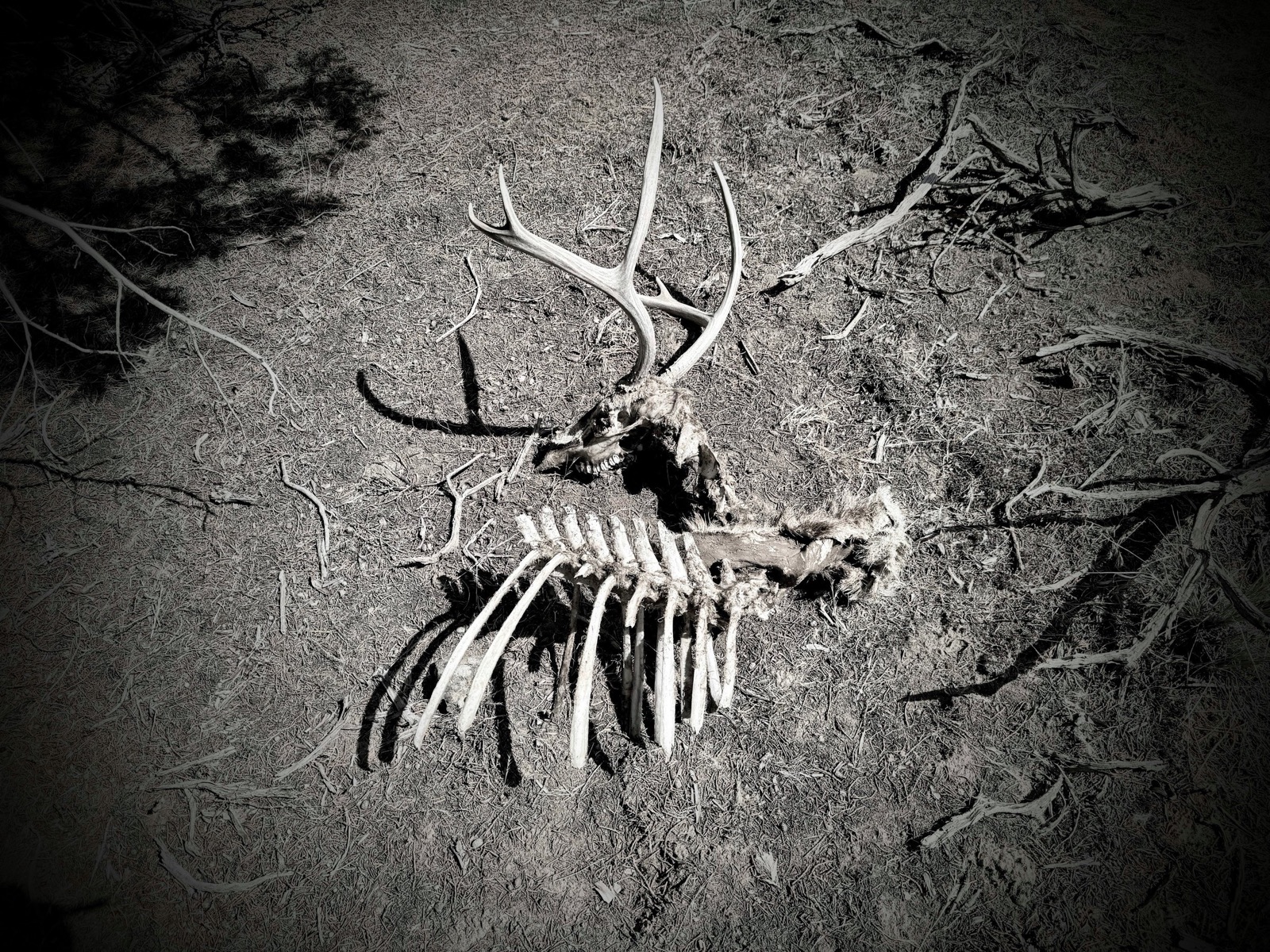
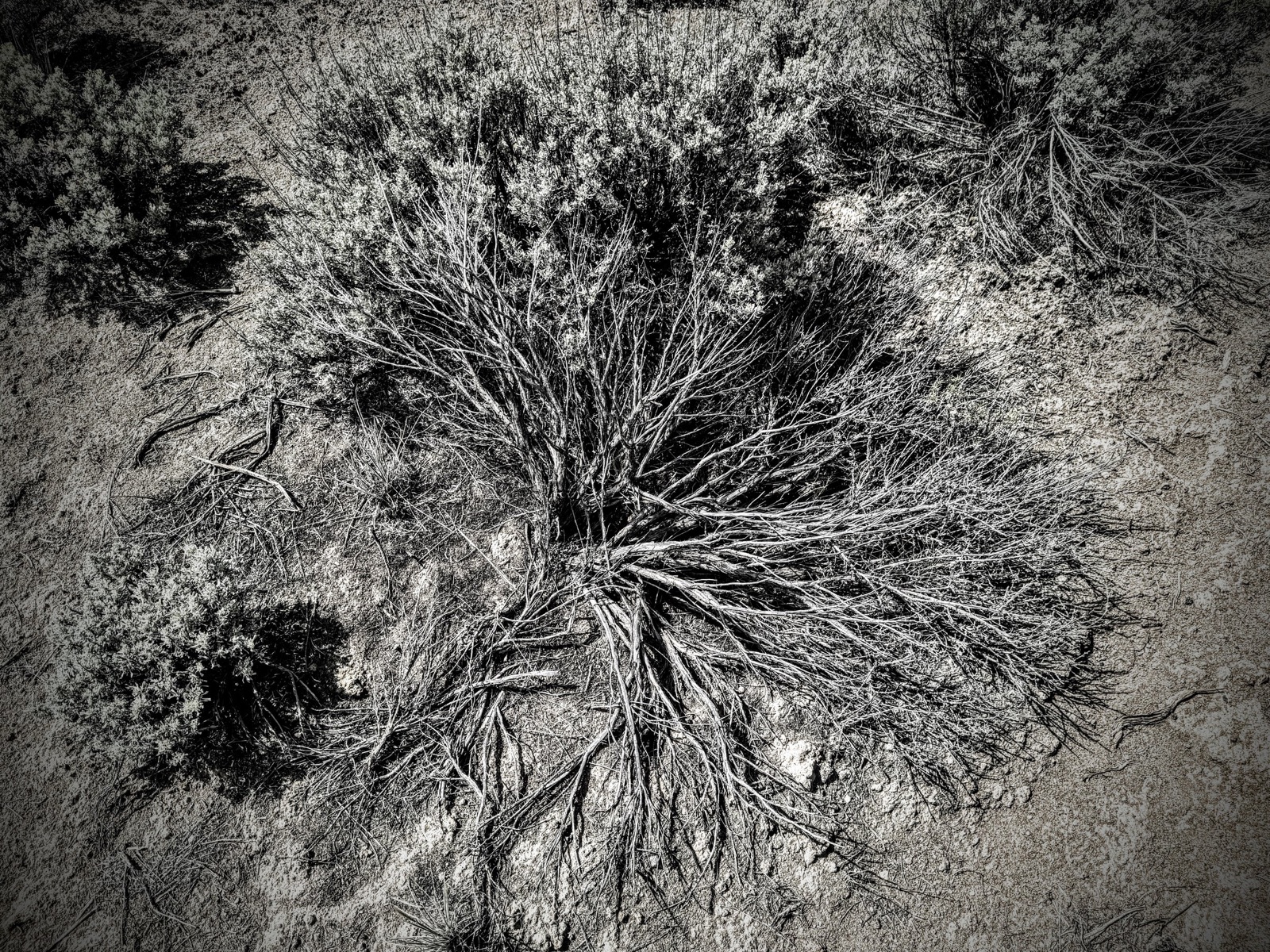
Caption: (left) Six-point buck skeleton with the skull and ribcage still largely articulated and in rough anatomical position relative to each other. The spine connected them, and ribs were still attached. Bones were not scattered. (Right) Partial skeleton of a woody shrub. Old-growth juniper woodlands. Central Oregon. June 2026.
——

BONUS CONTENT! My Theory on the SCAT…
A mountain lion killed the six-point buck. Dragged it to a lower-elevation area on the 40-acre preserve, hid it under a juniper with a wide canopy. Fed on it. The carcass appeared relatively confined to one spot, and the skeleton retained its basic form. A tawny fur patch near the shoulder remained. Mountain lions feed on the hindquarters and thoracic cavity first, which may explain the missing rear legs and pelvis; the head, antlers, and rib cage remain intact. Then a black bear came along to feed on this substantial kill, leaving a large scat pile that doesn’t resemble wolf, mountain lion, coyote, or any smaller creature’s waste. I suspect the black bear fed on forbs and the leftover buck before leaving a little note on the land about his co-existence.

Alive-Dead: The Story of My Meditation Tree

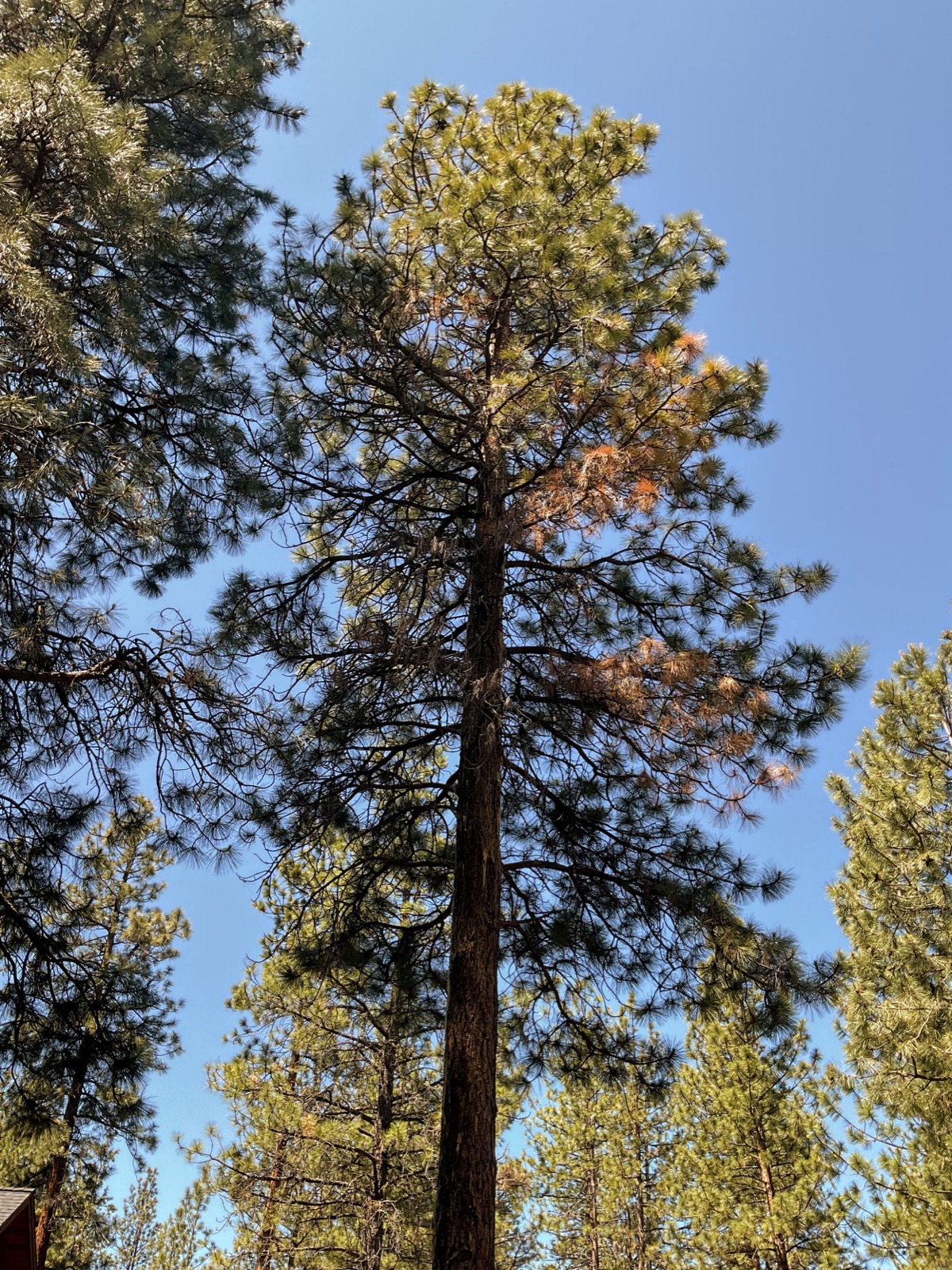
I used a butterknife to peel away the ponderosa pine’s bark plates, revealing bright cambium. I did a soap-bubble test for gurgling at possible boreholes and checked for frass at the base. Was it root rot, bark beetle, sunscald?

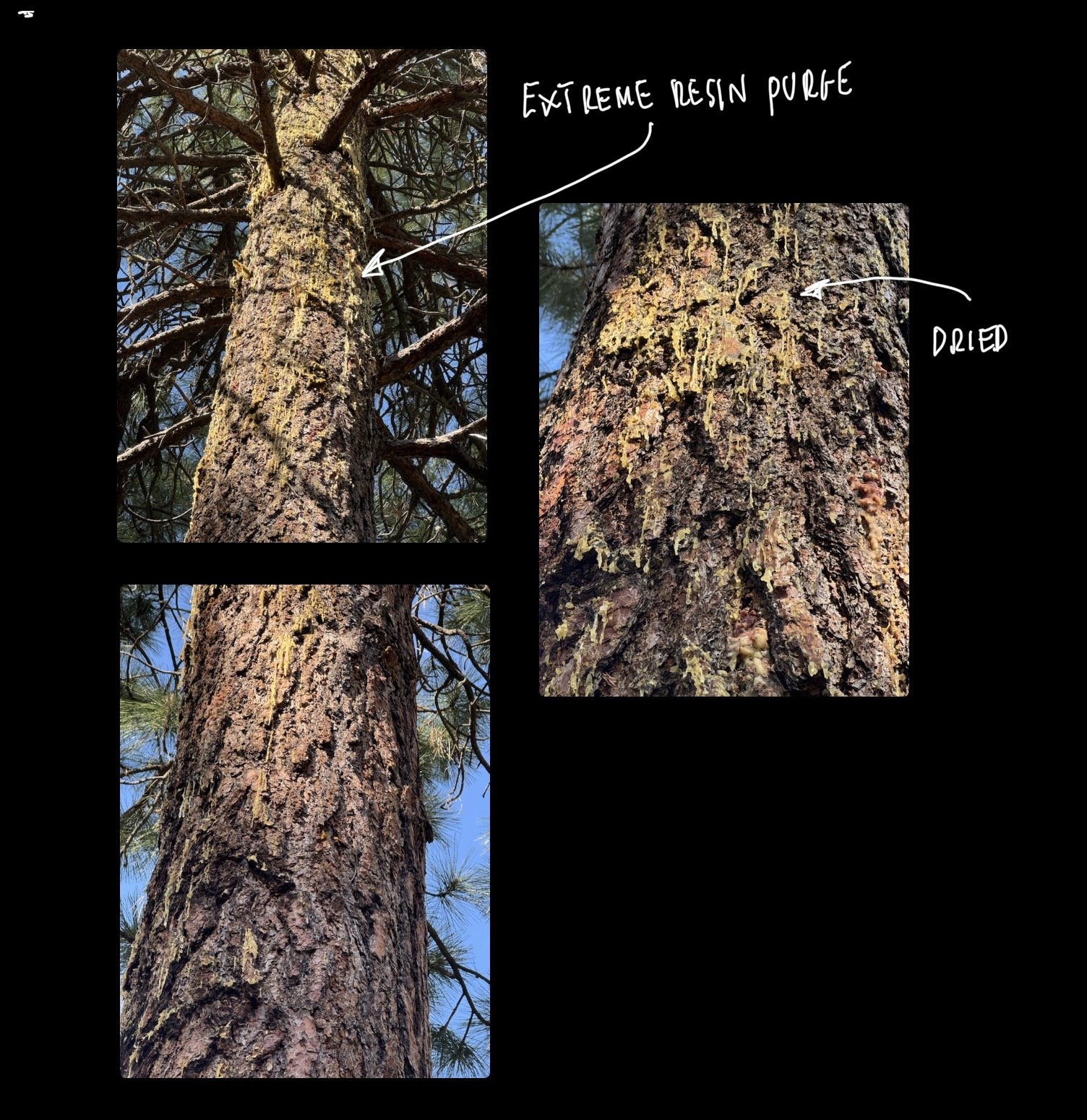
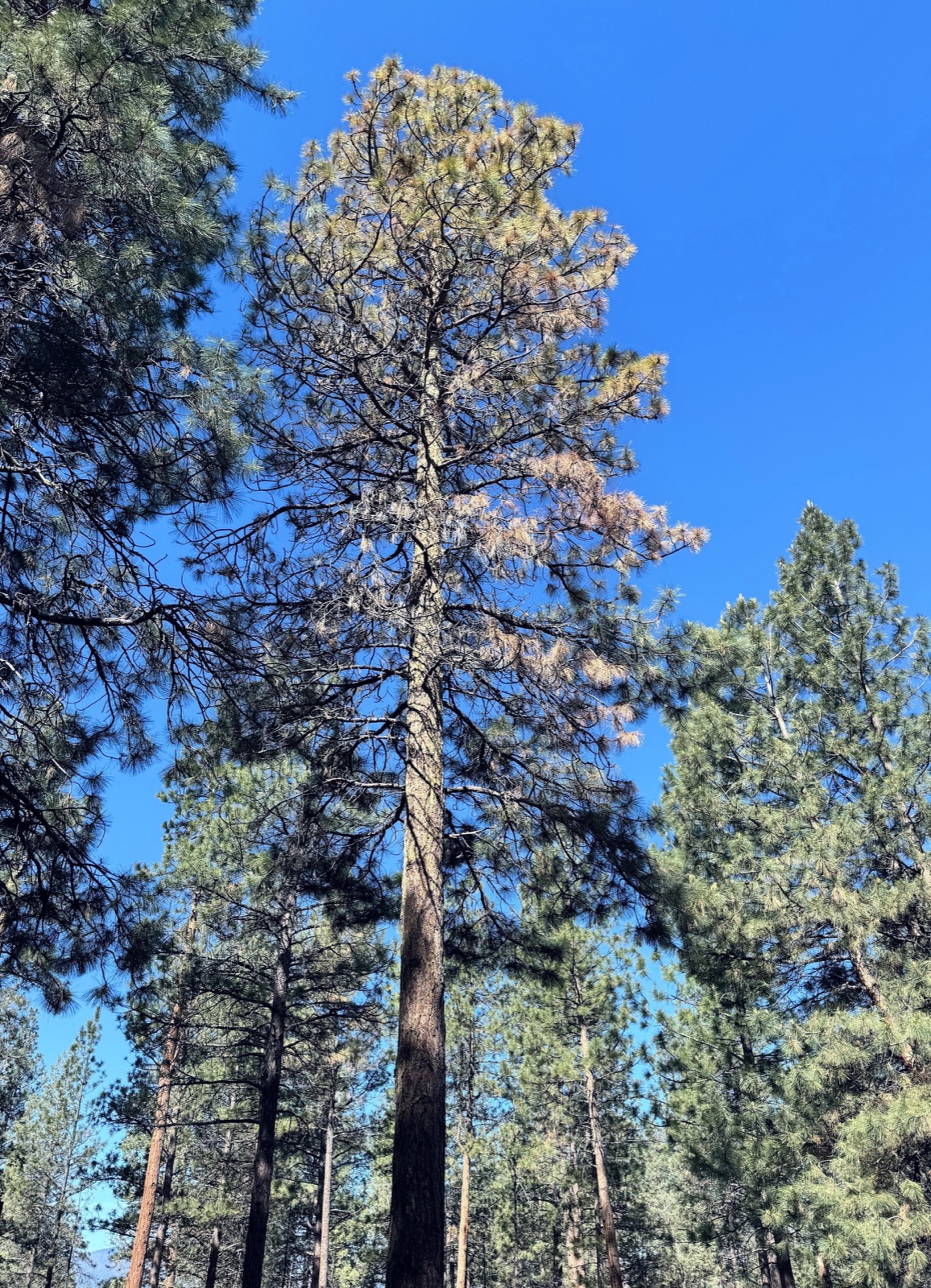
A tree contains a biography. The outside tells only part of a story, with its branches, needles, and trunk. Last summer, I noticed my meditation tree—the one I had been looking after for more than a decade—had resin pouring from it, and its needles were browning.

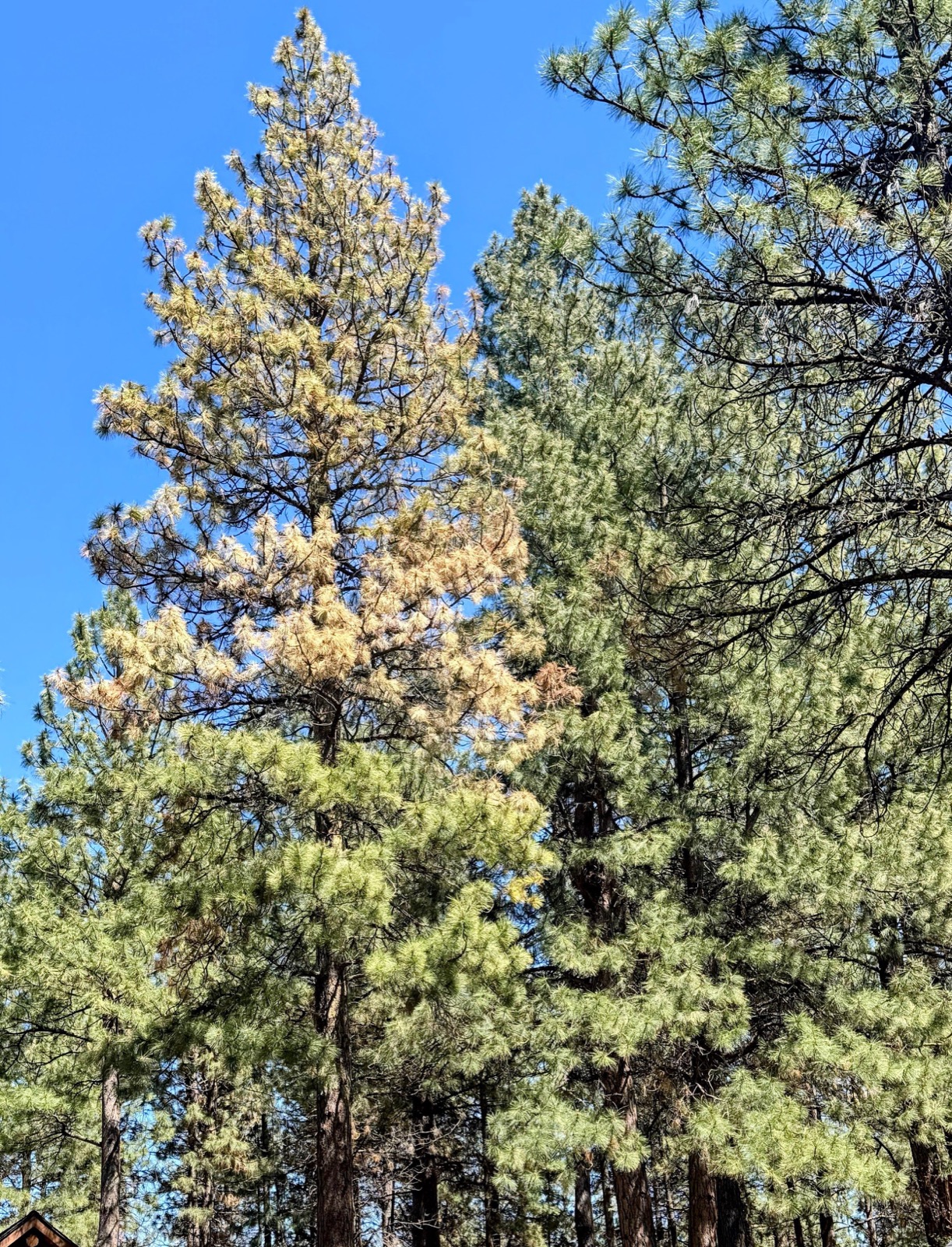
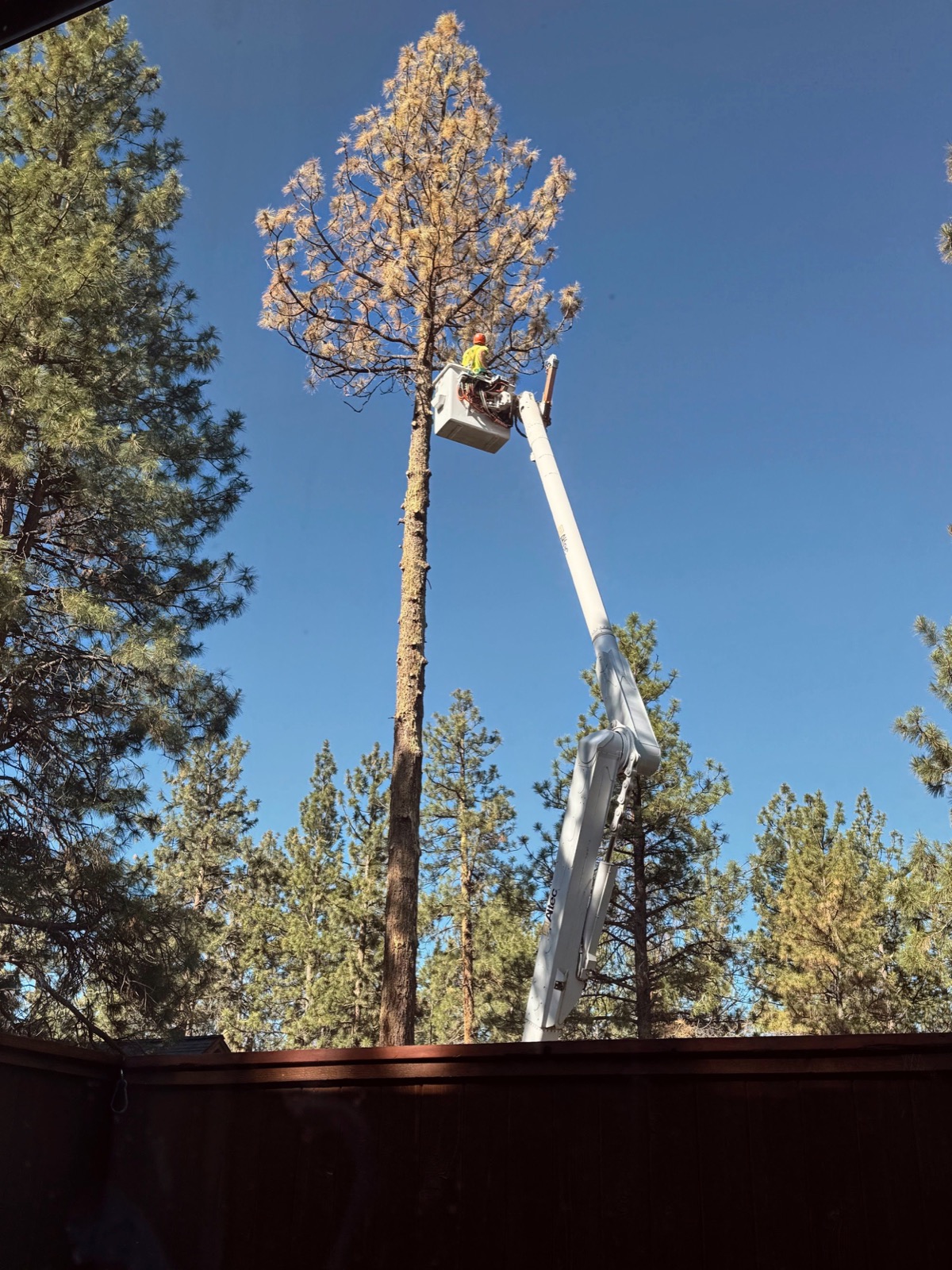
She survived winter but didn't return in spring. Instead, she browned to the crown and down all sides except one small part. An arborist, with a beard to his mid-chest and jolly smile, came and said it was alive but actively dying—"alive-dead," he said. "It’s gotta come down. The longer you wait, the more expensive it gets."
 
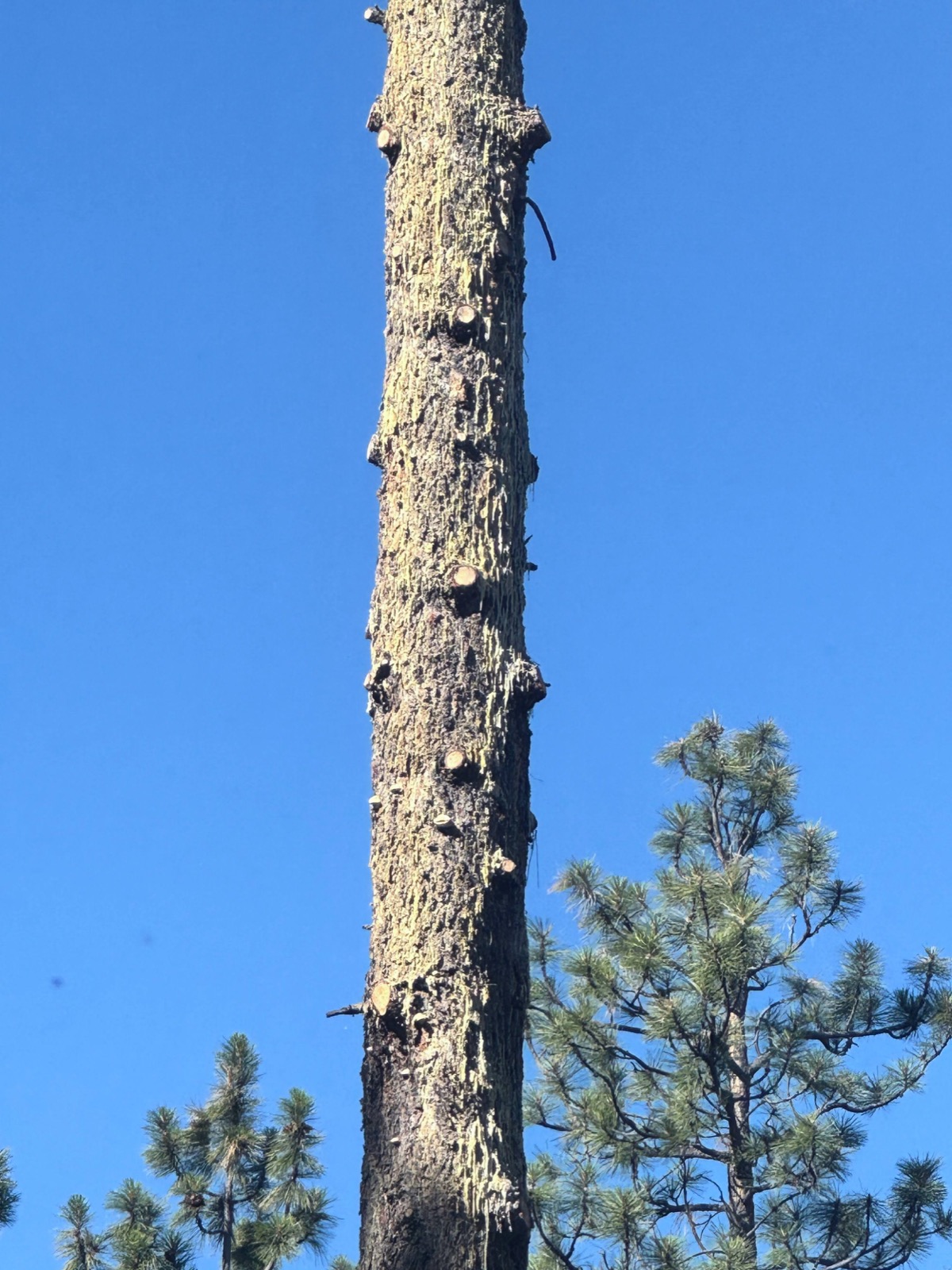
He apologized and said that he hated to cut down trees; he fancied himself more of a limber. “In my prime, I loved nothing more than limbing a tree to its full beauty.” But this one was a fire hazard, and we were in fire season. He said he'd put this 85-foot-tall one on the high-priority list if we agreed.

I woke, pulled back the curtains, and took her photo—her last sunrise. A mixture of gratitude and nostalgia entered the haze of remembering the kids and dogs running around her. Three of the dogs were dead now, too.

I know most people don't see nature as co-existing beings, placing me in a hypothetical minority. Her roots still give all they can to the world below. Each tree’s roots stretch as far as its height. Beneath me is a web of symbiosis woven from wood.

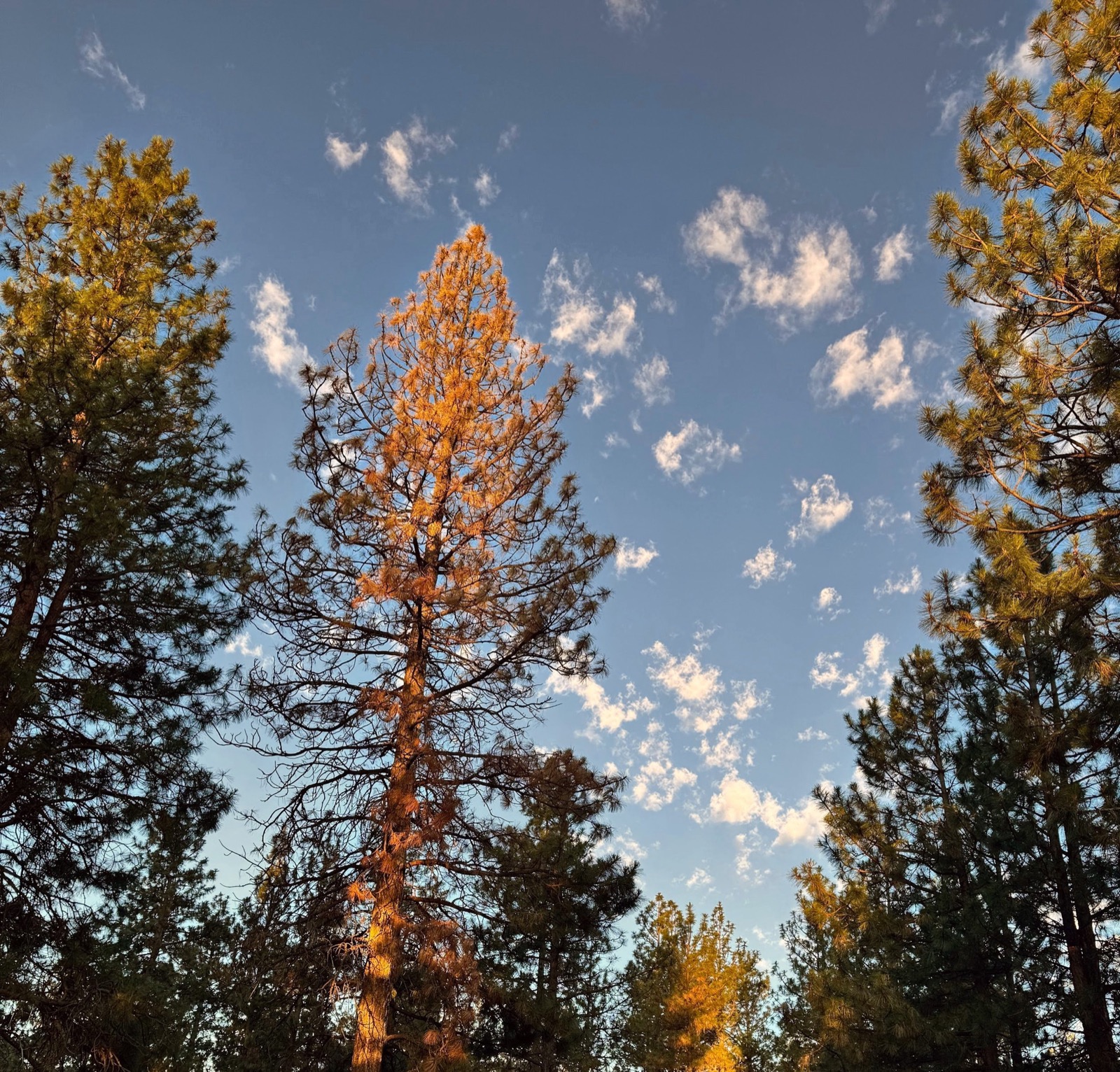
My meditation’s tree last sunrise. The small, scattered clouds are a rarity. My evidence? Looking at the sky each morning. June 2026

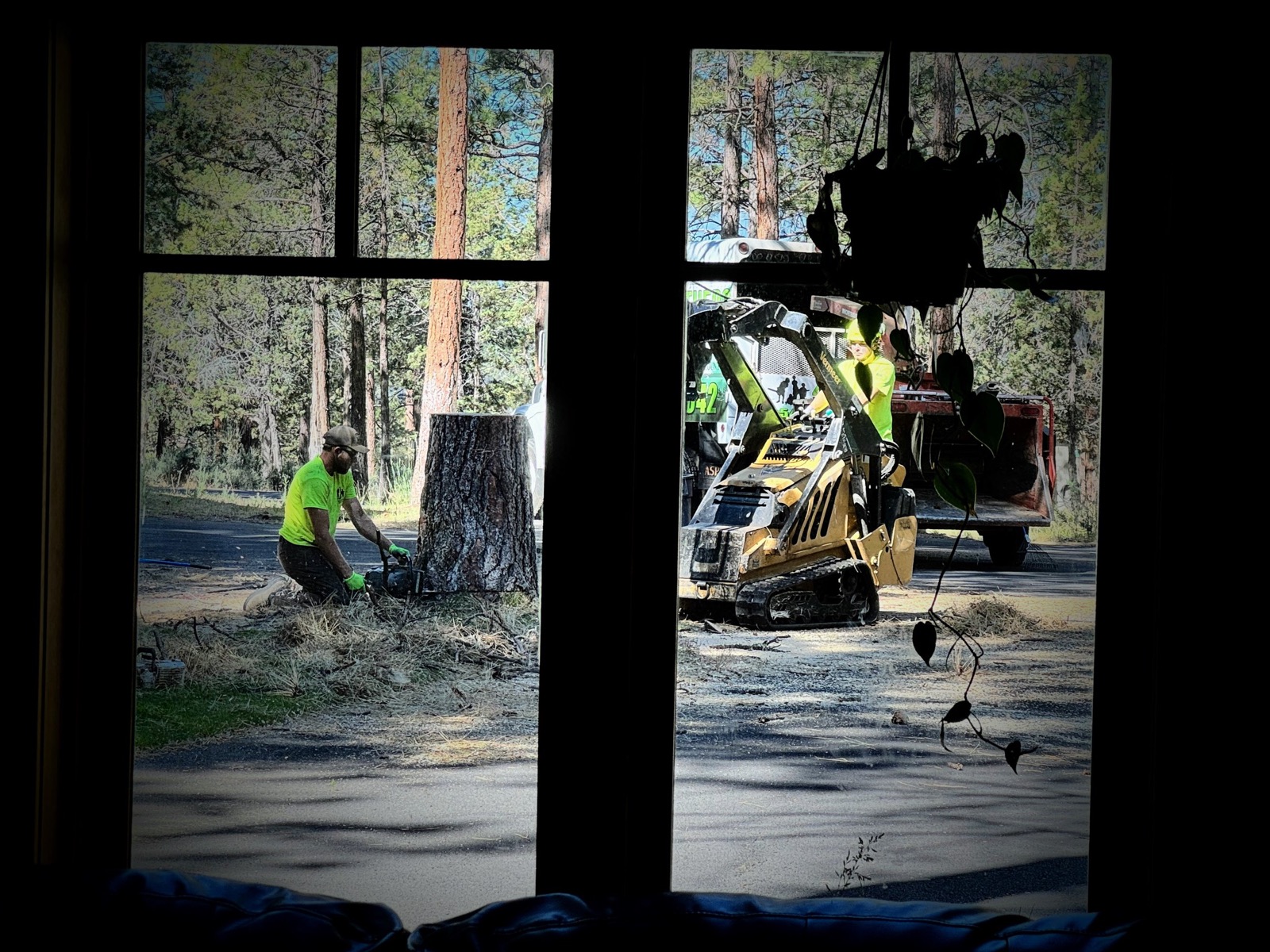
Three fallers arrived and took her down limb by limb, trunk slice by trunk slice. She’d been a massive shade tree. Her canopy caught rain and snow, keeping the ground below almost untouched.

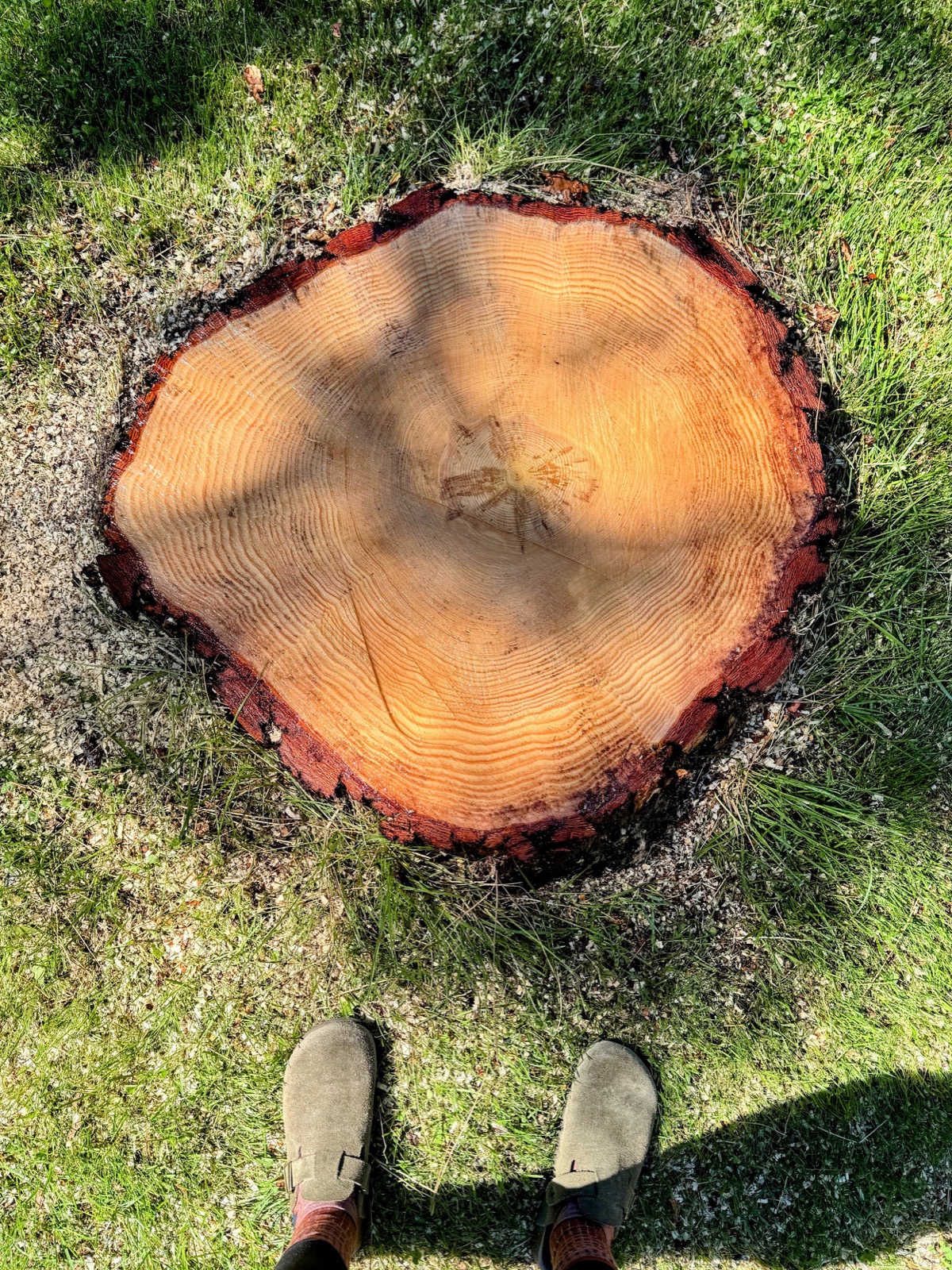
After they left, I hosed off the sawdust to see her story. Each ring showed she was over a century old: probably germinated around the World Wars, endured the Dust Bowl, slowed growth as she fought for light and water, then grew faster as the canopy opened.

I was born in her rings. You were born in her rings. Her story has stopped, but I leave her stump in the ground and will varnish the top with pine tar and oil, keeping her cross-section alive with history beside mine. Next, I’m trying to decide what to plant nearby her to watch life unfold, again.

Self-portrait in front of my meditation tree. The remaining canopy keeps her in shade. June 2026.