When the Sky Brings Ash: Reflections from the Farm Table
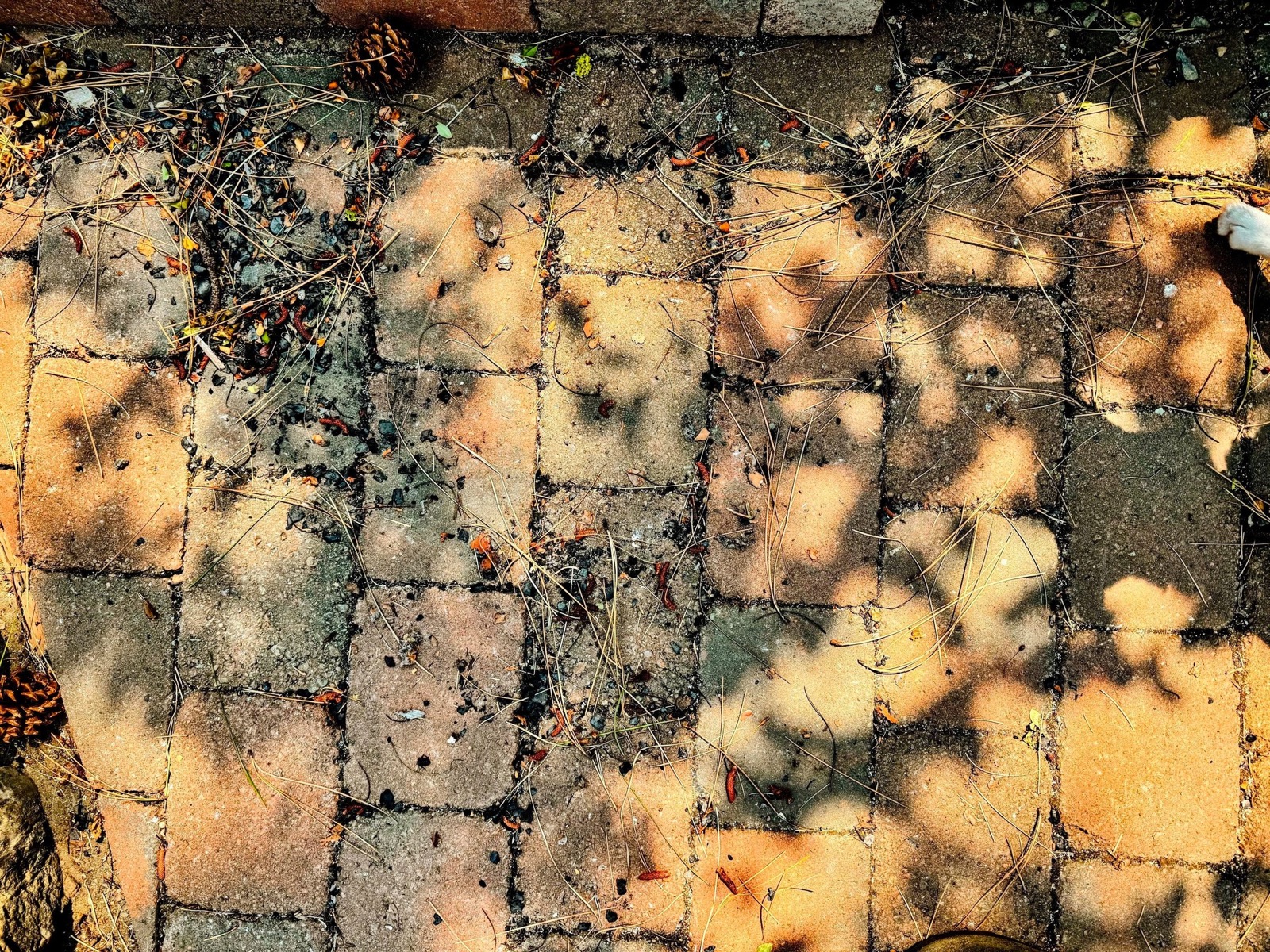
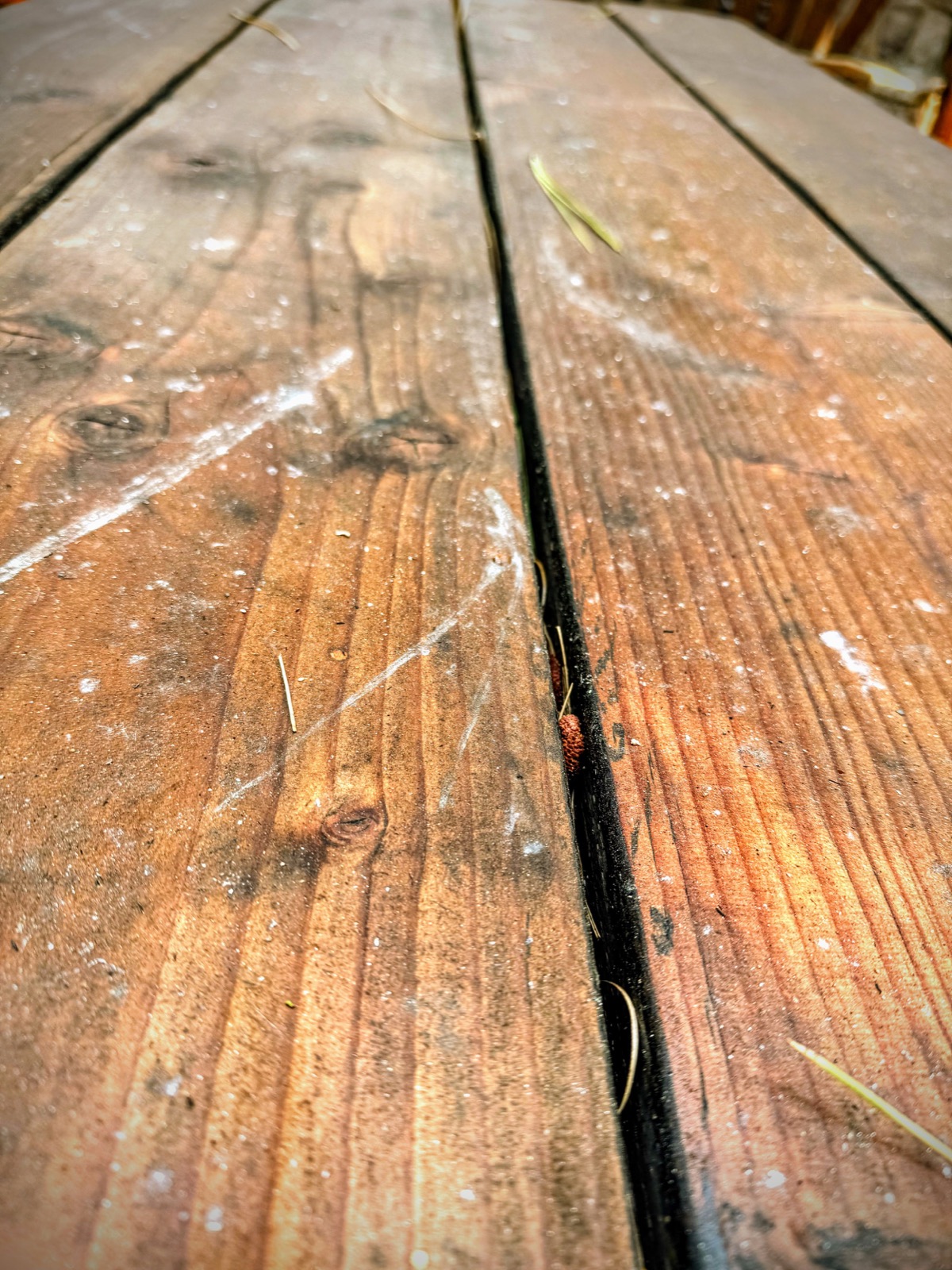
The other day, I worked outside at my long farm table, a space used for endless family meals where we pass bowls, plates, and wine to one another under the ponderosa canopy. I noticed the sky’s ashy dandruff floating around me. Their little particle charges were enough to glom onto the laptop screen and swirl around my shoulders.
I looked at the AirNow app, and the AQI was under 100. It didn’t smell like campfire, so wildfire smoke from Canada to the Pacific Northwest still circulated and fell.
How long will smoke and ash continue, I wondered, and who is studying this? Such questions led me to current peer-reviewed literature on wildfire atmospheric transmission in fire science.
The local wildfire created pyrocumulus clouds, with intense heat ricocheting in the pyroconvective plume to form a firestorm, complete with its own lightning. The plume's height and the wind’s speed and direction worked together to loft ash and debris high into the atmosphere, allowing them to travel long distances before falling back to the ground. Transport distance can be 5 to 20 km, or roughly 3 to 12.4 miles from its origin.
The ash is chemically encoded, its composition is a complex mixture. Wildfire ash contains plant nutrients (e.g., calcium, potassium, and magnesium). It can also carry toxic metals (e.g. lead).
The Scordo et al (2026) paper stated that “deposition of about 10g/m2 across 1 square kilometer translates into ten tons of ash and pyrogenic material entering soils, surface waters, and vegetation in just over 2 weeks.” Think of that kind of continuous deposit over the summer weeks at a time while a wildfire rushes through the landscape before containment and lands all over other ecosystems.
Ash settles on the ground, altering soil chemistry and growth patterns. It washes into bodies of water, where nutrients or toxins harm aquatic life. Airborne, the particulates reduce air quality, making it dangerous for people and animals to breathe, sometimes for days or weeks after the flames die. Whenever wildfire smoke hits an atmospheric inversion, the air hangs low and yellow-to-orange; the birdsong stops, windows close, and people tuck away.
We breathe in the burnt forests and grasses, and swim in its sedimentation. In fire ecology, periodic fires play a crucial role in nutrient cycling and shaping plant communities. Wherever we live, work, or play, ash records our planet’s fire history, marking its shifting balance between destruction and regeneration.
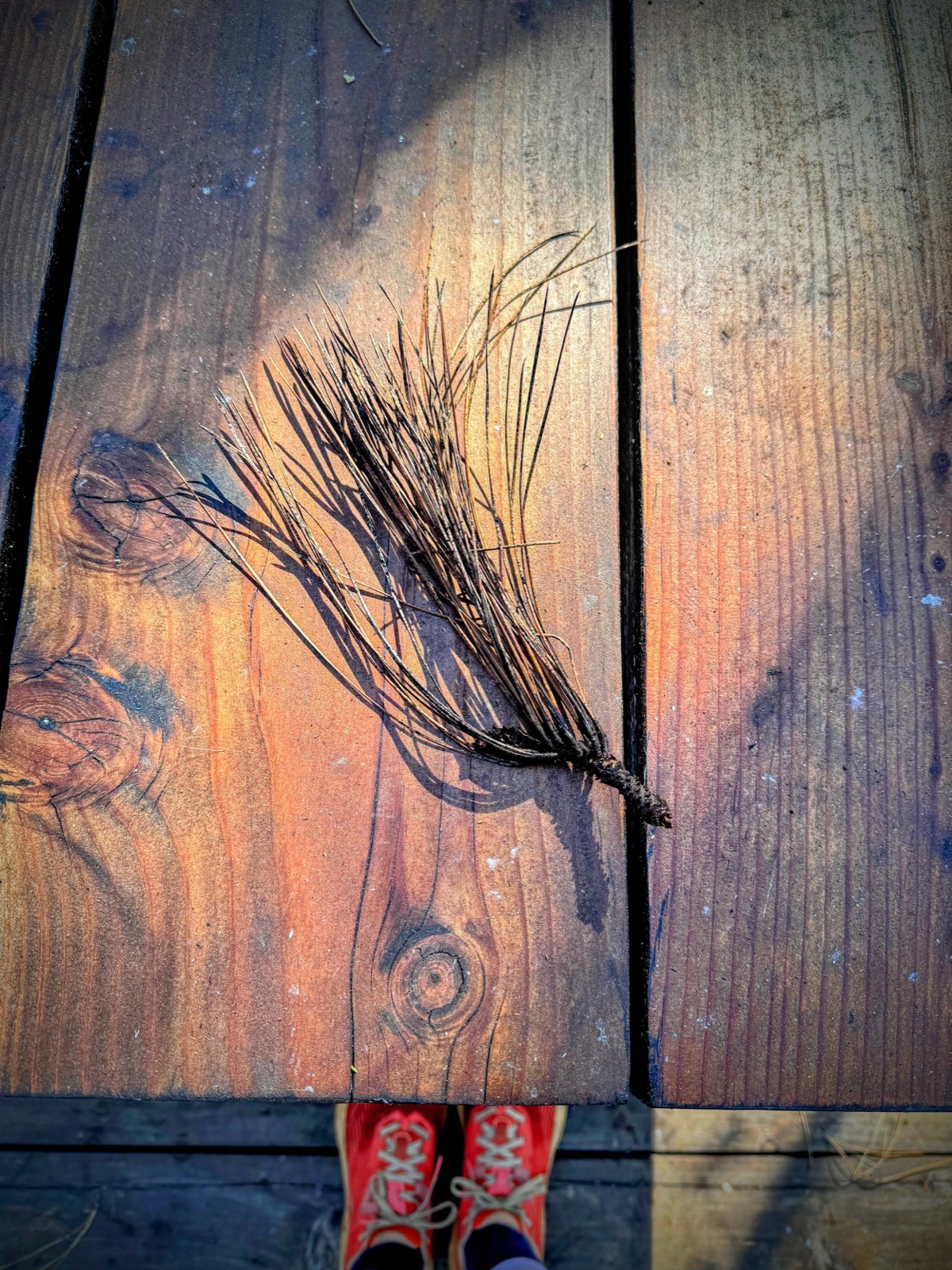
Self-portrait with firebrand placed on farm table. PNW | 2026
Peer-reviewed articles I consulted:
Paul MJ, LeDuc SD, Boaggio K, Herrick JD, Kaylor SD, Lassiter MG, Nolte CG, Rice RB. Effects of Air Pollutants from Wildfires on Downwind Ecosystems: Observations, Knowledge Gaps, and Questions for Assessing Risk. Environ Sci Technol. 2023 Oct 10;57(40):14787-14796. https://doi.org/10.1021/acs.est.2c09061
Sanchez-Garcia, C., Santín, C., Neris, J., Sigmund, G., Otero, X.L., Manley, J., Gonzalez-Rodriguez, G., Belcher, C., Cerdá, A., Marcotte, A.L., Murphy, S.F., Rhoades, C., Sheridan, G.J., Strydom, T., Robichaud, P.R., and Doerr, S.H., 2023, Chemical characteristics of wildfire ash across the globe and their environmental and socio-economic implications: Environment International, v. 178, 108065, 16 p., https://doi.org/10.1016/j.envint.2023.108065.
Scordo, F., Bavandpour, M., Or, D. et al. Downwind deposition of pyrogenic particles from wildfire plumes. Commun Earth Environ 7, 487 (2026). https://doi.org/10.1038/s43247-026-03660-3
Is there a place you keep going back to?
A sentence or two is plenty.
Comments