Visual Naturebook — page 2

In the Northern Great Basin’s Sagebrush Sea
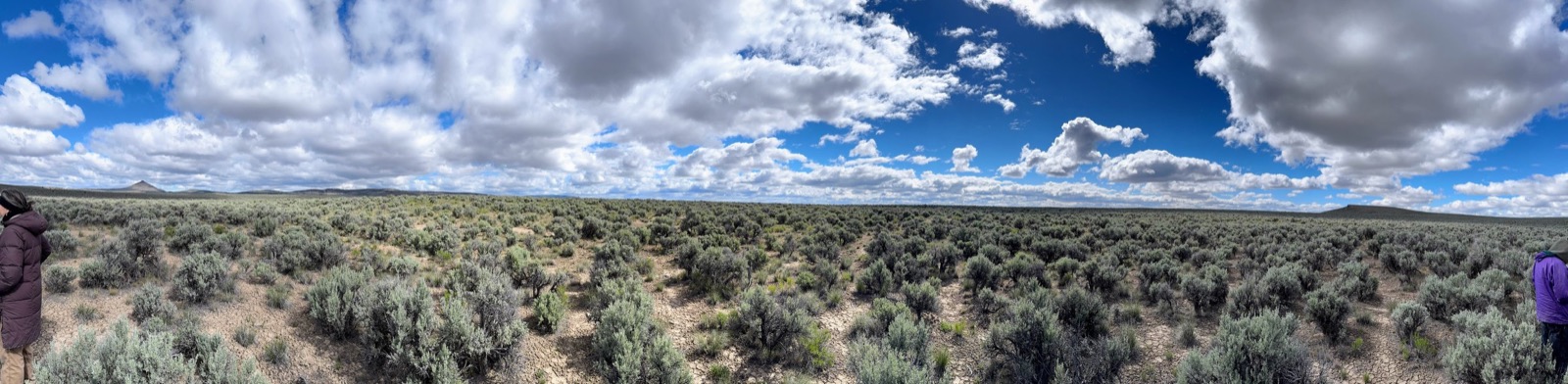
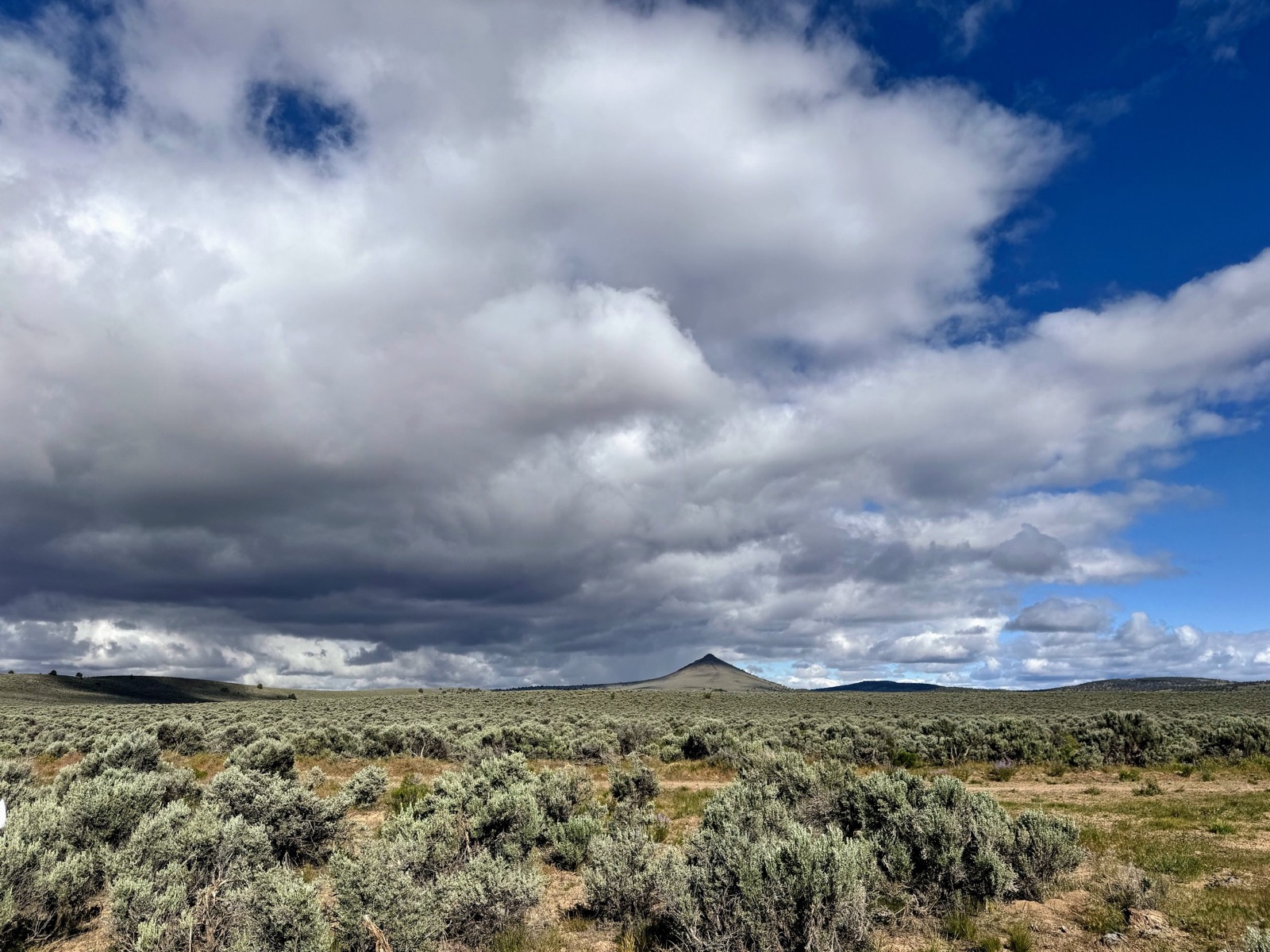
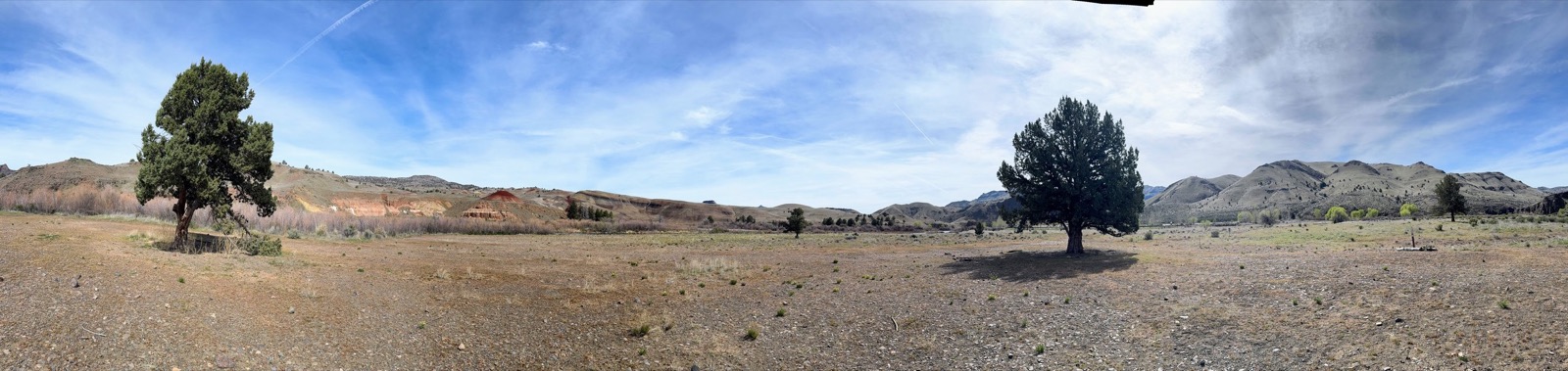
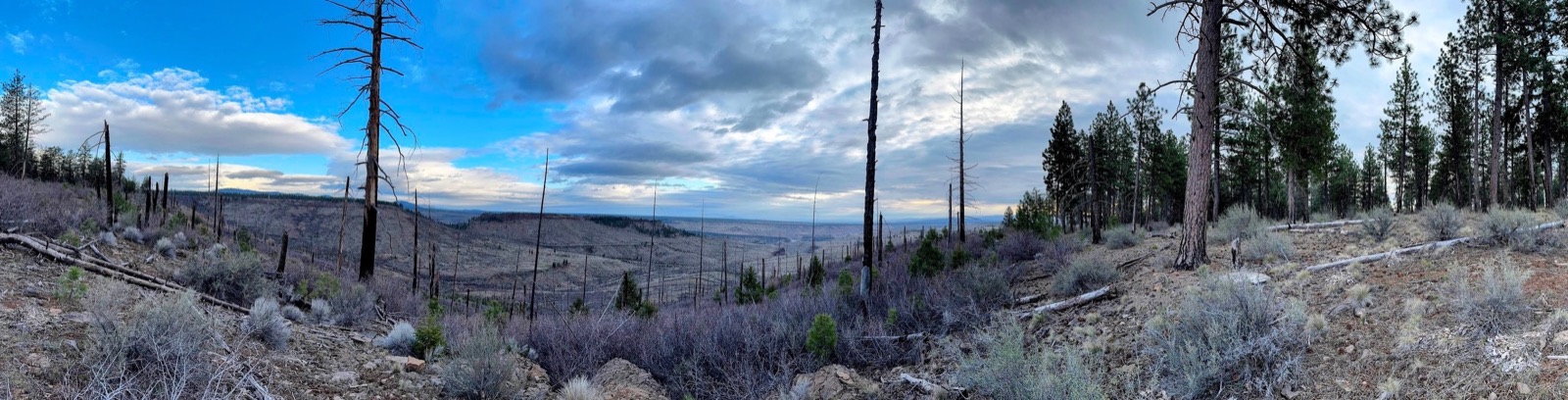
Panoramic photograph I took while doing fieldwork. It looks like this in 360 degrees! Northern Great Basin, Eastern Oregon. 2026

The Northern Great Basin lies between the Cascade Range and the Steens Mountains in a desolate stretch of eastern Oregon. Sagebrush stretches in every direction.

I was with a fieldwork group, tasked with learning and documenting small landbirds in the sagebrush sea that brushed our hips.

Before we took our positions, a spring squall brought surprises. The sky churned with charcoal grays, indigo blues, and wispy whites. Intermittent, spotty wind gusts produced two dust devils. I squinted and braced my face. Thankfully, I wore long underwear, sweater, and fleece. Beanie pulled down. Wool socks under hiking boots. Gloves on. It was near the end of May. The high desert is known for its spring unpredictability at 5,000 feet, with rain, snow, and heat within a 24-hour period. Wearing layers is a way of life here.

Despite these worsening conditions, the wildlife biologist said, “These aren’t the greatest avian collection conditions. But let’s stick with it; we’re already here.”

As soon as her encouragement landed, the graupel fell—white pellets clung to my black fleece pullover like a starry night. And we laughed at the absurdity. Birds didn’t fly or sing in this inclement weather. So, we stood in silence; the graupel struck the ground with a hollow sizzle, bouncing off dry vegetation and cracked earth that looked like the seams of puzzle pieces. 

Once the weather passed, motivated by her words, we continued. 
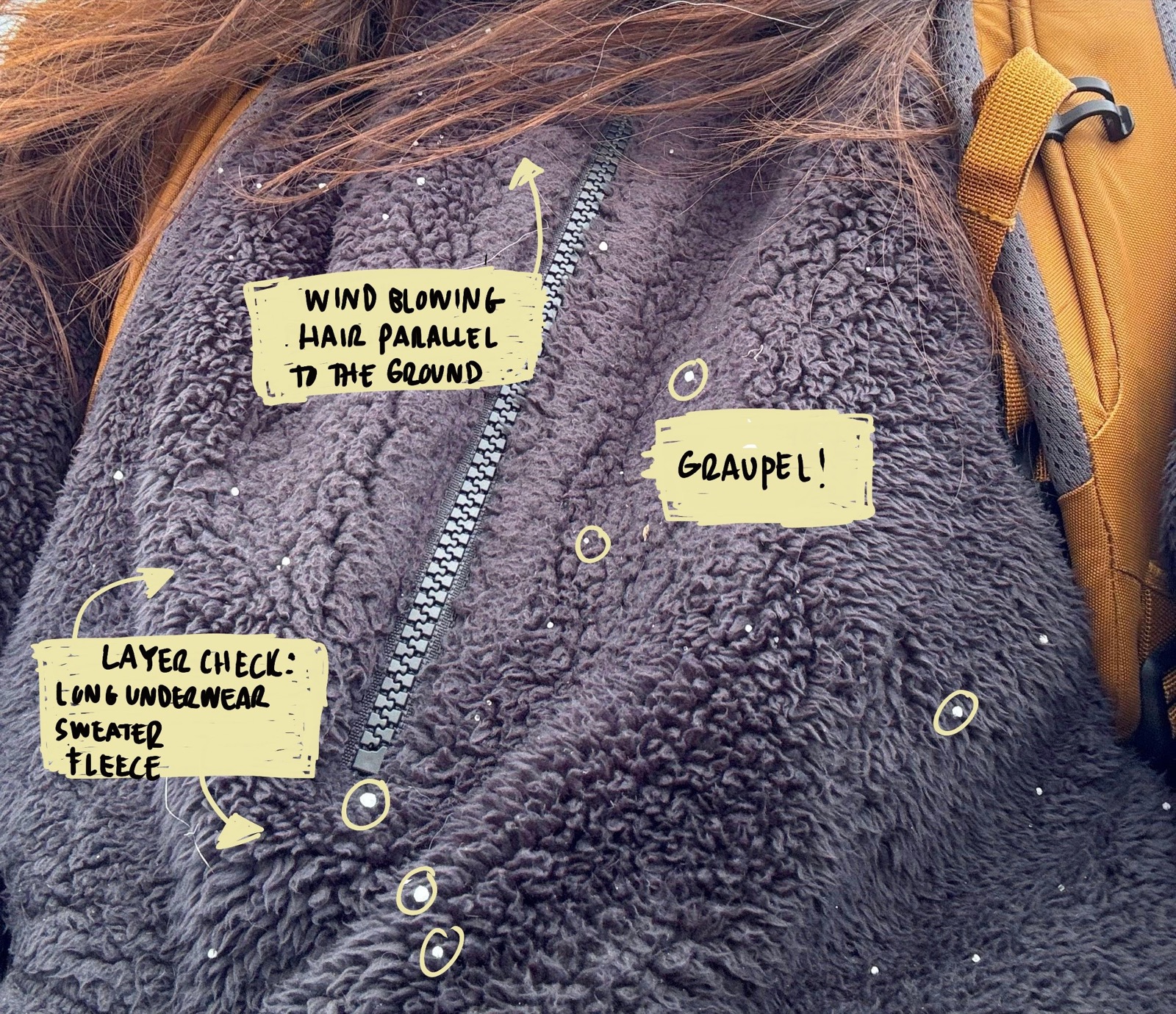
Close-up shot of fleece jacket amassing graupel and wind whipping hair parallel to the ground. Northern Great Basin, Eastern Oregon. 2026

The data sheet had five concentric circles, like a bull’s-eye, each ring demarcating distances ranging from 0–40m to 160–200m from my position. On my clipboard, I affixed a rubber band at the bottom that kept the data sheet in place when the wind whipped. 

I took photos from the north, south, east, and west to document the habitat and the position of the data survey. We also used the anemometer, range finder, and GPS. We faced north; each person chose a bird and slowly rotated through a full circle to observe and listen for calls. 

To maintain consistency, we counted only grounded and flushed birds, and no fly-throughs. We set the five-minute timer and went silently with active listening. We recorded every bird seen and heard.

I focused on the Brewer’s Sparrow (BRSP), noted for its distinctive calls. Others listened for meadowlarks, sagebrush sparrows, horned larks, and sage thrashers. First, we listened to call notes, then for the full song. I wrote circles on the data sheet labeled V (visual) or C (calling), plus the direction.
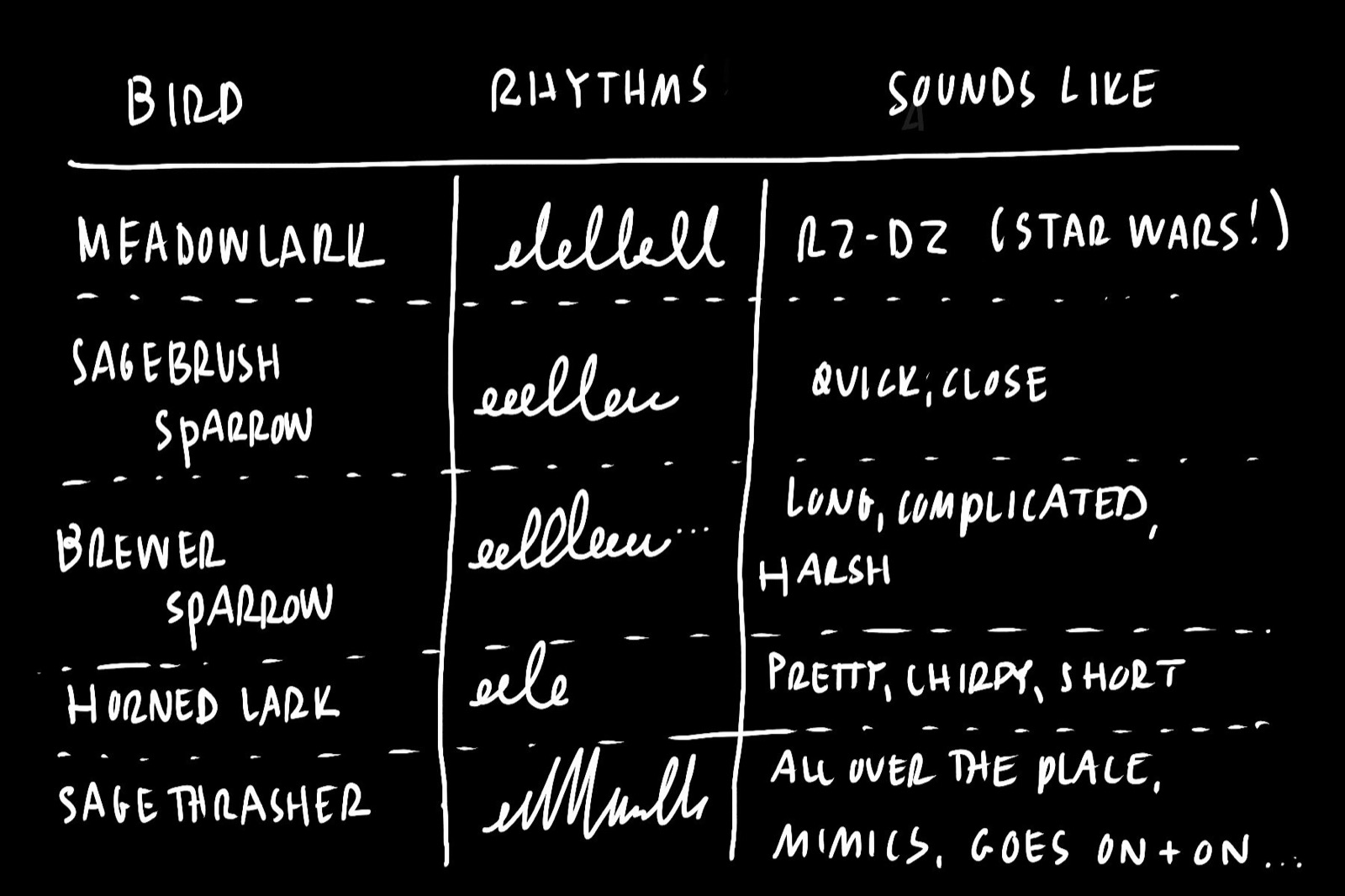
Note from my field notebook. The “Rhythms” section is my own way of “seeing” the calls, as if cryptic sheet music.

Amidst all this, their complicated trills rose from the vegetation, mostly heard but unseen in the steppe. The avian point survey was a snapshot of time. On windy days, hearing beyond 120m was difficult. The cacophony of their calls underscored both the difficulty and the beauty of our scientific choir recording their chorus.  
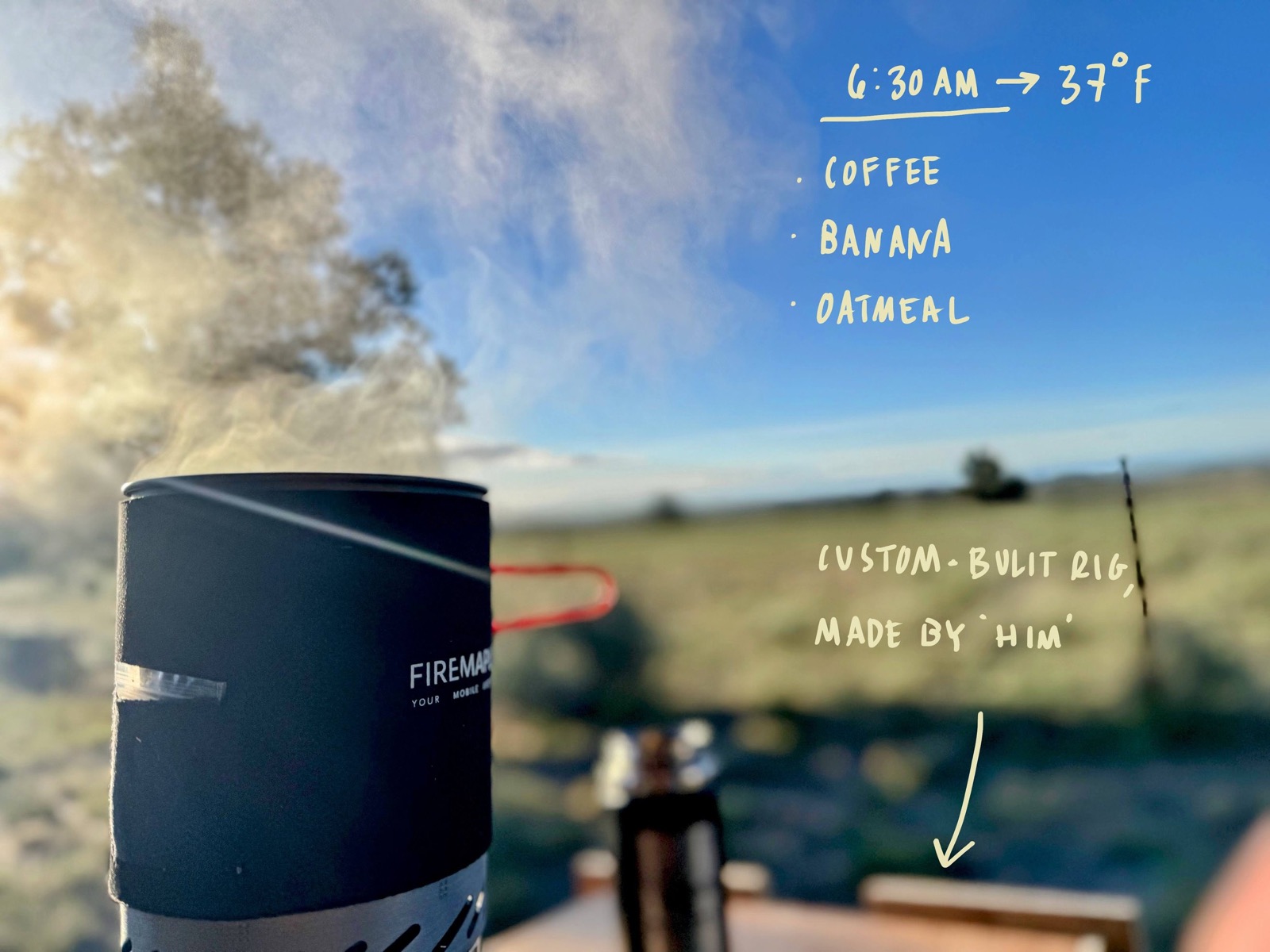
Custom-built rig by Him for car camping. The drawer system serves as a table for boiling water, cooking, and writing/drawing. Northern Great Basin, Eastern Oregon. 2026
Weather front during fieldwork. Looks like the clouds and earth are separated by a sliver of space. Northern Great Basin, Eastern Oregon. 2026

The Return of Ghost Bird

Dusk turned the forest shapes blue-gray. I read under the duvet by a small yellow light, the window cracked open. The voice returned from the distance: my ghost bird was back. It sounded like ancestral weeping in an attic—haunting and nameless. It rarely visited, never in daylight, belonging only to those transitional times of day.  

The song was a strange, high-pitched, ghostly warble—a whispery cackle, lasting about six seconds.   

Edit of Wilson’s snipe winnowing

This is my poor-quality audio sample; you’re listening for the distant bird. I was too far away with a poor microphone. There is a louder sample at the Cornell Lab, but it’s not quite the beautiful sound I hear from a distance.


I went outside and started the audio identifier. The sound was distant, but it broke through the road noise. Audio identified it as Wilson’s snipe. As if a child were learning a word for the first time, I said it out loud. Repeated it. The birdsong had an identity. Identity means information, and information means creating a narrative in my head. It lived here; I lived here. We were natural neighbors.   

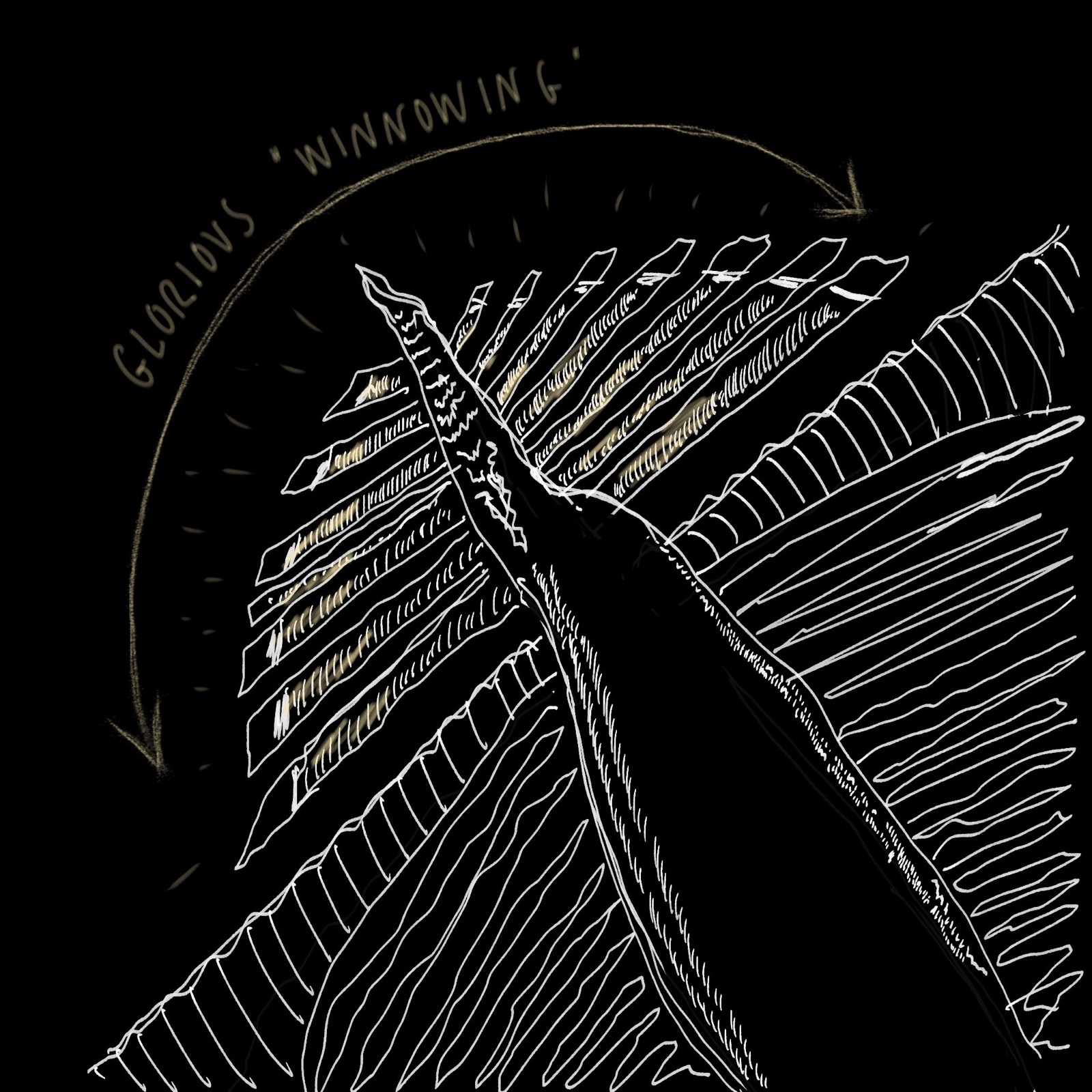
And what I found out was a mechanical engineer’s dream: its song was not a vocalization at all, but rather the sound emanated from its tail feathers during a dive-bombing flight at about 25 to 60 miles per hour. The sound was the flirtiest attempt to woo a mate and show territorial might, called winnowing.  

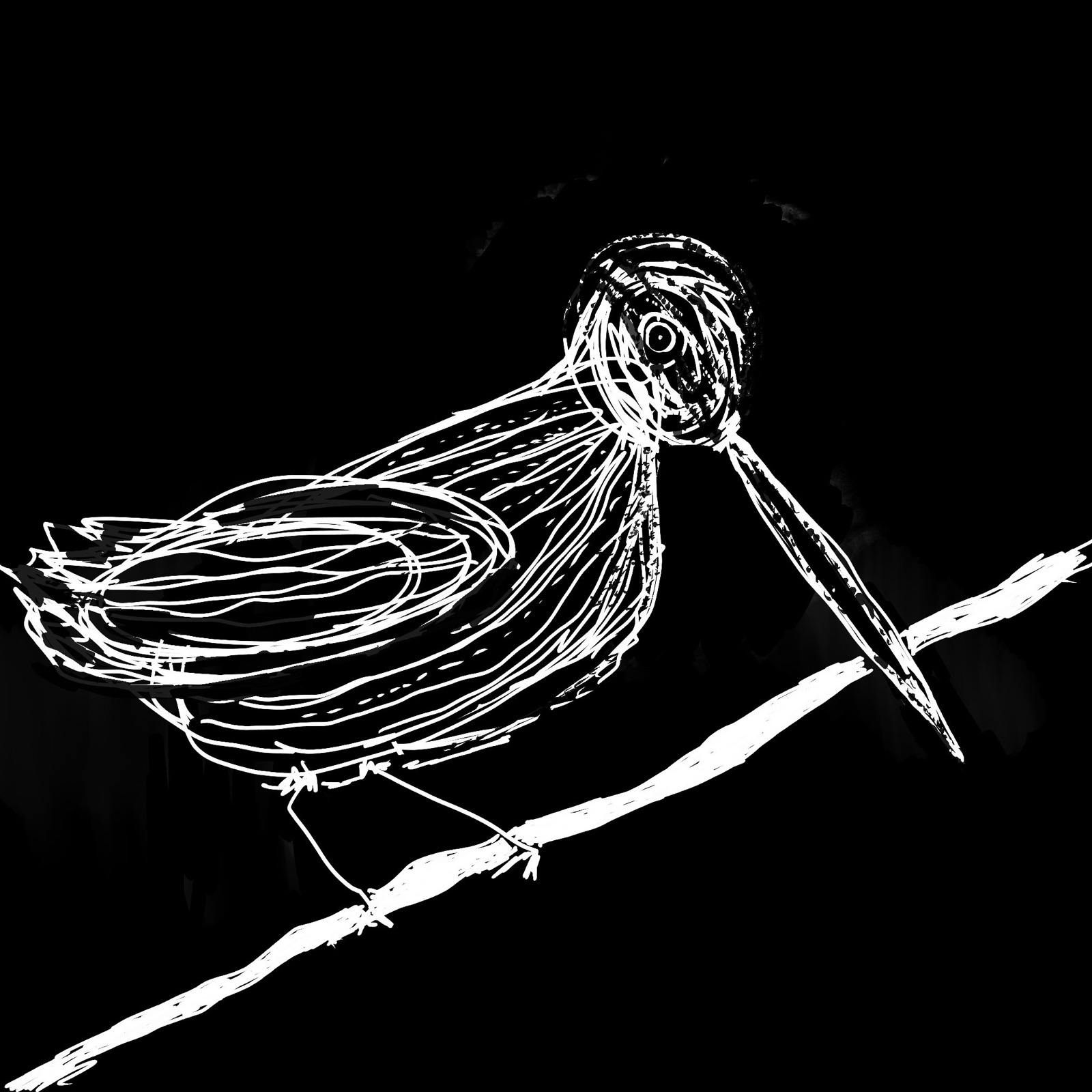
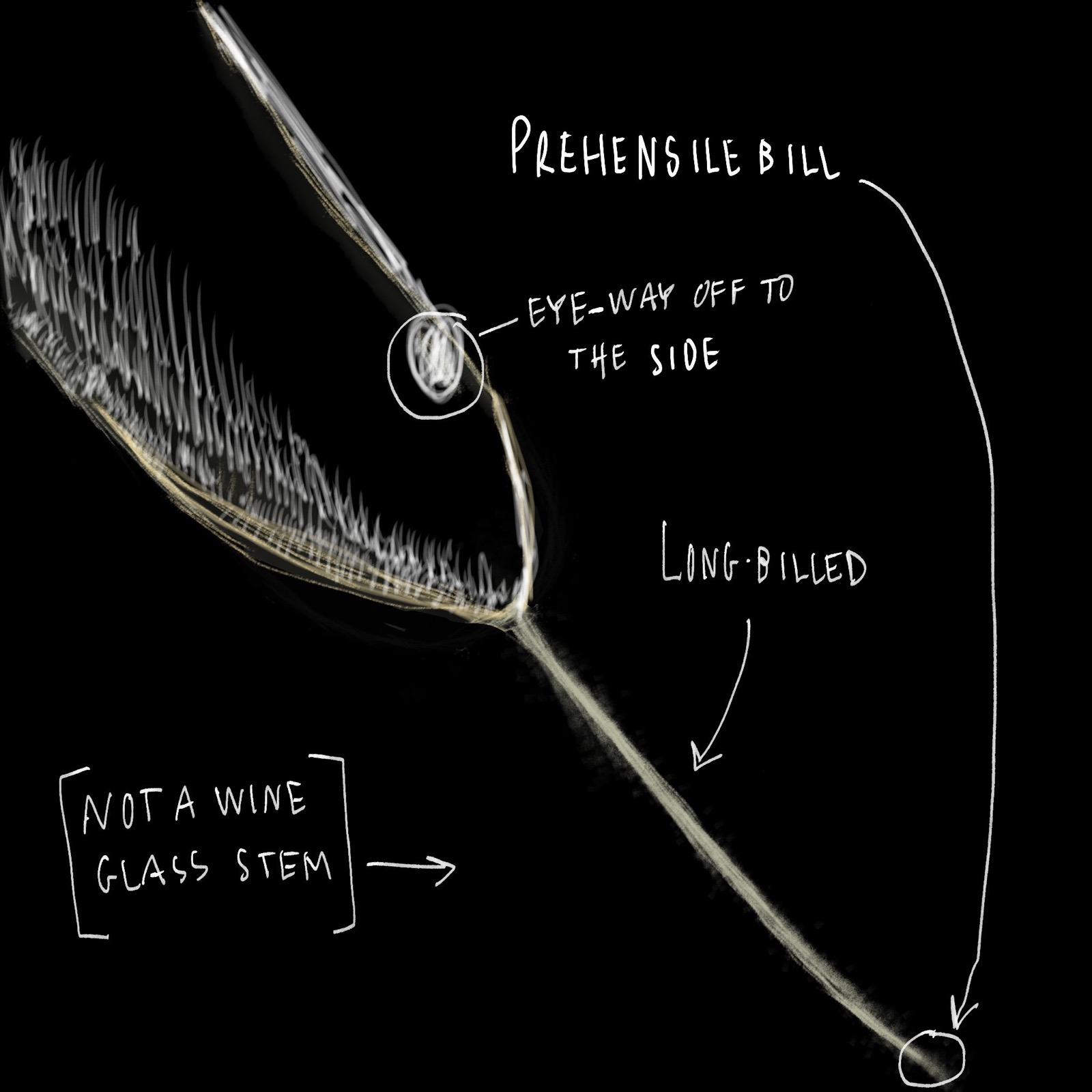
My sketches of the ghost bird, Wilson’s snipe: whole bird, tail feathers in winnowing dive-bomb, and its prehensile bill.

I have never seen this elusive bird; I have only heard its occasional sound in the spring’s pre-dawn and dusk. Then it goes away or stops its winnowing.    

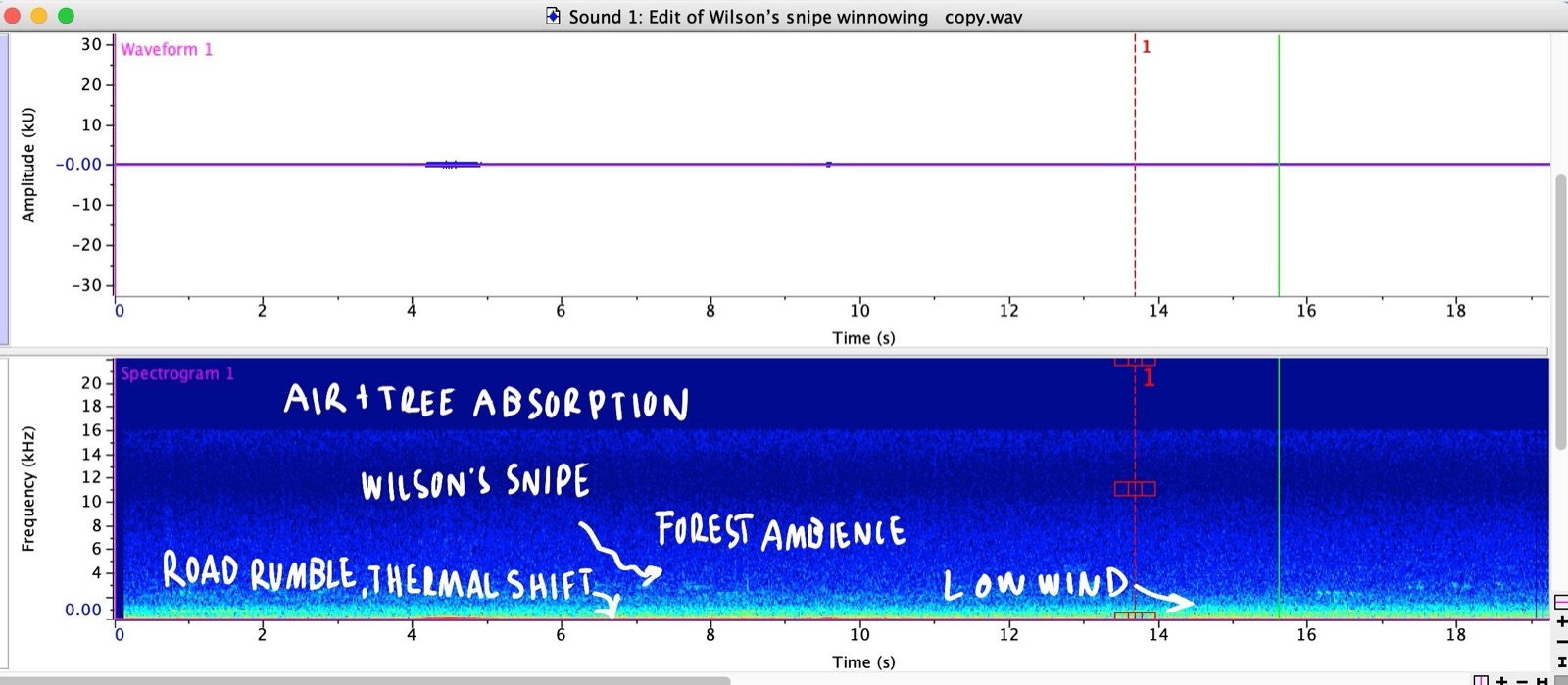
I did my best to record Wilson’s snipe and convert the audio file into a spectrogram to examine all the environmental sounds at dusk, when diurnal sounds change guard and thermals shift. The Wilson’s snipe sound hid in the spectrogram’s pixelated blue zone among the forest’s ambience. The spectrogram resembled a layered cake: slices of rumbles, winds, and absorptions stacked from ground to sky.   

This is the spectrogram of the audio file showing what dusk “looks” like in sound.

Its winnowing reminded me of how nostalgia arrives sporadically, and in whiffs, when we least expect it. 

Down by the Low River Is a Plastic-Sleeved Grove

Standing in the middle of a dry riverbank. John Day River. Eastern Oregon. 2026
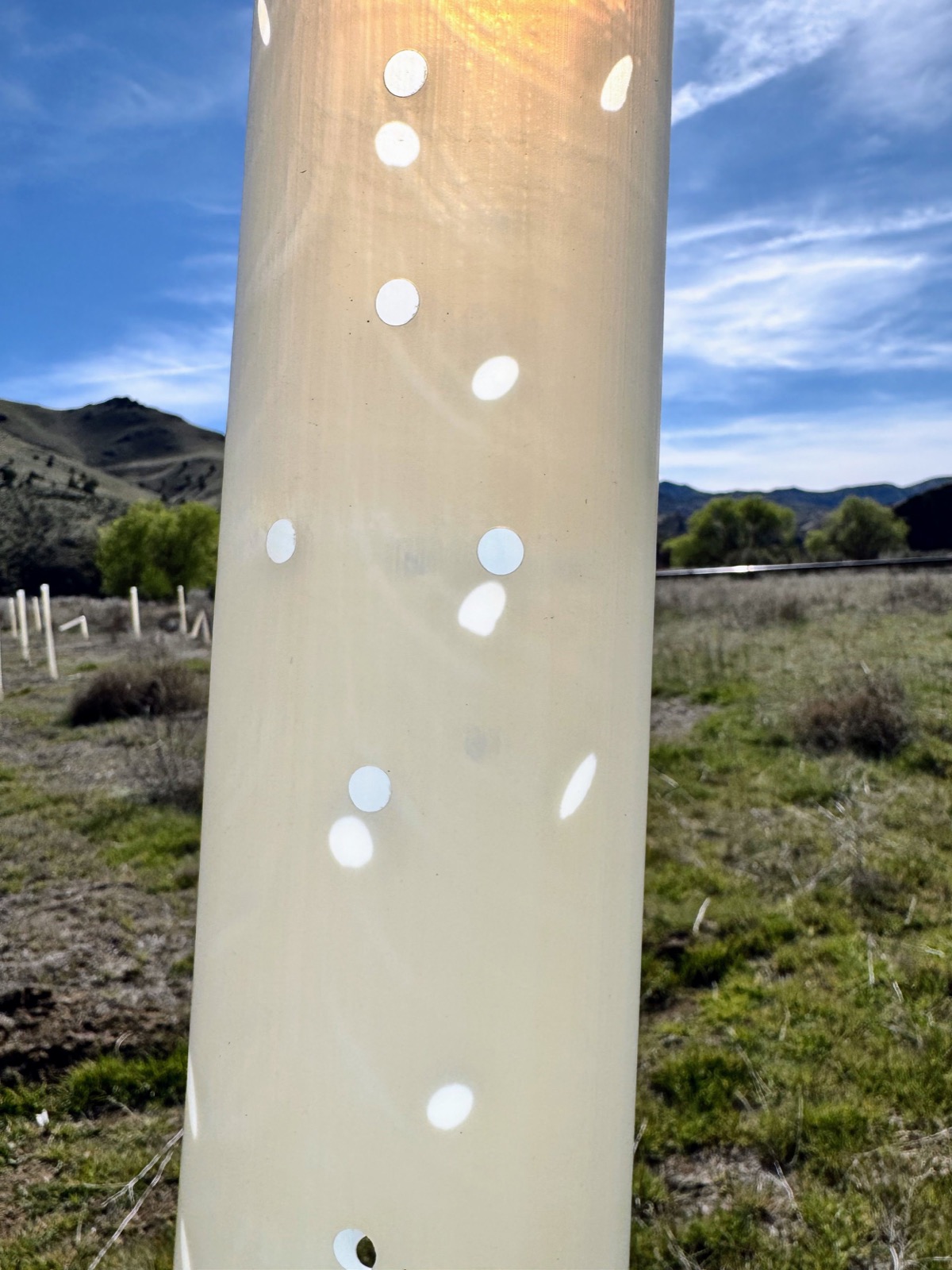
Close-up of plastic sleeve, with aerated holes. Eastern Oregon. 2026

Rows of long plastic sleeves were zip-tied to wooden stakes spaced every ten feet across the center of the BLM campground. The sleeves, presumed to protect planted saplings, hinted at a restoration effort. Yet so many sleeves were angled, broken, and discarded across the flat. 

There were no posted signs to explain the experiment. As I walked along the plastic grove, kicking up dust with my trail shoes, the work of Hope Jahren and Suzanne Simard came to mind; Jahren’s studies on plant resilience and Simard’s groundbreaking research into the hidden networks that connect trees beneath the soil seemed especially relevant when I looked at the struggling saplings.   

After exploring, we set up a camp alongside the John Day River. The dogs sniffed and searched for shade while I read Edward Abbey’s Desert Solitaire: A Season in the Wilderness. Abbey’s sharp observations of human intervention in wild places and his defense of untouched lands felt as urgent now as ever, deeply resonating with the scene unfolding around me.  

Later, as the evening settled in, we made dinner in the Jet Boil skillet and shared gummy candy for dessert. We went to bed before people in the city even left for a restaurant.  Overnight, the campground was mostly quiet, except at one point when I heard animals walking on the gravel outside the tent. Peace ended with loud squabbling turkeys and Mallards honking in constant Doppler effect.    

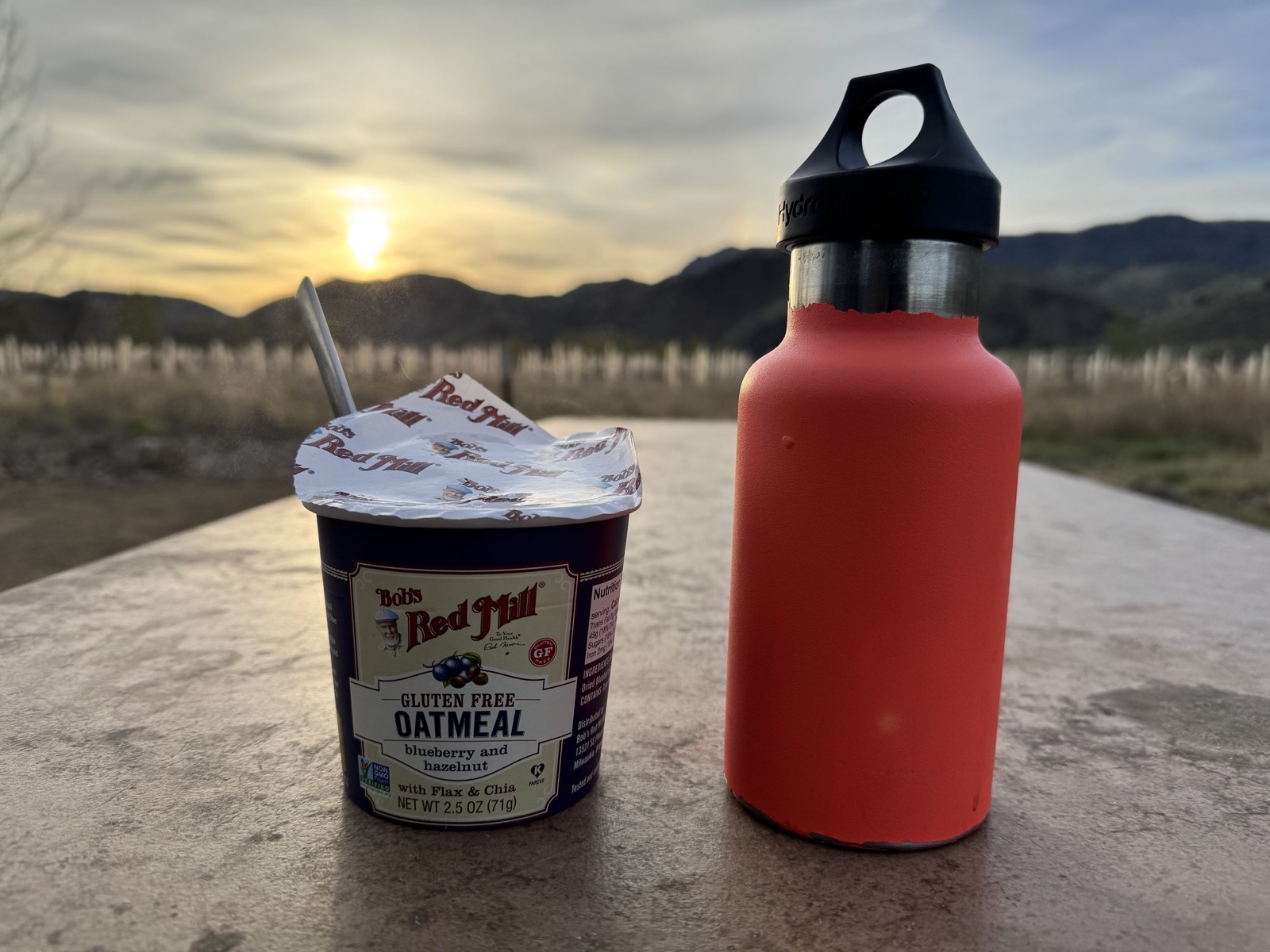
At sunrise, we ate instant blueberry oatmeal and drank black coffee while discussing our plans for the day. We favored the no-plan-as-a-plan approach—either settling on a single destination or letting ourselves wander the dirt roads. In this remote area, printed maps were essential.    

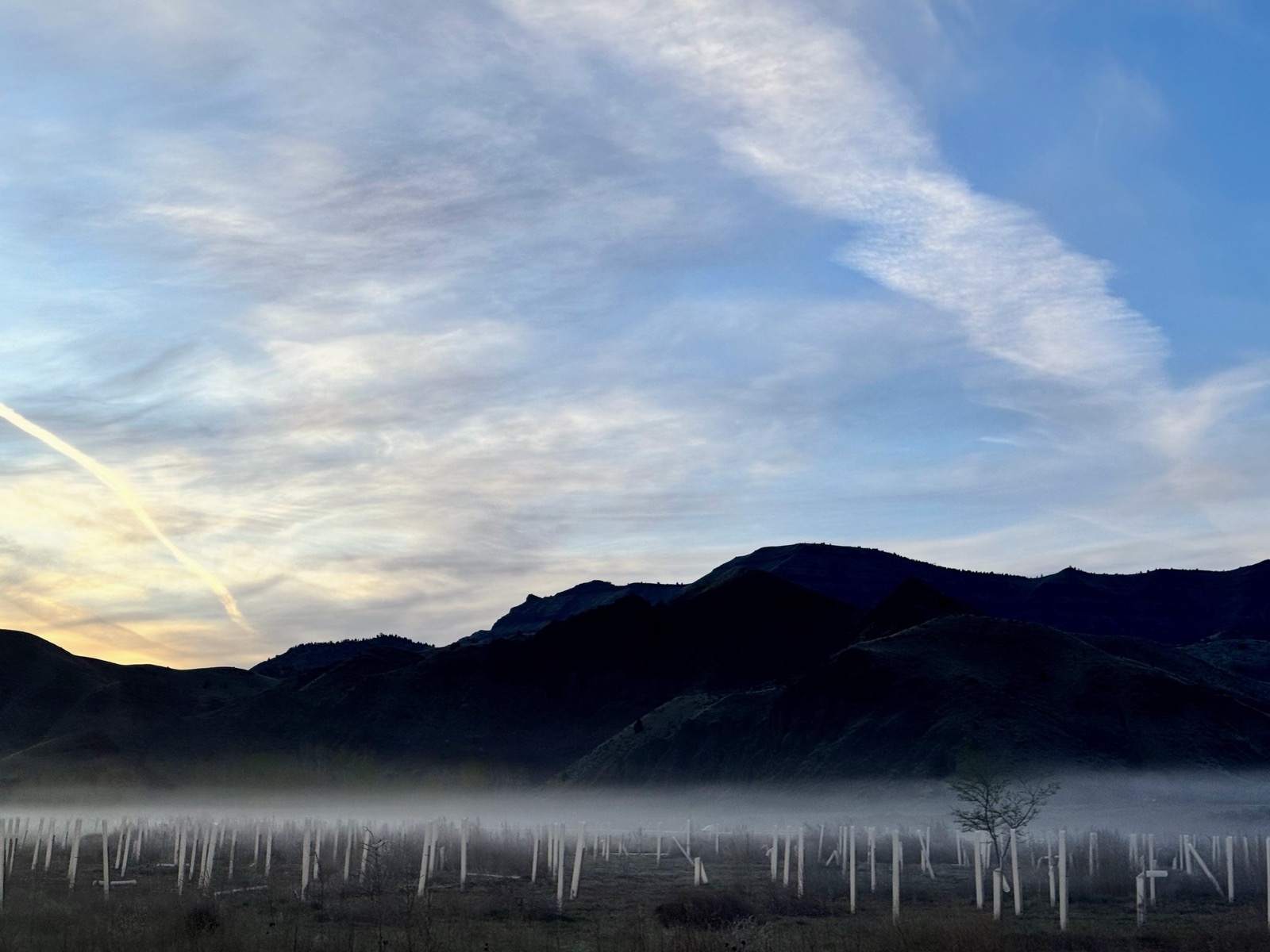
Dawn’s radiation fog skims the tops of the plastic-sleeved grove. John Day River. Eastern Oregon. 2026
Solid, outdoorsy, adventure breakfast of instant blueberry oatmeal and a thermos of black coffee. 2026, John Day River. Eastern Oregon. 2026

Soon after breakfast, a large pickup truck slowed nearby, and two older women got out and walked into the plastic-sleeved grove. "Here’s my chance," I said. "Of course it is," he replied.   
 
I approached the women and went into my roving reporter mode. The woman with deep time and sunshine on her face wore an oversized blue Cabela’s shirt, shorts, and Keen sandals. She had been one of the laborers in the grove. This was her first time back since they planted the trees more than a year ago.  

The BLM bought all the supplies for planting 3,000 cottonwood trees over 20 acres. The cottonwood grove plan was to offer wildlife food and cover. The Oregon Hunters Association planted trees for over two days. The BLM planned to flood the land to soak it. But it appeared that it had never happened. Without that critical step, the dry ground offered no help to the saplings.  

As she spoke about her disappointment, seeing the failed saplings up close, left me too dismayed. I suspected this was the federal budget cuts and a political administration’s efforts to slash an environmental pursuit for preservation and sustainability. Even a modest restoration effort here had its luck dried out under the scathing high desert sun.  

The plastic sleeves were bent and battered by the weather. She said we should be able to hear the river rushing at this time of year; it should be breaking the bank. The river could have been back-up water to the grove, but even a dry winter didn’t give it up. 

"This experiment failed," she said. "Now we need cleanup labor." 

The project's failure lingered with me. Even with the best intentions, things fail, especially when humans try to tend a landscape on their timetable rather than nature’s. Modern landscape is shaped by time, climate, and bureaucracy. Sometimes the land answers in ways we do not choose. My hope, though, is that in another season, a few cottonwoods will take. 

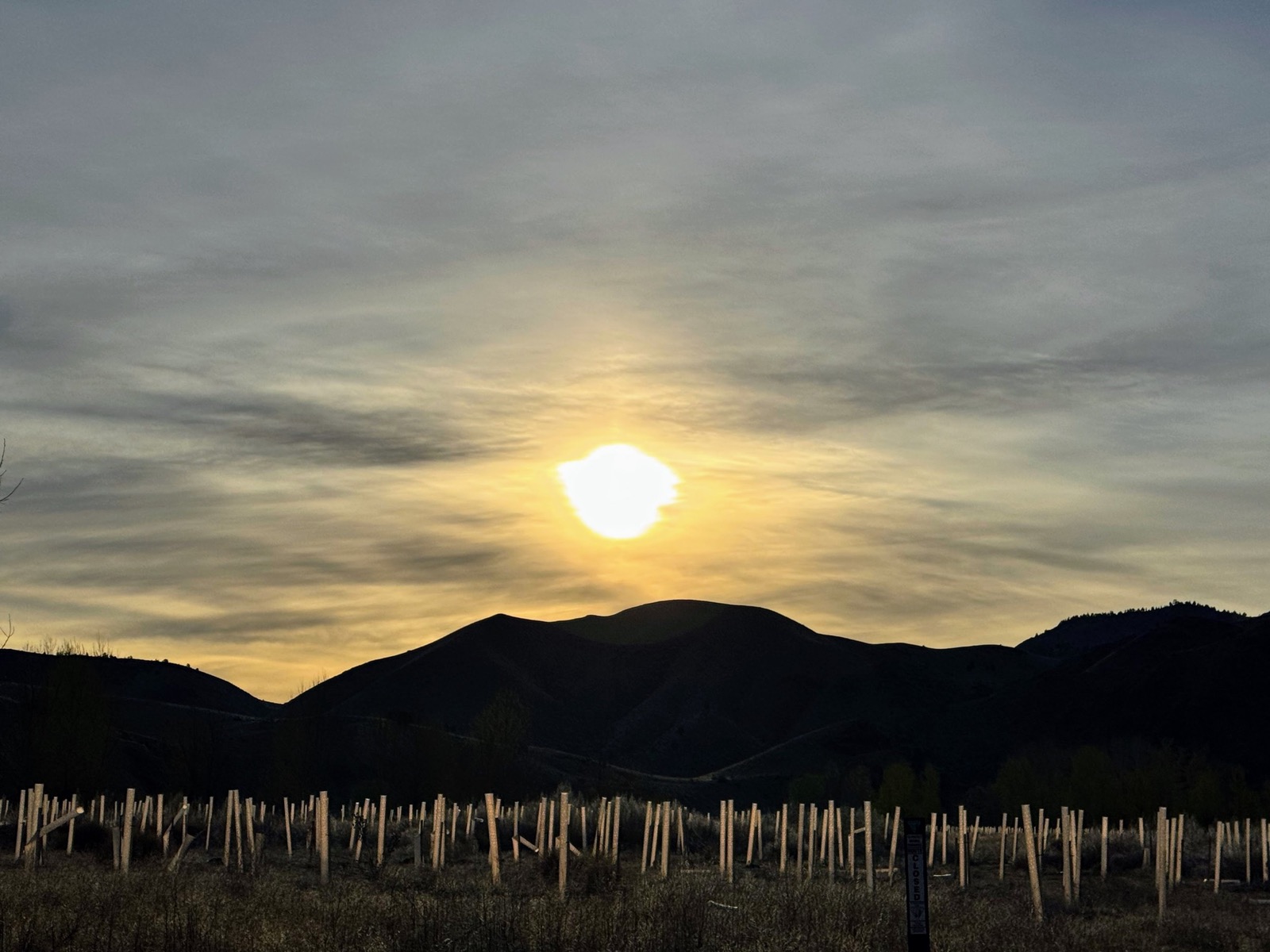
Sunrise illuminated the plastic-sleeved grove. John Day River. Eastern Oregon. 2026.

The Mysterious One-Note in the Forest

Dispersed camping among old wildfire scarred land and thriving forest. | PNW | 2026

I.
Pre-dusk, base camp, remote national forest above a wildfire-scarred ravine.  

We found a dispersed camping spot 20 miles down a forest road. It was after a windy day of hiking, with gusts up to 25 miles per hour whipped off the canyon and along the trail. 

After our campstove dinner, we passed the Fireball flask. The cinnamon heat hit my mouth and stomach as the light faded. Suddenly, our border collie erupted into wild barking. His sharp, protective barks rolled, penetrating the brittle understory and thick canopy. His chest swelled. Breath quickened. Whatever was there, he sensed it.  

We met eyes and praised him. Don’t question a dog. 

II. 
 
Pre-dawn in the windless tent with the dog pack; silence pervaded until a far-off call punctured it. Our newest rescue snapped up, with her ears pricked. A sheriff found her as a stray in eastern Oregon's high desert at winter's edge. She's a zesty, small, hoppy McNab-border collie crossed with a bunny; we swear. Her thin coat suggested nights burrowed tight under sage, bunchgrass, and juniper. Her feral instincts endured, despite domestication and a plush donut bed. She startled first, drifted last, and always listened. 

I unzipped the tent window and pushed my audio recorder into the cold. The soft, metronomic call pulsed every five to seven seconds. After an hour, it faded.  

Gray-green light coated the pointy-tipped pine forest and charred stumps along the ravine and the horizon. Clouds taped off Mount Hood. We made coffee and instant oatmeal, wearing beanies, fleece, and gloves. 

Pygmy Nuthatch, Ruby-crowned Kinglet, Williamson’s Sapsucker, Fox Sparrow, and Northern Flicker called. About an hour after sunrise, the one-note sonar resumed. I recorded the audio again, this time near the ridge’s edge, while drinking coffee from a thermos. 

III. 

Once at home, I played back the clip, cycling through bird and animal recordings. The pattern matched neither bird song nor coyote yips—no screeches or whistles—just a calm, soft, relentless note. I considered an owl, a marmot, or a tree frog, but the rhythm and timbre didn't fit.  

I knew mountain lions thrived in the region. While trail running, we often found scattered mule deer bones. I recently overheard paw-tracking stories from campers warming up before yoga. Mountain lions, a keystone species, fascinated me, and I knew they made many vocalizations, including a gentle, bird-like chirp. An ODFW wildlife technician’s audio explanation confirmed my intuition that it was a mountain lion call. 
 
So, my story, then: the night before, our dog did indeed sense a mountain lion on the ridge. We stood between mother and cub; she watched, regardless of distance. In the morning a mountain lion cub called its mother deep in the ravine.

Around here, they say, if you don’t see a mountain lion in the forest, she has already seen you. 

==
Listen for yourself: can you hear the background one-note “chirp”?

Birdsong and Mt Lion call — Tricia Louvar | Field Audio | 2026 PNW

In the Pursuit of Nothing, Something Happened in the Forest

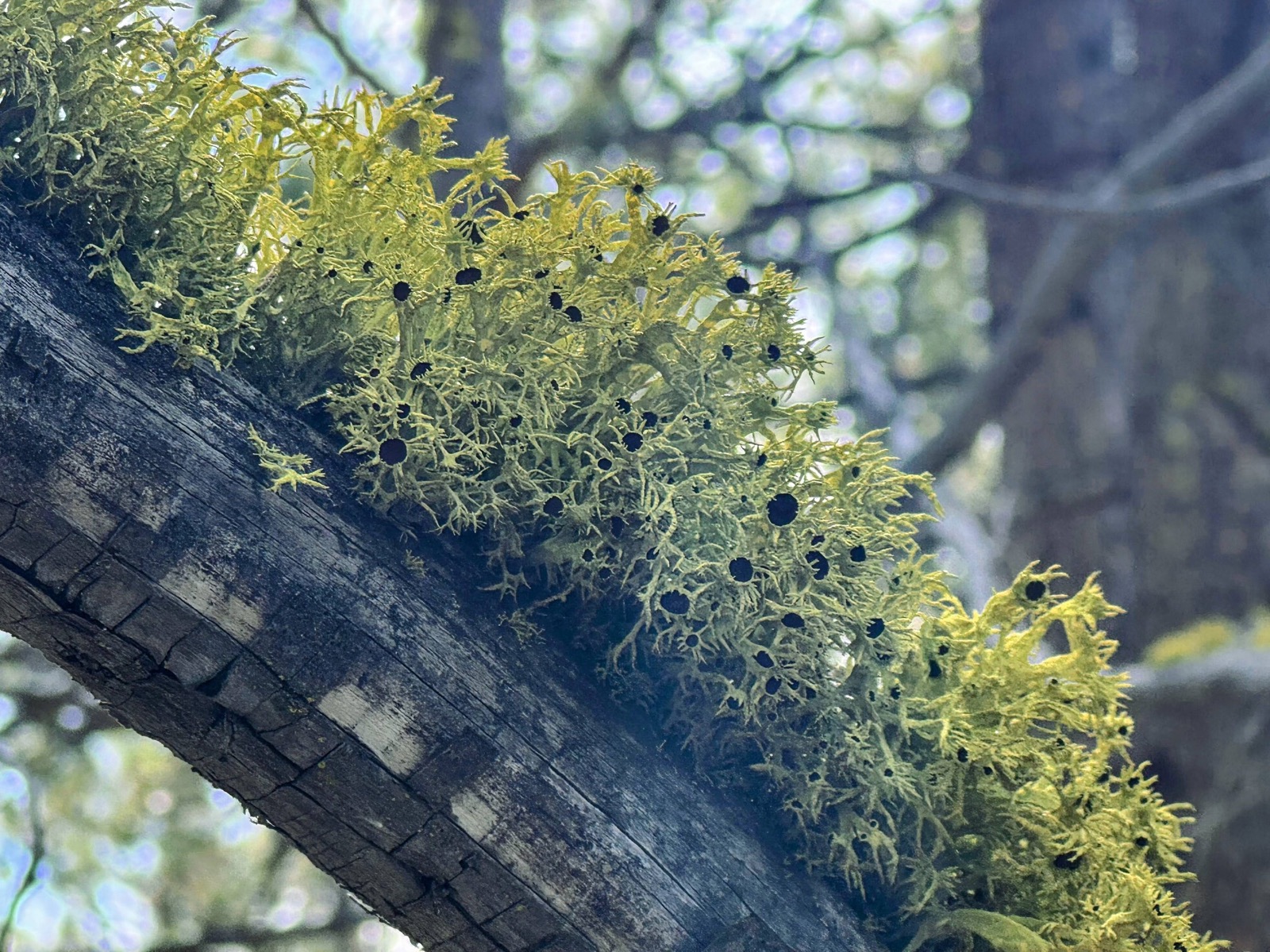
During forest bathing, I found this wolf lichen with apothecia. PNW | 2026

The dogs stopped before I did, noses in the duff. That is how it works with forest bathing—I follow where the dogs go, so I halted. I try not to go looking for anything, but if something pulls my attention, I ask why. 

As they had their sniff glory, I noticed the chartreuse lichen draped across the topside of a dying juniper branch. I stepped closer. Tucked inside the soft, spiked fronds were what looked like googly dark pupil stickers, the kind found on children’s craft tables. I had never seen these before. Upon further research, they are apothecia on wolf lichen. 

What I learned is this: when lichen fragments vegetatively, the broken piece carries both partners intact—the fungus and the alga together, a complete working unit. It lands on bark, rock, or soil and continues being what it already was. No search required. The partnership travels whole, like a married couple embarking on the Taoist’s Wei wu, path of least resistance. 

The apothecia indicate the opposite. They release spores containing only the fungus half of the organism—no alga, no partner, nothing but potential—into the wind. Each spore drifts until it lands near a compatible alga already living somewhere in the environment. If that meeting happens under the right conditions, something entirely new forms: a partnership between two organisms from different kingdoms of life that have never met before in exactly that combination. Not a copy of the parent but something that couldn't have been predicted. 

I stood in that forest spot longer than the dogs wanted me to. 

I am struck by the natural world mirroring my life as an empty nester. Our kids have floated into the world the way spores do— incomplete in their age but mature enough to move toward partnerships in their new environment. The apothecia do not chase the spore. They let it go and remain, like parents knowing they’ve done their job, seeing their kids go and thrive. And the view from the forest floor is great.

time & materials

working on a piece about owls … to come.

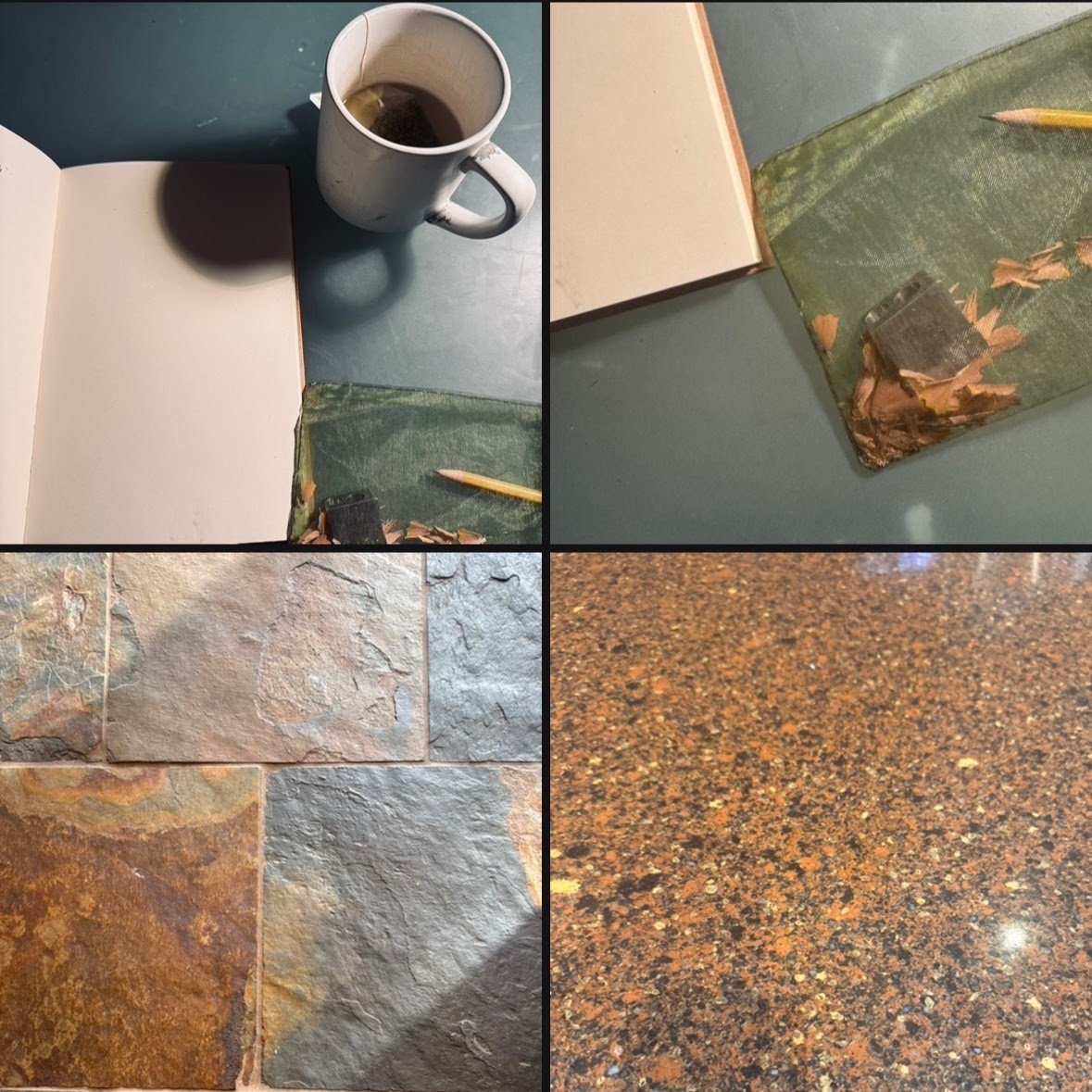
personal images from the space: rock types, pencil shavings, and sketchbook-journal for scratching away at ideas. And lukewarm tea, which I forgot to drink after falling into the flow.

When the Ground Let Go

The forest trail had survived worse. Mountain forest snowstorms are often the last vestiges of snow and ice, clinging until deep July. Frozen land. Thawed land. Animal bones litter these parts. Years of shoes, mountain bike tires, paws, and hooves wear their curves into the land's memory.   

A few days after the winter inversion lifted, I went for a trail run with the dogs. The familiar firmness of winter dirt was not there. Instead, the ground gave way—straight down, no warning, no slide. Just a sharp crunch, and my feet kept dropping into the ground, like a spoon cracking the top of creme Brule. It was as if the earth had exhaled each time my feet hit the trail.   

I adjusted, slowed, and paid attention. The earth could not hold me: crunch, pop, hollow sounds. The ground was lying.  

What unsettled me wasn't the sensation itself but how quickly my body lost trust. Muscles tightened. Balance recalibrated. I began walking the way you do on unfamiliar ice, even though there was no ice to see. The ground had changed its rules without telling me, and my body knew it before my mind could catch up.  

The rocks on the trail finally stopped me. They had fallen straight down into the trail, leaving behind precise outlines of their negative space. Not scattered, not rolled away—just dropped, straight down. The earth held them, then let them go, just as all lives lived.  

Our typical knowledge is   
ground = compresses;   
ice = shatters.  

This was   
ground = shatters.  

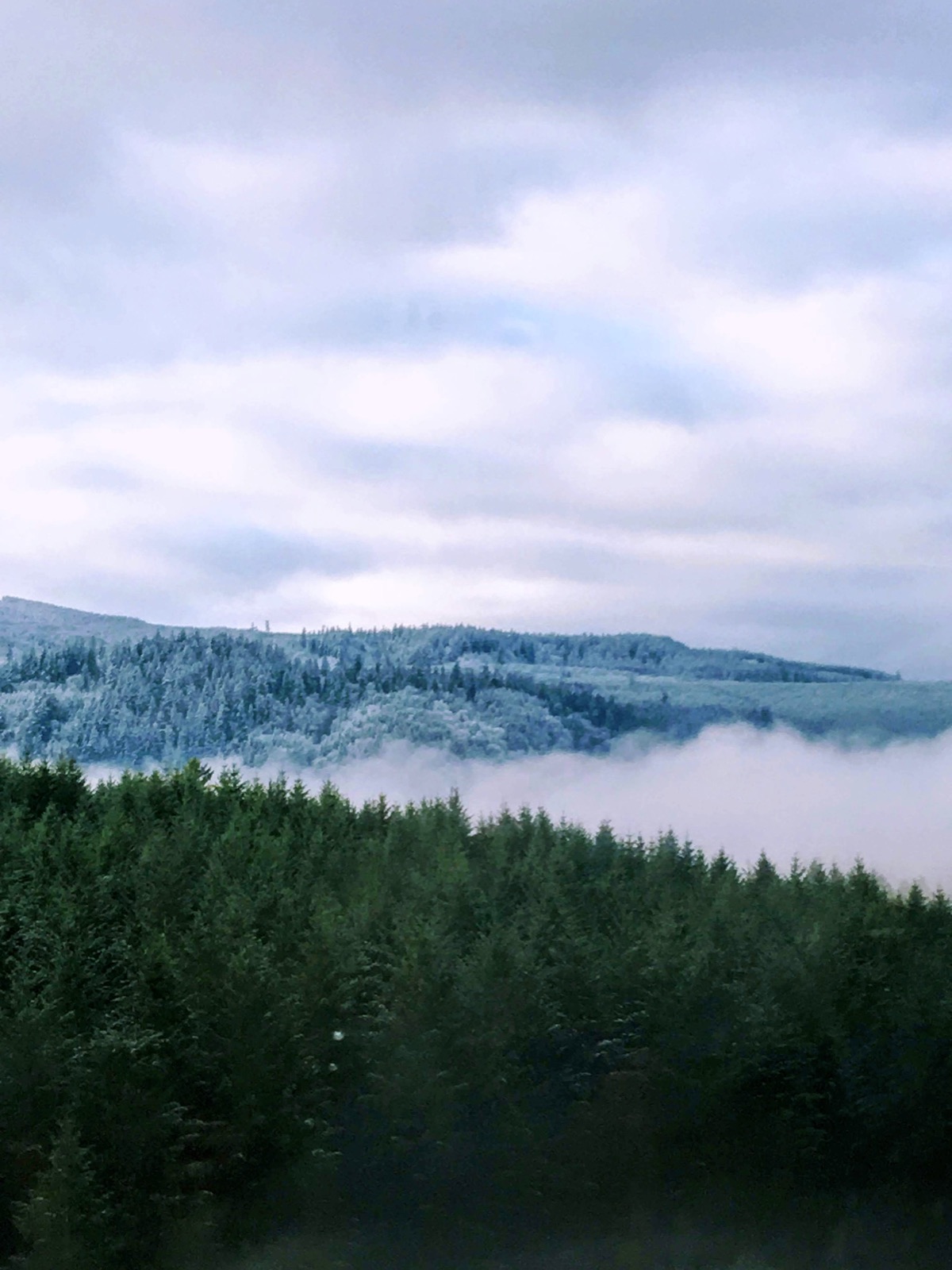
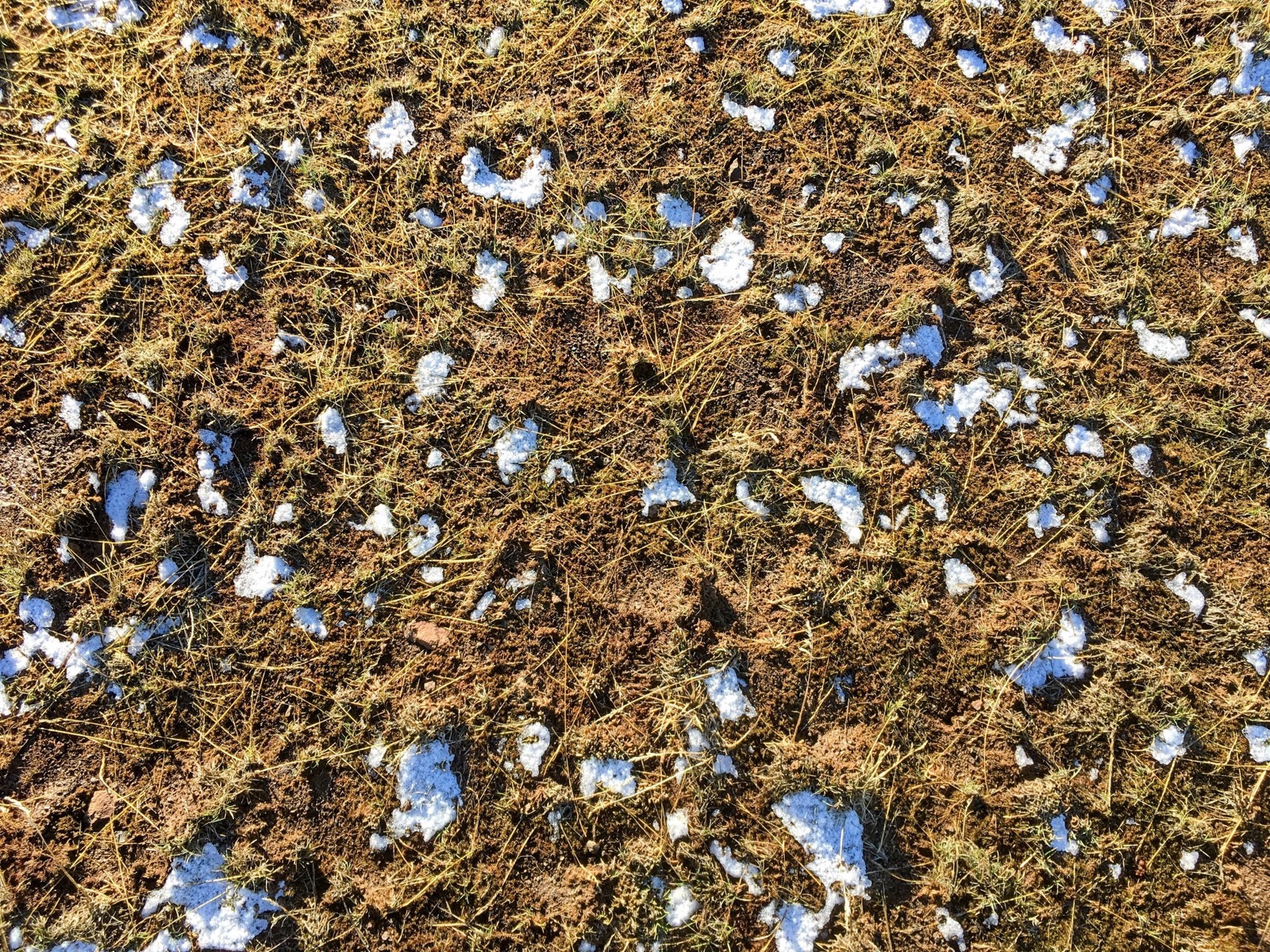
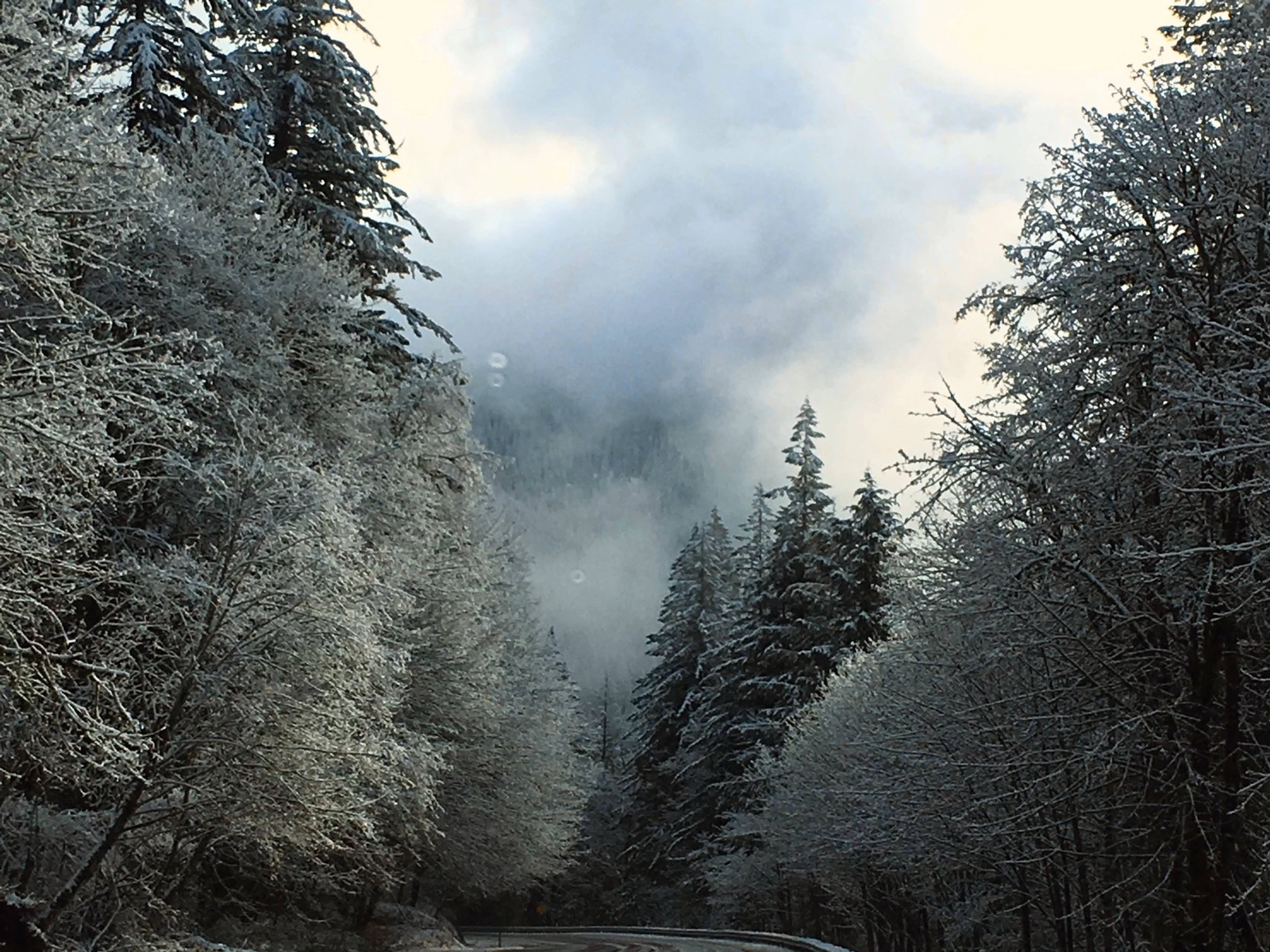
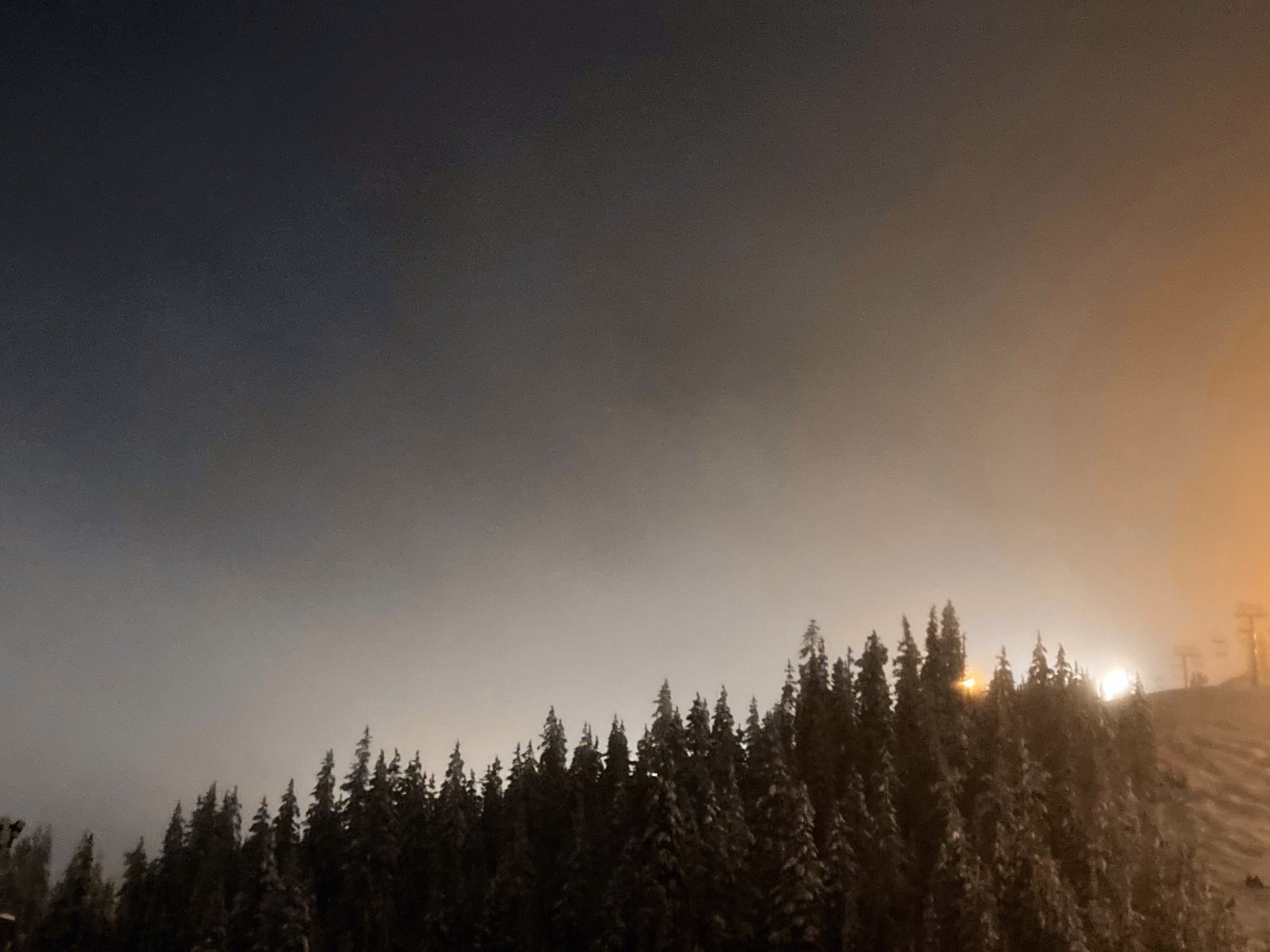
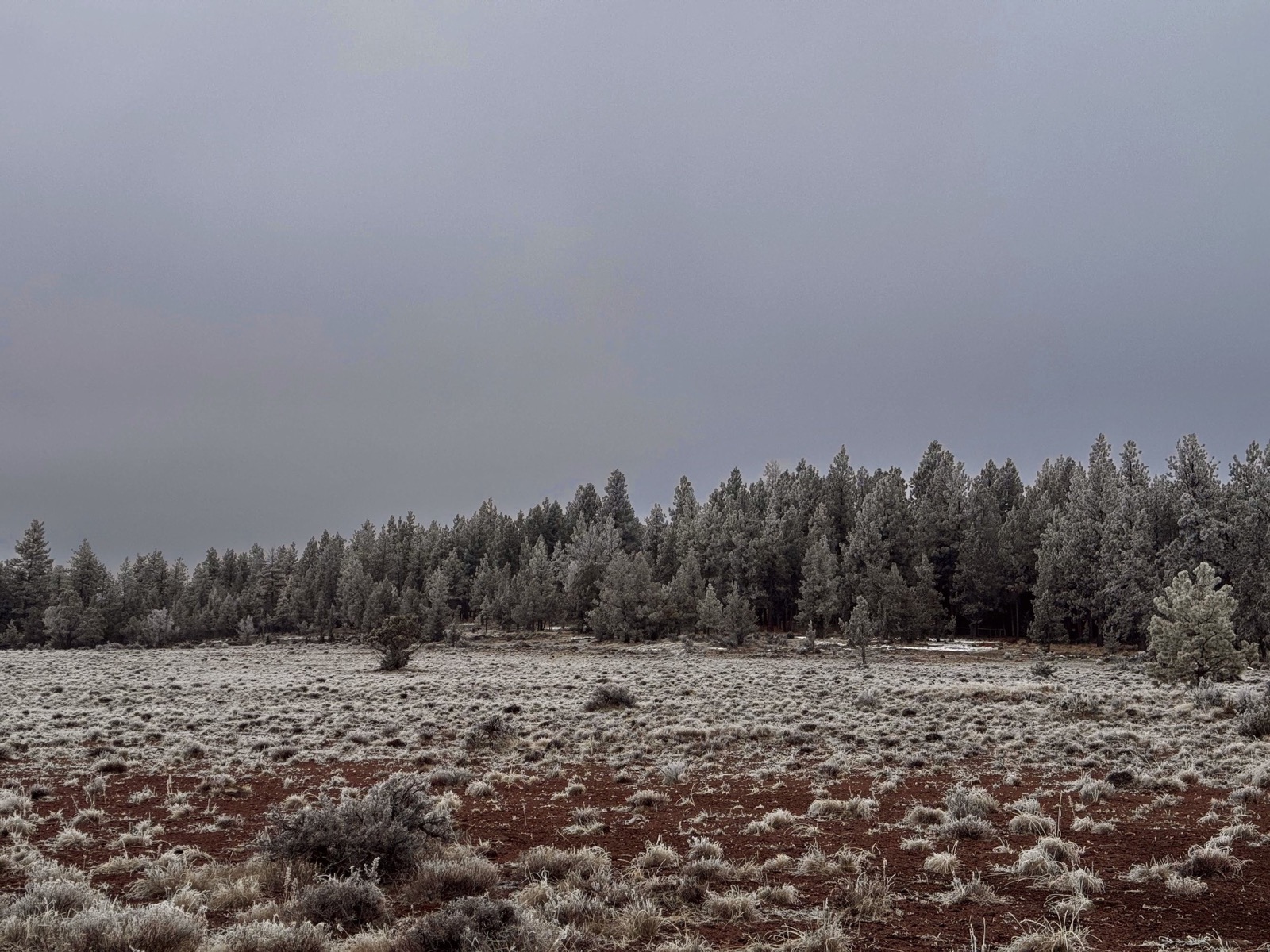
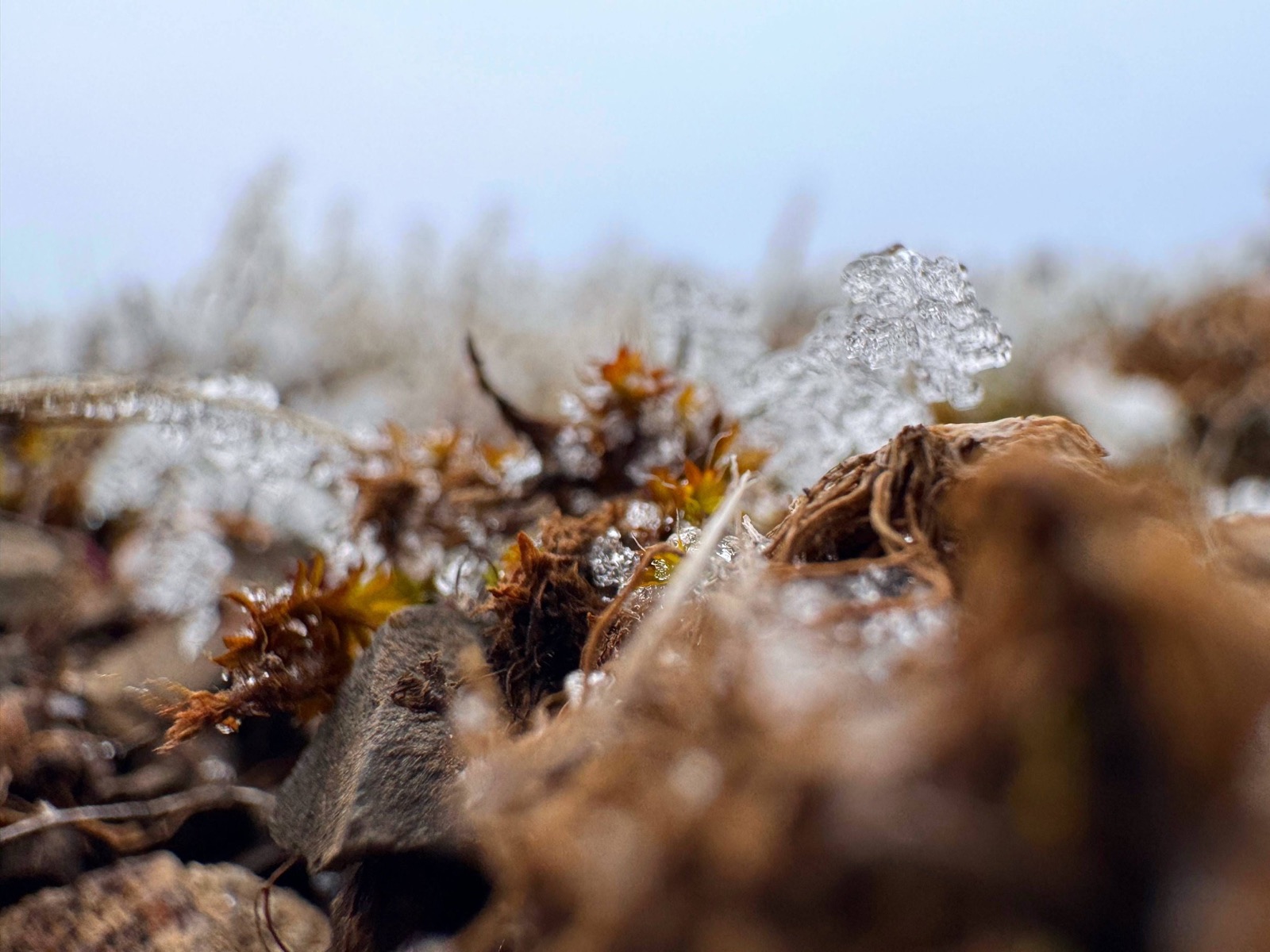
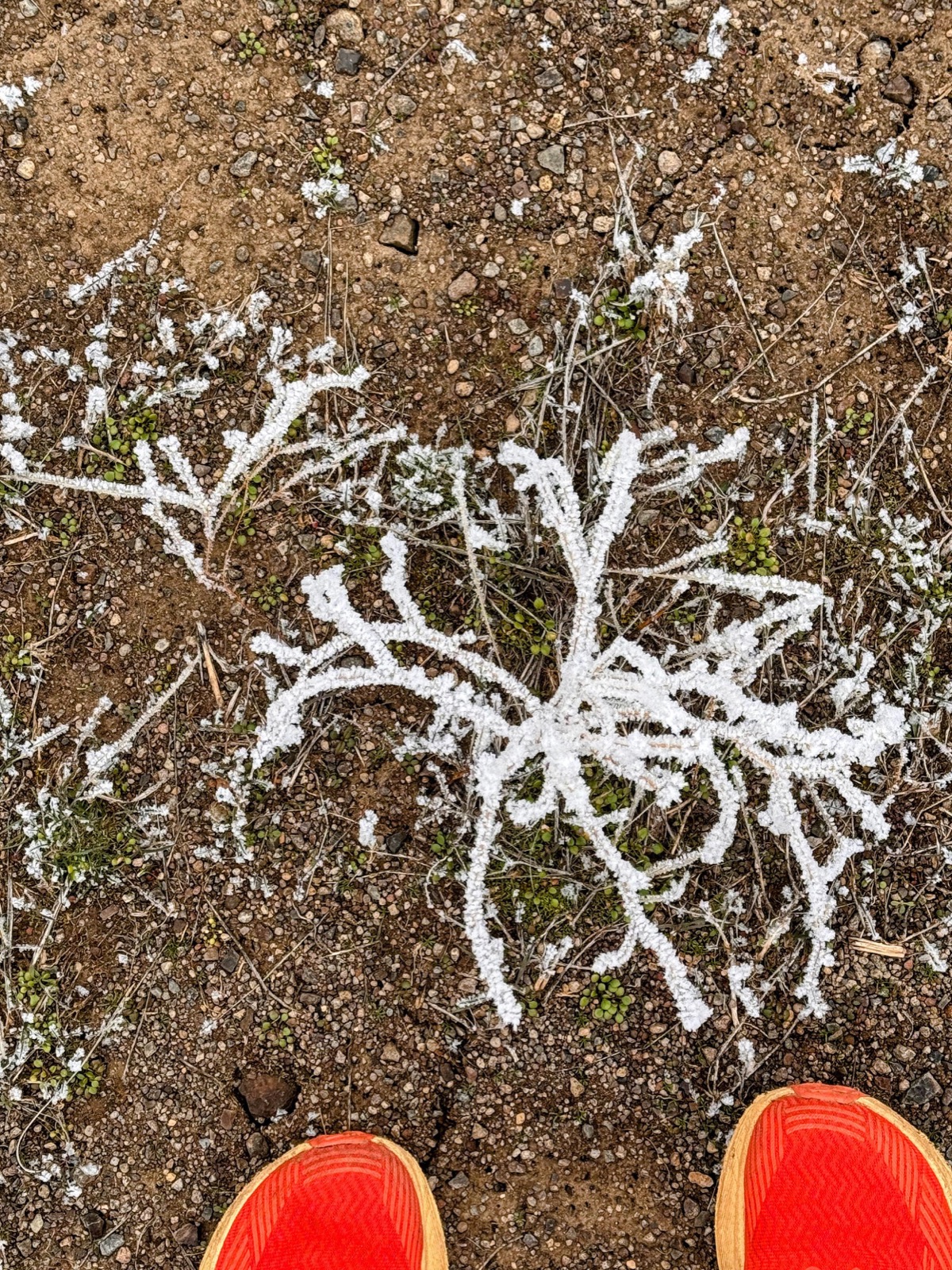
Photos from my personal archive of the Cascade Range: (left) long shot of wintry mountain range; close-up of thawing ground; frozen fog on forest road; night skiing lights on mountain ridgeline.


Ice formed in the dark. Water migrated upward. Structure rearranged itself while I went on with my days, unaware. Ice had formed not on the surface but inside the soil itself; thin sheets stacked as a quiet architecture (i.e., ice lenses). When the sun returned, it softened only the top layer, leaving a crust-over emptiness. Welcome to a freeze-thaw segregation of soil physics. 

My point load was ruining the trail; normally, it's spring, when the land managers advise staying off the trails to prevent destroying surface uniformity. But here I totally ruined it in winter.  

I kept thinking about how I trusted the ground when I wasn't next to a slope. How much of my life do I move through it that way, assuming support is inherent rather than conditional? Assuming what holds me up today will hold me tomorrow simply because it always has. 

We often think of collapse as something dramatic. Loud. Sudden. But this wasn't that. This was quite weak. A slow exchange of one state for another. A surface that continued to look like itself long after it had lost the ability to bear weight. 

The trail will recover. The soil will settle. The ice will disappear completely. From the surface, nothing will mark where the ground once gave up. It won’t remember me, but it will stay with me.

The Hold of Frozen Fog

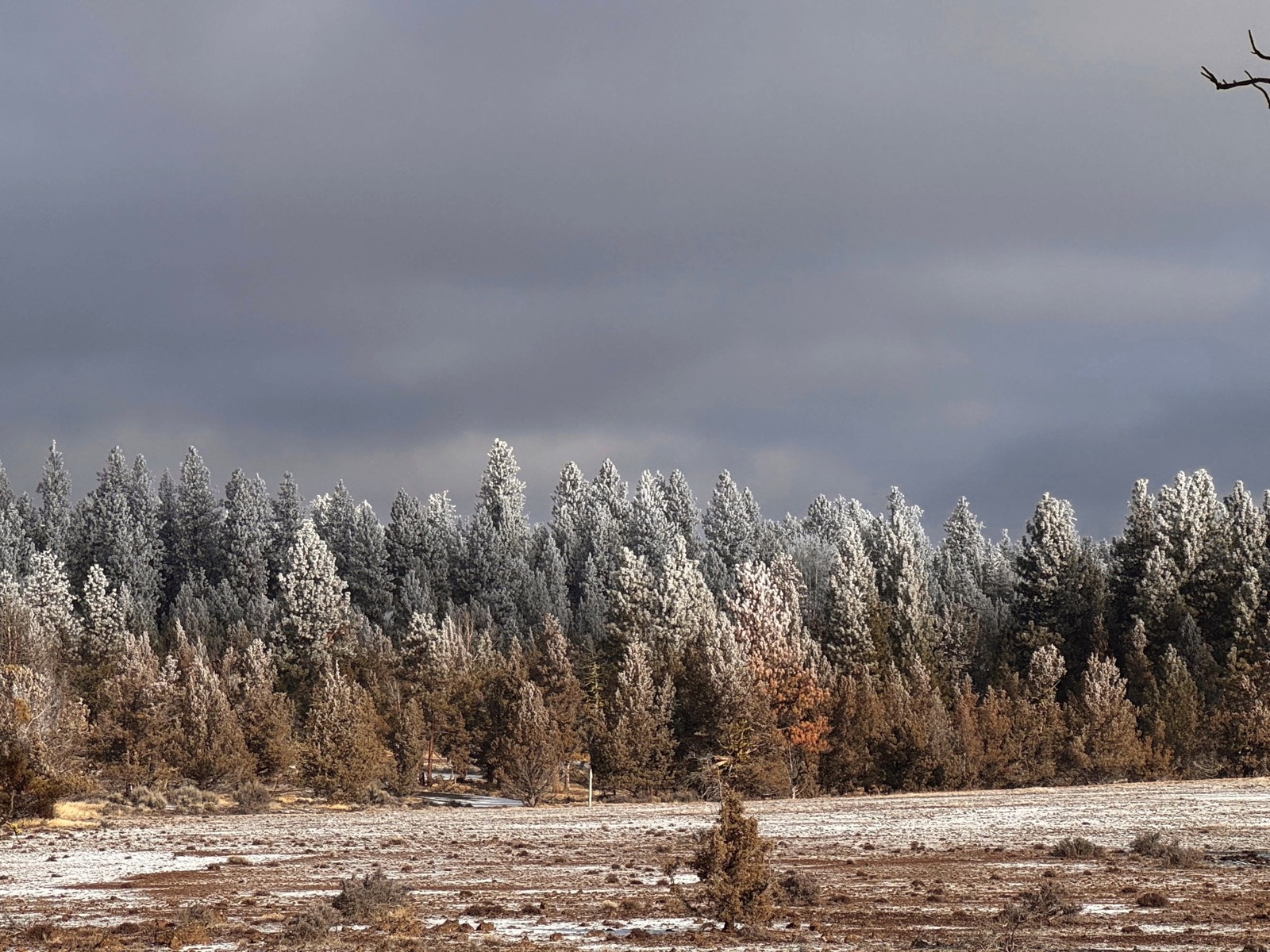
For a week and a half now, frozen fog pressed down, laying rime ice. Every twig, wire, and conifer needle was rimmed in frosty lace. The stillness hummed. 

This winter, so far, has kept itself quiet. Nights run long and clear. Cold air doesn’t rise — it drapes low, sliding downslope and settling into the valleys, folding itself in. The fog doesn’t lift. It stays. And stays. 

Each morning, the world reappears softer. The same forest, the same ridgeline— only now they wear a memory of moisture. Rime ice builds in slow increments, feathered and fine, like time itself is catching on edges. 

This is what an inversion does: holds the world in pause, asks you to notice how silence accumulates.  

finding (the) time

“...The life you lead is your art and the art you make is your life.”
Art Work: On the Creative Life, Sally Mann

I fondly remember studying Mann’s early work as a budding darkroom photographer who traveled great distances to see Photography ART wherever I landed or lived.

Now she’s 74, passing on her wisdom in Art Work. Life is short, and I’m listening and doing what needs to come next. What will survive, what will linger, what will whisper from time to time among one mind or many?

Down a forest road, walking, looking for the year’s tree. PNW

of truth and trust

“...to stand on the meeting of two eternities, the past and future, which is precisely the present moment...”
"Economy." Henry David Thoreau from Where I Lived, and What I Lived For
Hiking in the PNW | 2025